
Yarrow (Achillea)
What Is Yarrow? Yarrow (Achillea spp.) is a hardy perennial flower prized for its beautiful flat topped blooms, ferny foliage, drought tolerance, and wildlife appeal. Traditionally seen in its white form (Achillea millefolium), modern breeding programs have introduced dazzling colors and more compact garden varieties that thrive in borders, rock gardens, meadows, and pollinator spaces.
Botanically part of the Asteraceae family — the same family as daisies and sunflowers — yarrow is widely grown across temperate gardens. Native to many regions of the Northern Hemisphere, it’s long been valued for ornamental value, cut flower arrangements, low maintenance care, and ecological benefits like attracting bees and butterflies.
The Appeal of Colorful Yarrow
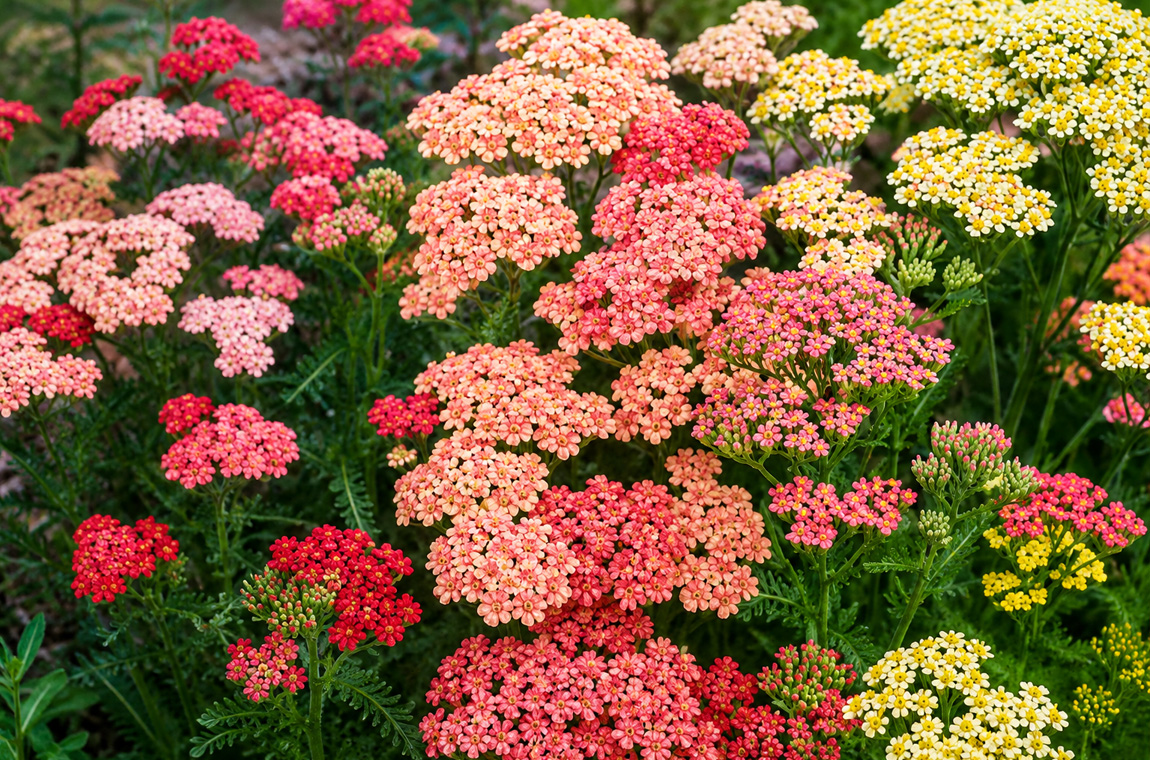
Modern gardeners love yarrow not just for its reliability, but for the stunning range of colors now available. No longer limited to white or yellow, gardeners can now enjoy shades of:
- Rich reds (Pomegranate)
- Apricots and roses (Apricot Delight)
- Deep pinks (Cerise Queen)
- Sunny yellows (Moonshine)
- Soft pinks fading to cream (Pink Grapefruit)
- Warm earthy tones (Terracotta)
These varieties give designers endless options for color schemes and seasonal interest.
Pomegranate Yarrow — Bold Red Drama
The cultivar Achillea millefolium ‘Pomegranate’ stands out with its rich, velvety red blooms that light up sunny beds and borders.
This yarrow belongs to the Tutti Frutti™ series, bred for compact, uniform flowering and strong color that remains vibrant in summer heat.
Plant Characteristics
- Color: Deep red flower clusters
- Height: ~1–2 ft (30–60 cm)
- Spread: ~1–2 ft (30–60 cm)
- Soil: Well drained, average to dry
- Sun: Full sun
Like many newer Achillea varieties, Pomegranate is drought tolerant, deer resistant, and attractive to butterflies and bees, making it an excellent all around perennial choice.
Apricot Delight — Warm Pastel Charm
Achillea ‘Apricot Delight’ brings soft apricot to rosy pink hues that vary as blooms age, giving a dynamic color display across the season.
Another member of the Tutti Frutti™ series, this variety has become beloved for its warm tones and strong performance in sunny borders.
Key Features
- Color: Apricot, pink, and rosy red bloom mix
- Growth: Upright clump ~18–22 inches tall
- Season: Blooms early summer into fall
Its fern like foliage and rich cluster blooms also make excellent cut flowers for bouquets or dried arrangements, adding multi season interest both outdoors and indoors.
Cerise Queen — Bright Pink Pop
Achillea ‘Cerise Queen’ brings vibrant magenta pink blooms that hover above the ferny foliage, adding bold color to sunny beds.
This variety is perfect for gardeners who want warm color schemes or to contrast with cooler tones like blues and whites.
Plant Highlights
- Color: Cerise pink flat flower clusters
- Height: Medium to tall habit
- Sun: Full sun with excellent drought tolerance
- Use: Borders, pollinator gardens, cut flowers
In addition to its strong color, Cerise Queen is known for being hardy and easy to grow, thriving with minimal care provided the soil is well drained.
Moonshine — Golden Glow for Sunny Gardens
One of the most classic yarrow varieties, Achillea ‘Moonshine’ is treasured for its cheery lemon yellow flowers atop silvery green, ferny foliage.
Often grown in sunny borders, cottage gardens, and gravel gardens, Moonshine is a go to choice for adding light, airy yellow tones and for its reputation as a robust garden performer.
Why It’s Garden Ready
- Color: Canary yellow blooms
- Foliage: Silvery, textured yarrow leaves
- Attracts: Pollinators like bees and hoverflies
- Height: Typically 18–24 inches
With its striking flower heads contrasting against lacy foliage, Moonshine continues to be a favorite for designers building sunny, wildlife friendly landscapes.
Pink Grapefruit — Dynamic Pink Blooms
Achillea ‘Pink Grapefruit’ is part of the Tutti Frutti series and offers deep rose to creamy pink blooms that fade with age.
Gardeners appreciate its bushy habit and showy, long lasting color that complements many perennial beds.
Features
- Color: Deep rose fading to light pink
- Growth: Compact robust clumps
- Uses: Bedding, border, cutting gardens
As with other modern varieties, Pink Grapefruit thrives in full sun and dry to medium soils, making it a resilient choice for busy or low water gardens.
Terracotta — Warm Earth Tones
While not as universally talked about as some of the Tutti Frutti varieties, Achillea ‘Terracotta’ is gaining fans for its rust orange blooms, which evoke warm autumn palettes in summer months.
This color adds a vivid earthy accent to gardens, bridging the gap between yellows and reds and enhancing late season displays.
Garden Profile
- Color: Deep orange to terracotta hues
- Foliage: Grey green, finely divided
- Suitability: Borders, wildlife gardens, perennial combinations
This variety, like many Achillea, is drought tolerant and hardy, integrating beautifully with grasses, salvias, and late summer bloomers.
Growing & Caring for Yarrow
One reason yarrow is such a garden staple is its low maintenance nature. With the right planting and care, your yarrow will reward you year after year.
Sunlight & Soil
Yarrow thrives in full sun — at least 6 hours daily — and prefers well drained soil. Too much shade or overly rich soil can result in leggy plants and weaker blooming.
Watering & Drought Tolerance
Once established, yarrow is highly drought tolerant, and overwatering can lead to root issues or floppiness. Water regularly during establishment, then reduce frequency as the plant matures.
Maintenance & Pruning
- Deadheading: Removing spent blooms can encourage rebloom and prolong flowering season.
- Division: Every 3–4 years, divide crowded clumps to refresh plants and maintain vigor.
- Winter Care: Most varieties die back after frost; cut stems in late fall or early spring.
Proper care ensures not only continued blooms but also a tidy, manageable plant habit.
Pollinators & Garden Ecology
Yarrow isn’t just beautiful — its nectar rich blooms attract bees, butterflies, and other beneficial insects, making it a valuable addition to pollinator gardens. The long flowering period provides sustained food resources throughout summer into early fall.
Additionally, yarrow’s fern like foliage adds textural contrast to many perennial plantings even when not in bloom, enhancing visual interest across seasons.
Design Ideas for Yarrow
Yarrow’s color range and adaptability make it perfect for many garden styles.
Mixed Borders
Plant Pomegranate or Cerise Queen in back borders to inject rich color, while Moonshine and Pink Grapefruit brighten front rows.
Containers & Patio Pots
Compact varieties like Apricot Delight and Pink Grapefruit work beautifully in containers, adding color on patios and entryways.
Pollinator Gardens
Group several yarrow colors together — yellow Moonshine, red Pomegranate, and soft pink Apricot Delight — to create visual diversity and ecological richness.
Naturalized or Meadow Gardens
Yarrow fits naturally into prairie style plantings with grasses and upright perennials, enjoying sun and space to flourish.
Seasonal Interest & Bloom Times
Most ornamental yarrow varieties bloom from early summer through late summer, with some rebloom triggered by deadheading. Their flat, umbel like flower clusters age gracefully, often shifting in hue over weeks, adding evolving beauty to the garden palette.
Autumn brings seedheads that can provide textural interest and food sources for wildlife through winter, while the foliage usually recovers strong in spring.
Final Thoughts: Why Yarrow Belongs in Your Garden
Yarrow’s combination of color diversity, low maintenance, wildlife value, and architectural form makes it a must have perennial. Whether you’re drawn to the fiery hues of Pomegranate, the golden glow of Moonshine, or the soft elegance of Pink Grapefruit and Apricot Delight, there’s a yarrow variety to fit your garden aesthetic.
Plant them in sunny, well drained spots, and enjoy weeks of flowers, benefits to pollinators, and versatile design possibilities that elevate your outdoor space from spring into fall.