
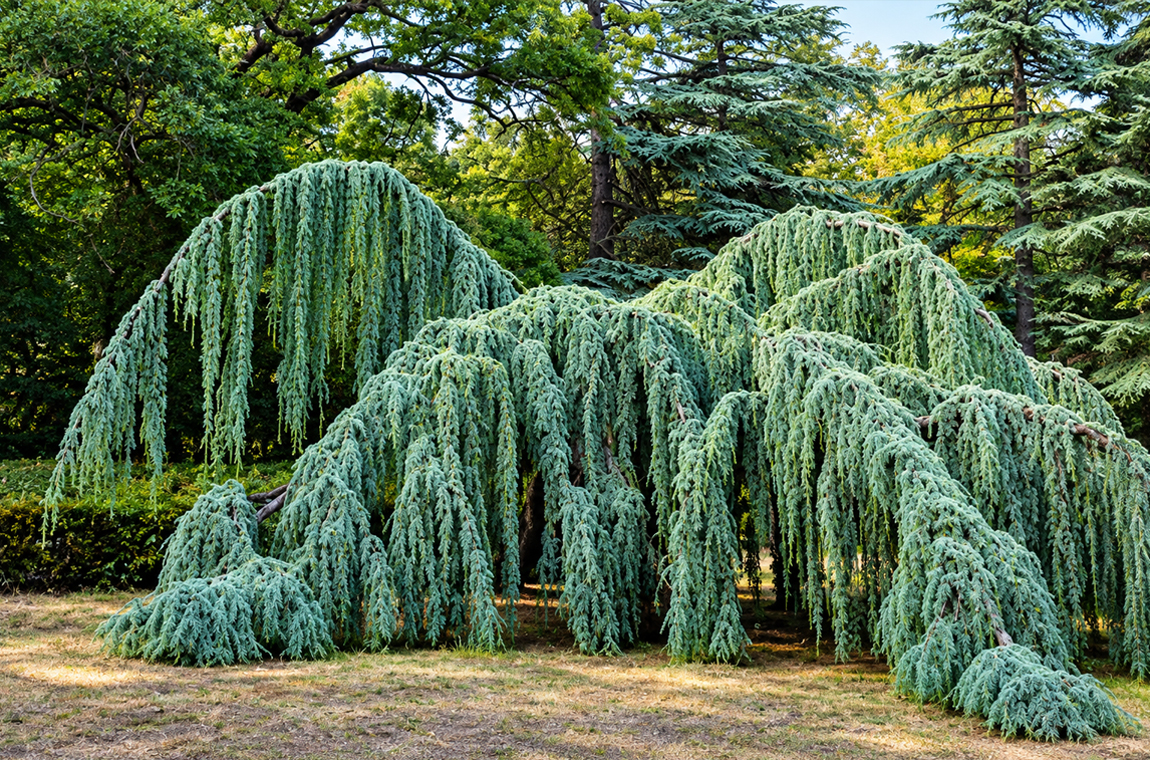
Weeping Blue Atlas Cedar
The Weeping Blue Atlas Cedar, Cedrus atlantica ‘Glauca Pendula’, is a striking evergreen conifer prized for its striking weeping form, silvery-blue needles, and sculptural form. Unlike upright conifers, this cultivar cascades gracefully, creating a waterfall-like effect that feels bold and elegant.
Native to North Africa, the Atlas cedar is adapted to mountain conditions. ‘Glauca Pendula’ is valued primarily for its ornamental character.
What Makes the Weeping Blue Atlas Cedar Special?
Growth Habit and Form
The most captivating feature is its pendulous growth habit, with long branches that drape downward like a curtain. The leader can be staked upright to create a serpentine, sculptural form with twisting and curving trunk shapes. Without support, the branches cascade naturally. Each plant develops differently, making every specimen a piece of living art.
Foliage: Color That Captures Light
The needles have a striking silvery-blue color that creates contrast against flowering shrubs and green foliage. As an evergreen, the cedar provides texture, structure, and color throughout winter, remaining visually important after deciduous plants lose their leaves.
Ideal Uses in Landscapes
The weeping blue Atlas cedar works well as an accent or specimen planting in lawns and garden beds. Its cascading branches complement rock gardens and slopes, where the foliage contrasts well with rocky textures.
It can create drama around garden entrances, pathways, and driveways. Smaller trained specimens may work in containers or raised beds. This cedar adds movement and visual dimension.
Planting and Growing Conditions
Light
This cedar thrives in full sun, preferably receiving six hours of direct sunlight daily. Good sun exposure supports healthy growth and helps enhance the blue coloration of the needles.
Soil
Well-drained soil is essential. Atlas cedar can tolerate loam, sandy, and clay soils, but it does not tolerate standing water well. Excessive moisture can contribute to root problems.
Hardiness Zones
The cedar is suited to USDA Hardiness Zones 6–9 and performs best in temperate conditions.
Watering
Young plants should be watered regularly while establishing their root systems. Once established, mature trees become relatively drought tolerant, although occasional deep watering is beneficial during dry periods.
Training and Pruning
Training
Training is one of the most interesting aspects of growing this cedar. The central leader can be staked to develop serpentine trunks or elevated centers with cascading outer branches. Without support, the natural weeping habit creates an elegant, drooping silhouette.
Pruning
Pruning is generally minimal. Remove dead or damaged branches, improve airflow when necessary, and shape the tree according to the desired form. Late-winter pruning can help maintain structure.
Seasonal Interest
The weeping blue Atlas cedar retains its needles year-round. In spring, new growth develops with a silvery sheen. During summer, blue-green foliage becomes prominent in full sun. In fall, evergreen color contrasts with autumn foliage, while winter foliage provides structure and color.
Considerations Before Planting
Space Needs
The tree can spread broadly and may become nearly as wide as it is tall. Allow sufficient space for horizontal growth and cascading branches.
Wind
Pendulous branches can be vulnerable to strong winds and heavy snow loads. A sheltered location helps protect its graceful form and reduces branch damage.
Transplant Sensitivity
It can be difficult to transplant once mature. Container-grown plants should be moved carefully and watered thoroughly after planting.
Common Questions About Weeping Blue Atlas Cedar
How fast does it grow?
It is a slow-growing tree, making it an excellent long-term landscape feature, although it will not quickly fill a large space.
Can it be kept small?
Yes. Careful pruning and training can maintain smaller specimens suitable for courtyards, raised beds, or containers.
Does the blue color change?
The silvery-blue needles may appear more muted in shade and more vibrant in full sun, making light exposure important to its appearance.
Final Thoughts: A Garden Gem
The Weeping Blue Atlas Cedar is more than an evergreen—it is living sculpture. Whether trained into a serpentine centerpiece, allowed to cascade naturally, or used as a dramatic landscape accent, its distinctive form and silvery-blue foliage bring personality and year-round beauty to the garden.
With the right location, proper planting, and thoughtful care, Cedrus atlantica ‘Glauca Pendula’ can become a garden heirloom, growing alongside the landscape and elevating its character for decades.