
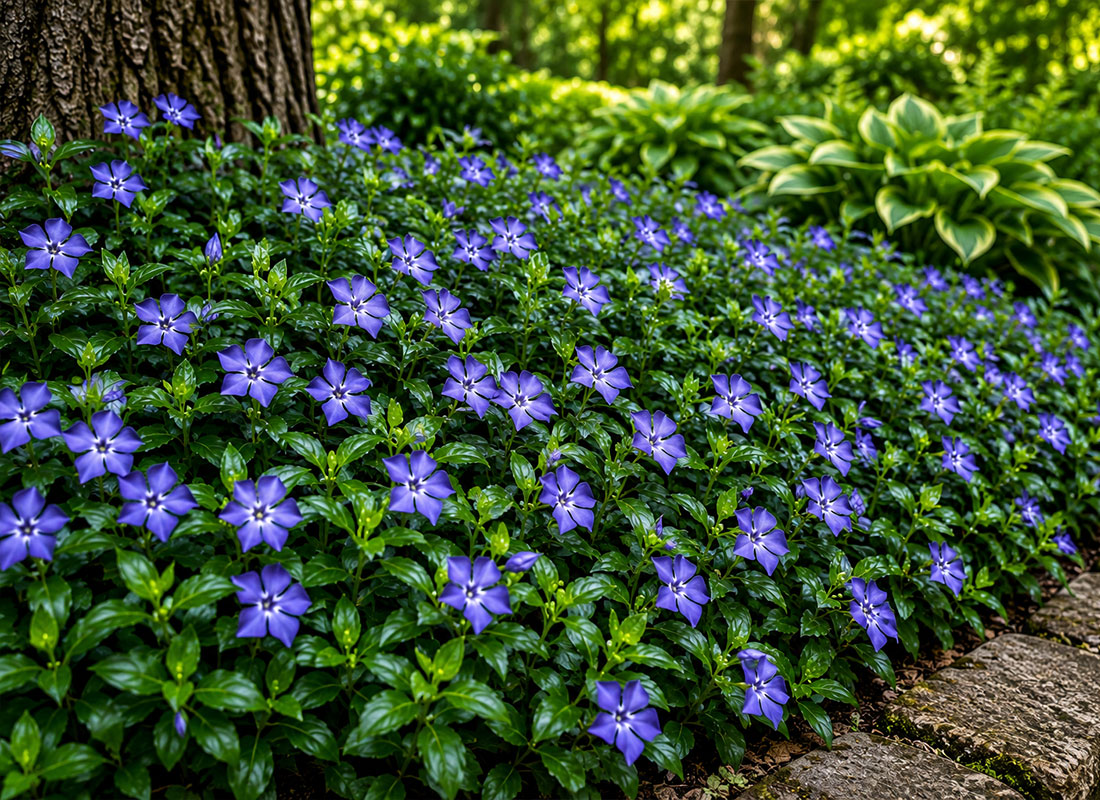
Vinca (Periwinkle)
Vinca, also commonly called periwinkle (especially Vinca minor), is one of the most popular groundcover plants for gardens, landscapes, and even difficult shady spots where few other plants thrive. Evergreen, resilient, low‑maintenance, and attractive — this plant does a lot more than just fill a space.
In this comprehensive guide, we’ll explore:
- What makes Vinca a great landscape plant
- Growth habits, flowers, and foliage
- Why it’s deer and rabbit resistant
- How and where to plant it
- Care tips and common problems
- Landscape design ideas
- Variations and cultivars worth trying
Meet Vinca (Periwinkle): The Evergreen Groundcover That Wows
Vinca is a hardy evergreen perennial groundcover in the Apocynaceae family. It’s most commonly sold and planted as Vinca minor — a low‑growing plant with glossy dark or variegated green leaves dotted with star‑shaped blooms in shades of blue, violet, or even white.
At maturity, most varieties stay only about 4–6 inches tall but can spread a foot or more wide as the stems root into the soil wherever they touch. That makes them ideal for blanketing shady slopes, borders, and under trees where grass won't grow.
Key Features:
- Evergreen foliage year-round
- Daisy-like flowers in spring and sometimes again later
- Creeping, mat-forming habit
- Tolerates shade and dry soil once established
Why People Love Vinca: Beauty and Performance in One
Evergreen All Year
Unlike many groundcovers that die back in winter, Vinca keeps its leaves year-round, adding continuous green to the landscape even in snowy or cold conditions.
This evergreen character makes it especially valuable in gardens where winter interest matters — under evergreen shrubs, beside walkways, or against foundation plantings.
Charming Flowers in Spring and Beyond
In spring, Vinca produces star-shaped flowers that range from sky-blue to violet or purple — a subtle but lovely contrast to its deep green leaves.
Some varieties bloom again in summer or fall, while others maintain foliage interest even when flowers are not present.
Excellent for Tough Spots
Many gardeners rely on Vinca to fill spots where grass fails, including:
- Under trees
- Shady slopes
- Dry shady corners
- Along walkways
- Eroding banks
Once established, its trailing stems form a dense mat that suppresses weeds and slows soil loss during rains.
Beautiful and Deer & Rabbit Resistant
One of the biggest selling points — and often the reason gardeners choose it over other groundcovers — is that Vinca minor is generally resistant to both deer and rabbits.
Animals typically avoid eating Vinca because:
- The leaves can have a subtle bitter taste
- The plant contains compounds that are unappealing to critters
- Dense foliage makes grazing harder than on other low plants
While nothing is 100% deer/rabbit proof — especially if food is scarce — Vinca is widely rated as very resistant compared to typical garden plants.
If your deer or rabbits regularly ravage your gardening efforts, Vinca can be a reliable solution for groundcover.
How to Plant and Grow Vinca
Right Environment
Vinca is adaptable. It will grow in:
- Full sun (cooler climates)
- Partial shade
- Full shade (especially in hot climates)
- Tip: While sun helps blooms, too much hot mid-day sun can scorch leaves, so partial shade can be ideal in warm regions.
Soil Preferences
Vinca is not picky, but it prefers:
- Well-drained soil
- Slightly acidic to neutral
- Tolerant of dry conditions after establishment
Once roots take hold, you won’t need much supplemental care beyond occasional watering during long droughts.
Planting Tips
- Space plants about 12–18 inches apart for a quick mat.
- Mulch lightly until established to keep weeds down.
- Water thoroughly after planting and reduce frequency after roots spread.
Within a single season, you’ll often see a lush, almost weed-free carpet forming as stems spread and root.
Care Tips for Success
Watering
- Water when new growth appears
- After establishment, water only in extended dry spells
Unlike many perennials, Vinca doesn’t need frequent irrigation — too much water can actually encourage problems like root rot.
Pruning & Maintenance
- Trim back any overgrowth in early spring to keep edges neat
- If it gets too aggressive, its stems can easily be pulled or cut back
- Vinca will root wherever stems touch the soil, which is how it spreads — but also how you can relocate pieces to fill other areas
Common Pests & Problems
Vinca is generally low-maintenance, but the most common issues are:
- Overgrowth beyond your intended area (it may spread into unwanted spots)
- Stem blights or rot in overly wet soils
- Leaf scorch in very hot, sunny locations
- Rare insect pests, typically minor and manageable
Regular pruning and good drainage prevent most problems.
Garden Design Ideas With Vinca
Vinca isn’t just functional — it can enhance garden beauty when used creatively:
Under Shade Trees
Instead of struggling to grow grass under tree shade, use Vinca to create a carpet of green that blooms each spring.
Woodland Garden Floor
In naturalistic or woodland-themed gardens, plant Vinca among ferns, hostas, and shade bulbs to mimic forest undergrowth.
Edging and Path Borders
Vinca works beautifully along walkways, patio edges, or borders — softening hard lines while preventing weeds.
Combined Plantings
Use Vinca as a groundcover beneath taller shrubs (like azaleas or rhododendrons) to fill negative space and add continuity.
Cultivars and Variety Highlights
While Vinca minor is the classic choice, there are lovely variants:
‘Bowles’ Periwinkle
- Rich blue flowers
- Glossy evergreen leaves
- Excellent spread
- Deer and rabbit resistant
‘Atropurpurea’ Purple Periwinkle
- Deeper purple blossoms
- Shade-tolerant
- Butterfly-friendly and critter-resistant
Variegated Forms
Some have green and cream leaves that brighten shady spots beautifully.
Other cultivars offer larger flowers, more compact growth, or slightly different foliage colors — giving you plenty of design flexibility.
Final Thoughts: Why Vinca Is Worth Planting
Vinca (Periwinkle) earns its reputation because it delivers beauty, toughness, and reliability in a single plant.
Whether you’re dealing with shade, hungry deer, weeds, dry soil, or a slope that won’t hold grass — this evergreen groundcover gives you green coverage year-round and blossoms in spring with minimal fuss.
Its combination of resilience, low maintenance, and ornamental charm makes it a favorite for both beginner and experienced gardeners.
Quick Summary
| Feature | Vinca (Periwinkle) |
|---|---|
| Evergreen | Yes |
| Flower Color | Blue, Violet, Purple, White |
| Deer Resistant | Yes |
| Rabbit Resistant | Yes |
| Sun/Shade | Tolerates Full Shade to Partial Sun |
| Soil | Well-Drained, Tolerates Dry |
| Maintenance | Low |
If you want a plant that adds beauty but doesn’t demand constant care, thrives in shade, and stands up to deer and rabbits — then Vinca periwinkle is absolutely worth adding to your garden.