
Viburnum — Korean Spice & tomentosum
Whether you’re a seasoned gardener or just starting to explore ornamental shrubs, few plants captivate the senses quite like the Korean Spice Viburnum. Renowned for its intoxicating fragrance, beautiful blooms, and multi-season interest, this viburnum stands as a garden classic. Its attractive flowers, foliage, fall color, and wildlife value make it a versatile addition to many landscapes.
1. What Is Viburnum? An Overview
The genus Viburnum includes over 150 species of shrubs and small trees belonging to the Adoxaceae family. Most are deciduous, while some are evergreen, and they are valued for showy flowers, attractive foliage, seasonal color, and ornamental fruit.
One particularly beloved species is Viburnum carlesii, commonly called Korean Spice Viburnum. It is a deciduous shrub prized for its highly fragrant spring flowers. Viburnum tomentosum is another attractive species, although the term “Korean Spice” generally refers to V. carlesii and its cultivars.
2. Origins & Botanical Identity
Native Habitat
Viburnum carlesii originates from Korea and Japan (Tsushima Island). It thrives in temperate climates where winter chill and spring warmth alternate, creating favorable conditions for abundant flowering.
Taxonomy
- Genus: Viburnum
- Species: V. carlesii
- Family: Adoxaceae
- Common Name: Korean Spice Viburnum
- Height: Typically 4–8 ft at maturity
- Spread: Similar width, forming a rounded shrub
- Growth Habit: Upright, dense, and multi-stemmed
3. What Makes Korean Spice Special? The Flowers & Fragrance
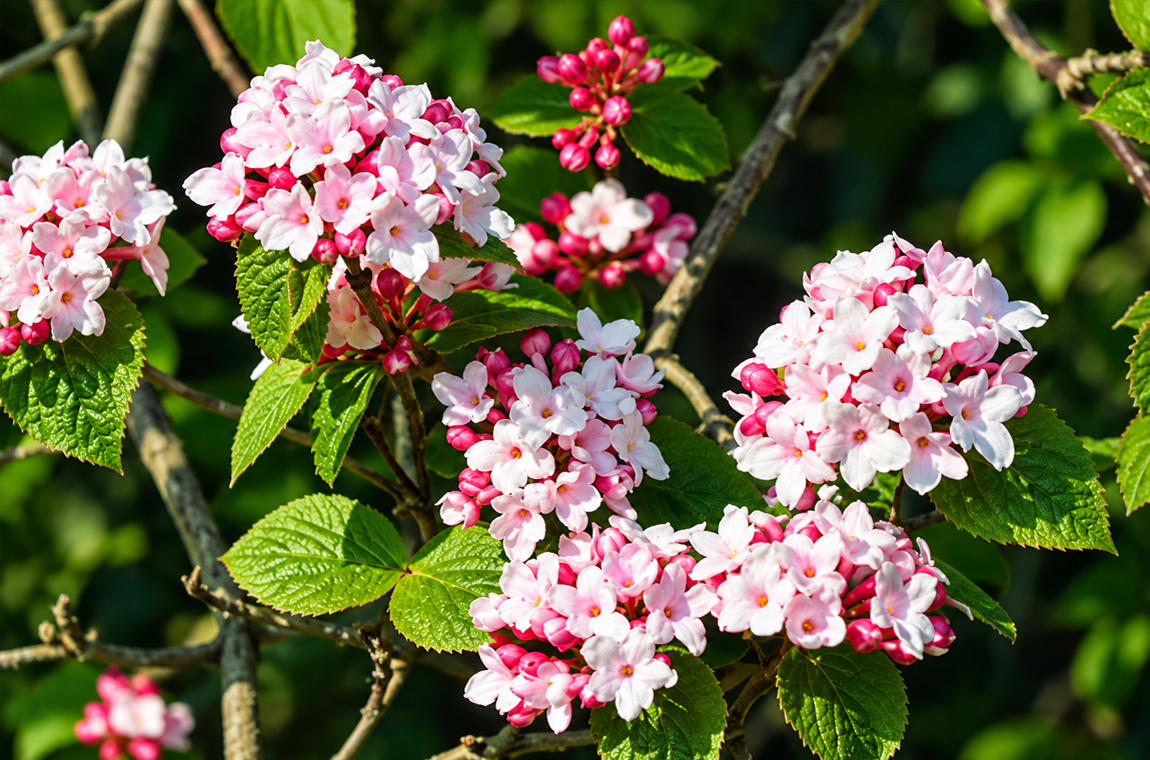
The hallmark of Korean Spice Viburnum is its fragrance. In spring, clusters of pinkish buds open into creamy white-to-pale pink flowers with a sweet, spicy aroma often compared to cloves or perfume.
Gardeners frequently plant these viburnums near patios, windows, entryways, or walkways so the fragrance can be enjoyed easily.
Flower Features
- Clusters form rounded, snowball-like inflorescences
- Buds begin reddish or pink and fade to white
- Fragrance is strongest on warm spring days
- Blooms typically last 2–4 weeks
The flowers also attract bees and butterflies, making the plant valuable for supporting pollinators and enhancing garden biodiversity.
4. Foliage & Seasonal Interest
Korean Spice Viburnum offers beauty beyond its spring flowers.
Spring & Summer
After flowering, dark green leaves provide rich structure throughout the growing season.
Fall
As summer fades, the foliage changes to wine-red and burgundy tones, creating a dramatic autumn display. This gives the plant interest across three seasons: fragrance in spring, structure in summer, and color in fall.
Fruit
Small red fruits appear later in the year and mature into dark bluish-black berries that can attract birds.
5. Varieties & Cultivars
Several cultivars provide differences in size, flowering, and seasonal color.
‘Aurora’
A larger shrub reaching approximately 6–8 ft, with deep pink buds that open into pinkish-white, fragrant blooms.
‘Compactum’
A smaller form reaching approximately 3–4 ft, making it suitable for smaller spaces.
Spice Island™
A compact, rounded cultivar with early blooms and dark green foliage that develops deep wine-red fall color.
‘Sugar N’ Spice™’
A 4–5 ft shrub valued for its intense fall color and suitability for hedges.
These options allow gardeners to select a Korean Spice Viburnum that fits their landscape requirements.
6. Planting & Growing Tips
Site Selection
Korean Spice Viburnum performs well in full sun to partial shade. More sunlight generally encourages heavier flowering, while afternoon shade can be beneficial in hotter climates.
Soil & Watering
- Prefers well-drained soil
- Slightly acidic to neutral soil encourages healthy growth
- Avoid soggy sites
- Water regularly during establishment
Climate & Hardiness
It is generally suitable for USDA Zones 4–7, although some cultivars can tolerate warmer regions. With adequate moisture, it can handle both cold winters and warm summers.
Pruning
Prune immediately after flowering to avoid removing next year's flower buds while maintaining the desired shape.
7. Landscape Uses & Design Ideas
Specimen Plant
Place it near entrances, patios, or focal points where its flowers and fragrance can be appreciated.
Hedge or Screen
A row of plants can form a fragrant hedge that provides spring flowers and structure throughout the rest of the year.
Mixed Borders
Combine it with salvia, daylilies, ornamental grasses, or other shrubs for seasonal color and textural contrast.
Wildlife Gardens
Its flowers provide nectar for pollinators, while its berries can attract birds.
8. Pests & Challenges
Korean Spice Viburnum is generally low-maintenance, though occasional problems can include:
- Viburnum crown borers — may weaken stems
- Leaf spots or mildew — more likely in wet conditions
- Deer and rabbits — generally resistant, although young plants may occasionally be browsed
Good air circulation, proper spacing, and suitable growing conditions can help reduce pest and disease issues.
Culinary & Cultural Notes
Despite the word “spice” in its common name, Korean Spice Viburnum is not generally grown as a culinary herb. The name refers to the spicy fragrance of its flowers rather than culinary use. While some viburnum species have traditional uses in folk medicine or cultural symbolism in East Asia, V. carlesii is primarily an ornamental plant.
9. Viburnum tomentosum — How It Relates
Viburnum tomentosum is another fragrant viburnum species with attractive flowers and foliage. It is less commonly grown than Korean Spice Viburnum but shares many similar cultivation preferences and aesthetic qualities. Both can be included in mixed shrub plantings to create diversity and seasonal interest.
10. Final Thoughts — Why Gardeners Love Viburnum
What makes Korean Spice Viburnum special is the full sensory experience it provides:
- Fragrant spring blooms
- Elegant summer foliage
- Stunning fall color
- Wildlife attraction
In landscapes large and small, this viburnum continues to captivate gardeners year after year. Its fragrance, seasonal beauty, and versatility make it a worthy addition to almost any garden palette.