
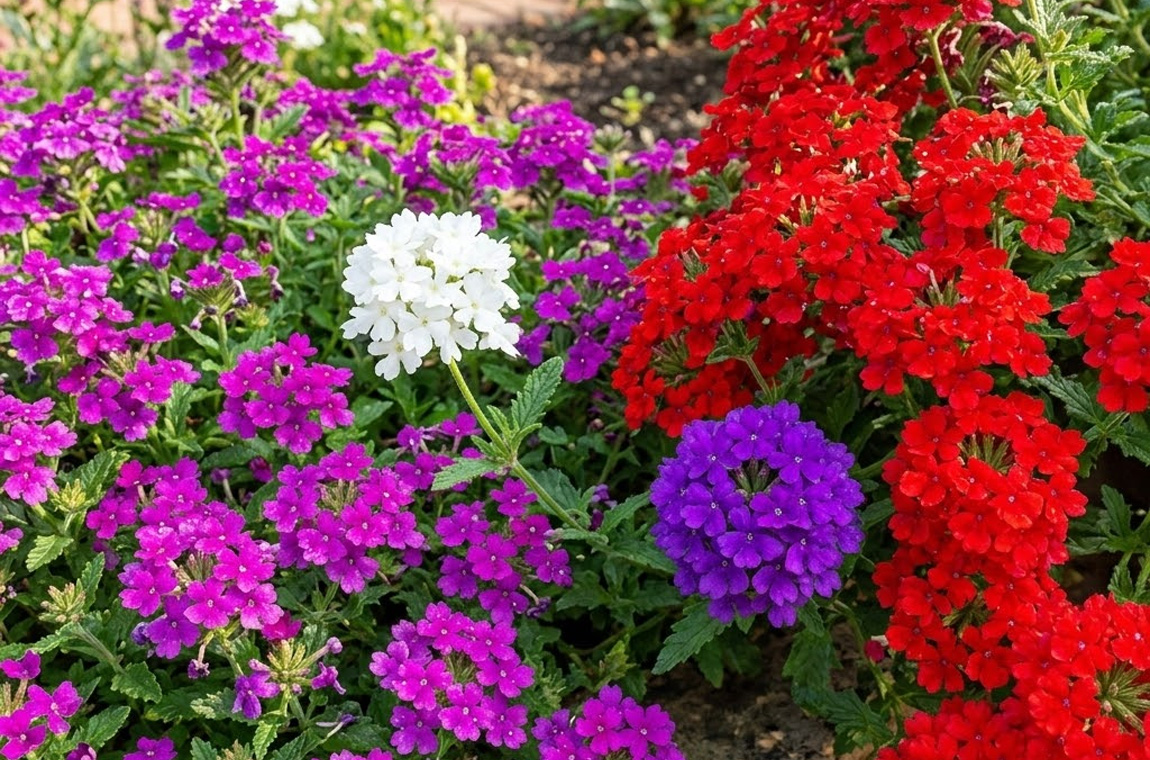
Verbena
Verbena is a versatile, low-maintenance flowering plant beloved by gardeners for its long-lasting blooms, bright colors, and ability to attract pollinators. From trailing varieties perfect for containers and hanging baskets to upright types ideal for borders, verbena offers something for every garden design. This guide explores purple, white, and other popular varieties, care instructions, planting tips, and design ideas to help you make the most of this cheerful perennial.
What Is Verbena?
Verbena is a genus of flowering plants in the family Verbenaceae, encompassing both annual and perennial varieties. Known for clusters of small, vivid flowers, verbena thrives in sunny, well-drained locations. Its blooms come in shades of purple, white, pink, red, and bi-color, offering endless combinations for gardeners.
Some common verbena species include:
- Verbena bonariensis – tall, airy, purple flowers.
- Verbena canadensis – low-growing, trailing types in red, purple, or pink.
- Verbena x hybrida – hybrid garden verbenas with large flower clusters in multiple colors.
Popular Verbena Varieties
Purple Verbena
Purple verbena adds a rich, jewel-toned hue to any garden bed or container. It works well for creating cool-color schemes alongside blues and whites. Varieties include:
- ‘Homestead Purple’ – compact, long-blooming clusters perfect for borders.
- Verbena bonariensis – tall, airy stems with vibrant purple flowers, great for pollinators.
White Verbena
White verbena provides classic, clean contrast in mixed beds and hanging baskets. Ideal for brightening shady corners or pairing with darker colors. Popular choices include:
- ‘White Cascade’ – trailing variety, perfect for hanging baskets.
- Verbena x hybrida ‘Silver White’ – mound-forming and compact with crisp white blooms.
Other Colors
Verbena comes in a rainbow of colors, allowing gardeners to mix and match for bold designs:
- Pink: soft romantic hues for cottage gardens.
- Red: fiery tones for striking visual impact.
- Bi-color varieties: combinations like purple-white or pink-red for unique accents.
Why Grow Verbena?
Verbena is a gardener’s favorite because it offers numerous advantages:
- Long Blooming Season – Typically flowers from spring until frost.
- Attracts Pollinators – Bees, butterflies, and hummingbirds love verbena.
- Versatile Growth Habits – Upright for beds, trailing for containers and baskets.
- Drought Tolerant – Once established, verbena withstands dry conditions.
- Pest and Disease Resistance – Most modern hybrids resist mildew and rot.
Planting Verbena
Light
Verbena thrives in full sun (6+ hours daily). Sufficient sunlight ensures dense foliage and continuous blooms.
Soil
Prefers well-drained soil. Adding organic matter improves fertility but ensure it doesn’t retain excessive moisture.
Watering
- Newly planted: Water regularly to establish roots.
- Established plants: Moderate drought-tolerance; water only when soil dries.
Hardiness
- Tender perennials: Typically grown as annuals in zones below 9.
- Hardy varieties: In warmer zones, some verbena types return year after year.
Care & Maintenance
1. Deadheading
Remove spent flowers to encourage reblooming.
2. Pruning
Trim plants back mid-season to refresh growth and maintain shape.
3. Fertilizing
Use a slow-release or liquid fertilizer during the growing season.
4. Pest Management
Monitor for aphids or spider mites; treat with insecticidal soap if needed.
Attracting Pollinators
Verbena’s nectar-rich flowers are highly attractive to pollinators:
- Butterflies: Swallowtails, monarchs, and painted ladies frequent verbena.
- Bees: Honeybees and native bees benefit from continuous blooms.
- Hummingbirds: Particularly drawn to red or magenta varieties.
Including verbena in your garden boosts biodiversity and pollination, making it both beautiful and ecologically valuable.
Design Ideas with Verbena
Borders & Flower Beds
Plant upright varieties like Verbena bonariensis at the back of borders for height and color. Combine with lavender, salvia, or ornamental grasses for contrast.
Containers & Hanging Baskets
Trailing types, such as ‘White Cascade’, are perfect for containers. They spill over edges, creating a lush, flowing effect.
Rock Gardens
Compact varieties fit well into rock gardens, adding seasonal color without overwhelming small spaces.
Mixed Color Schemes
Combine purple, white, and pink verbena in mass plantings for a dynamic and colorful display. Use contrasting foliage plants like silver-leaf santolina or dusty miller to enhance the effect.
Companion Plants
Verbena pairs well with a variety of other garden plants:
| Companion Plant | Why It Works |
|---|---|
| Petunias | Similar water needs and trailing habit |
| Marigolds | Bright contrasting colors |
| Salvia | Vertical texture, similar bloom season |
| Ornamental grasses | Soft movement contrasts structured blooms |
| Lavender | Provides fragrance and silvery foliage |
Common Problems and Solutions
1. Powdery Mildew
Ensure proper air circulation and avoid overhead watering.
2. Root Rot
Plant in well-drained soil to prevent waterlogging.
3. Leggy Growth
Prune mid-season and deadhead to encourage compact, bushy growth.
4. Pests
Aphids, spider mites, and whiteflies occasionally attack; use insecticidal soap if needed.
Seasonal Care Guide
Spring
Start planting after frost; fertilize newly planted annuals.
Summer
Deadhead regularly; water deeply during dry spells.
Fall
Enjoy the last blooms; trim back faded plants.
Winter
Tender varieties die back; collect seeds for propagation next season.
Propagation Tips
Verbena can be propagated by:
- Seeds: Sow indoors 8–10 weeks before last frost.
- Cuttings: Take softwood cuttings in spring or summer; root in moist soil.
- Division: Some perennial types can be divided in spring.
Why Verbena Belongs in Your Garden
Verbena is long-blooming, low-maintenance, and ecologically beneficial. It suits containers, borders, rock gardens, and pollinator gardens. With its vibrant color options, including purple and white, it adds season-long interest and visual appeal.
- Easy to grow in sun with minimal watering.
- Supports pollinators like bees, butterflies, and hummingbirds.
- Provides versatile design options for every garden style.
Whether you choose deep purple blooms to create a rich, moody garden palette or white cascading flowers for brightness, verbena is a must-have perennial or annual for any sunny garden space.