
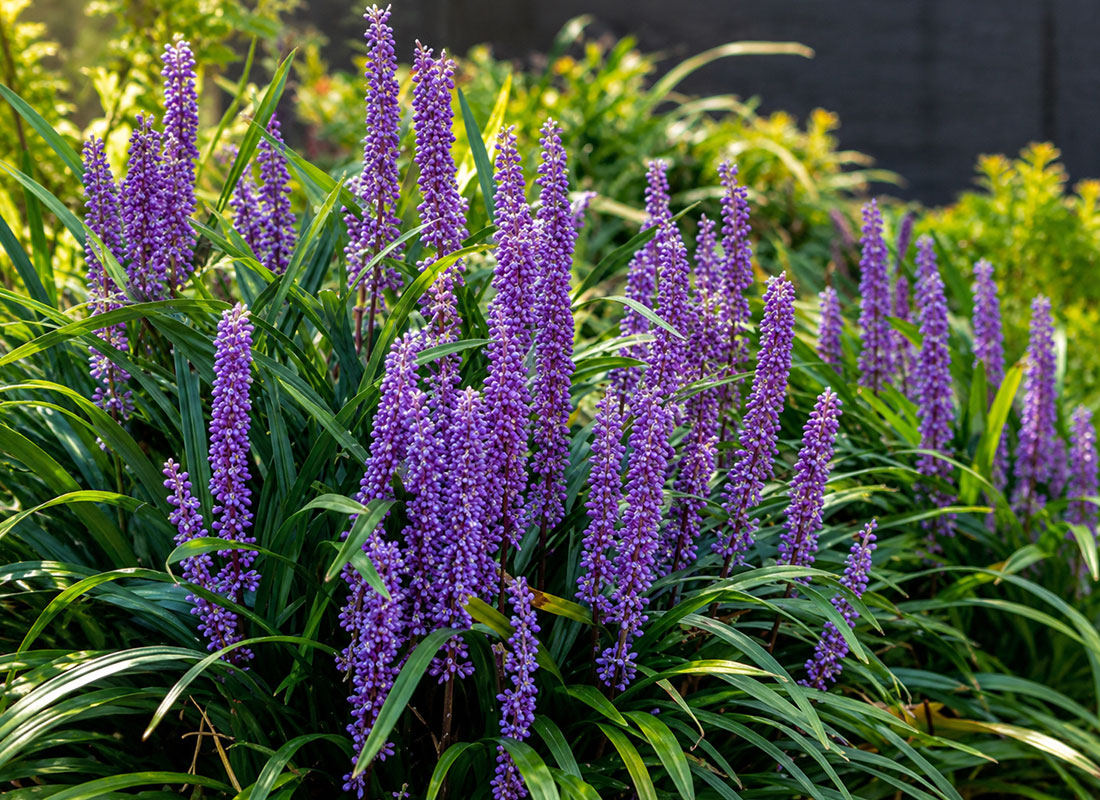
Variegated Liriope
Variegated Liriope (often Liriope muscari ‘Variegata’) is a perennial ornamental grass-like plant prized in landscaping for its striped cream or yellow‑edged foliage, modest flowers, and dependable performance in shade to part sun. Its evergreen habit (in many regions) and tolerance of tough conditions make it a favorite for borders, mass plantings, groundcover, and low‑maintenance gardens.
Variegated Liriope isn’t just good‑looking — it’s also known for being relatively resistant to deer compared with many other ornamentals, which makes it a valuable option for gardeners in areas with high deer pressure.
Origins & Botanical Background
Liriope is native to East Asia, including China, Japan, and Korea, and belongs to the Asparagaceae family. There are several species and cultivars, but “variegated” types are typically Liriope muscari selected for their beautifully striped leaves.
While the plain green varieties are common, the variegated forms—with creamy margins and green centers—add light, texture, and visual contrast in shady garden spaces where color can be hard to find.
Look & Growth Habit
Variegated Liriope forms tight clumps of arching, blade‑like leaves typically 12–18″ tall (sometimes up to 24″) with a spreading habit that can reach 18–24″ wide. In late summer to early fall, it produces short flower spikes of small lavender or lilac blooms that rise above the foliage.
The variegation brings brightness to shady beds — the light tones contrast beautifully with deep green evergreens, dark mulch, or the soft tones of hostas and ferns.
Deer Resistance — What You Should Know
One of the reasons variegated Liriope shows up in many landscape designs is its reputation for deer resistance. While no plant is completely deer‑proof, Liriope’s texture, taste, and chemical makeup generally make it less appealing to deer compared with tender leafy plants, roses, hostas, or many annual flowers.
Why Liriope Tends To Be Deer‑Resistant:
- Tough, fibrous leaves that aren’t palatable.
- Low nutrient appeal — deer tend to avoid plants they don’t find tasty.
- Textural deterrent — coarse foliage can feel unappetizing compared with tender greens.
That said, deer feeding habits can vary by region and season. In areas where food is scarce (e.g., deep winter), even typically “resistant” plants might be nibbled. Yet in most suburban and natural landscapes, gardeners report significantly less deer damage with liriope compared with many alternatives.
Light & Growing Conditions
Variegated Liriope is versatile — it performs well in a range of light conditions from partial shade to morning sun.
- Full shade – foliage stays bright and variegation shows well.
- Partial sun – often where liriope shines best; durable foliage and robust growth.
- Full sun (hot afternoons) – can work, especially with adequate moisture and mulching, but leaves may scorch in extreme heat.
It’s a great choice under trees, along shady paths, near foundation plantings, or in areas where other plants struggle.
Soil, Watering & Hardiness
- Soil: Well‑drained soils are ideal. Liriope tolerates clay, loam, sand, and acidic soils.
- Watering: Moderate water needs; establish with consistent moisture then taper.
- USDA Hardiness: Generally hardy in zones 5–10, though this varies with cultivar and winter severity.
Its tough adaptability contributes to its popularity as a low‑maintenance ornamental.
Planting Tips
Whether you’re planting a border, groundcover, or accenting a walkway, here’s how to get the best results:
Choose the Right Spot
- Avoid heavy shade that can make plants thin and leggy.
- Steer clear of hot, reflective southern walls without afternoon shade.
- Variegation shows best where there’s a mix of light and shadow.
Soil Prep
- Loosen soil and amend with compost or organic matter to improve drainage.
- Keep soil slightly moist but never soggy.
Spacing
- Space plants 8–12″ apart for a dense groundcover look.
- You can tighten spacing for a “carpet” effect or space farther for individual clumps.
Timing
- Spring or early fall are ideal planting times.
- Fall planting lets roots establish before winter.
Blooming & Seasonal Interest
While foliage steals the show, don’t miss the flowers! In many climates, variegated liriope puts up lilac‑purple flower spikes in late summer or early autumn. The blooms add vertical interest and can attract pollinators such as bees.
After flowering, old seed spikes can be removed for a tidier look, but some gardeners leave them for architectural texture in winter.
Fall & Winter Care
In milder climates, liriope remains evergreen — meaning you get year‑round color and structure in the garden. In colder regions, older leaves may brown. A late winter or early spring cleanup (removing dead foliage before new growth) helps maintain a fresh appearance.
Mulching around the base also:
- Protects roots in freeze/thaw cycles.
- Helps conserve moisture.
- Reduces weed competition.
Pests & Diseases
Overall, variegated Liriope is low‑maintenance, but here are a few things to watch for:
Common Issues
- Slugs & snails – may nibble tender shoots.
- Scale insects – occasionally on stressed plants.
- Leaf spot (fungal) – in overly wet, poorly drained soil.
Prevention & Care
- Good air circulation.
- Avoid overhead watering.
- Remove diseased leaves promptly.
- Use slug traps if needed.
Landscaping Uses & Design Ideas
Variegated liriope is surprisingly versatile. Here are some creative ways to use it:
1. Walkway Edging
A classic use — the striped foliage frames paths beautifully and stands up to foot traffic.
2. Foundation Planting
Use it to soften foundation walls or blend with larger shrubs.
3. Under Trees / Shade Gardens
Pairs well with hostas, ferns, heuchera, and shade‑loving perennials.
4. Mass Plantings / Groundcover
Create flowing swaths of variegated texture that brighten shady beds.
5. Mixed Borders
Combine with bold foliage plants to create contrast.
Pairings That Pop
Variegated liriope mixes well with a range of plants:
- Hostas – deep greens and blue tones.
- Heucheras – bold foliage colors.
- Ferns – soft texture contrast.
- Astilbes – feathery flowers and shade tolerance.
- Daylilies – complementary grassy texture.
These combinations can create dynamic shade gardens full of interest year‑round.
Why Choose Variegated Liriope?
Let’s sum up what makes this plant a landscape favorite:
Benefits
Adds color and texture in shade
Deer‑resistant tendency
Low maintenance
Long‑lasting foliage
Good for borders, edges, and mass plantings
Works in a range of conditions
Considerations
- Not completely deer‑proof in heavy browsing areas.
- Can spread over time — best in beds where this is welcome.
FAQs About Variegated Liriope
Q: Does variegated liriope grow in full sun?
A: Yes — especially morning sun or dappled light. In hot afternoon sun, keep soil a bit cooler with mulch and water.
Q: How fast does it spread?
A: Moderately — it spreads via short rhizomes. Dense plantings will fill in faster.
Q: How do I propagate it?
A: Best by division in early spring or fall. Simply dig clumps, divide into smaller sections, and replant.
Q: Will deer ever eat it?
A: In normal conditions, deer usually avoid it. But in extreme food shortage, they may nibble any plant.
Q: Should I cut it back?
A: Cut back in late winter / early spring before new growth for a fresh look.
Conclusion
Variegated Liriope is a wonderful choice for gardeners seeking:
- A low‑maintenance ornamental
- Visual interest in shady parts of the garden
- A plant that deer tend to leave alone
- Year‑round structure and texture
With its elegant stripes, versatile uses, and reliable performance, this charming plant deserves a place in many landscapes — particularly where deer love to roam and nibble.