
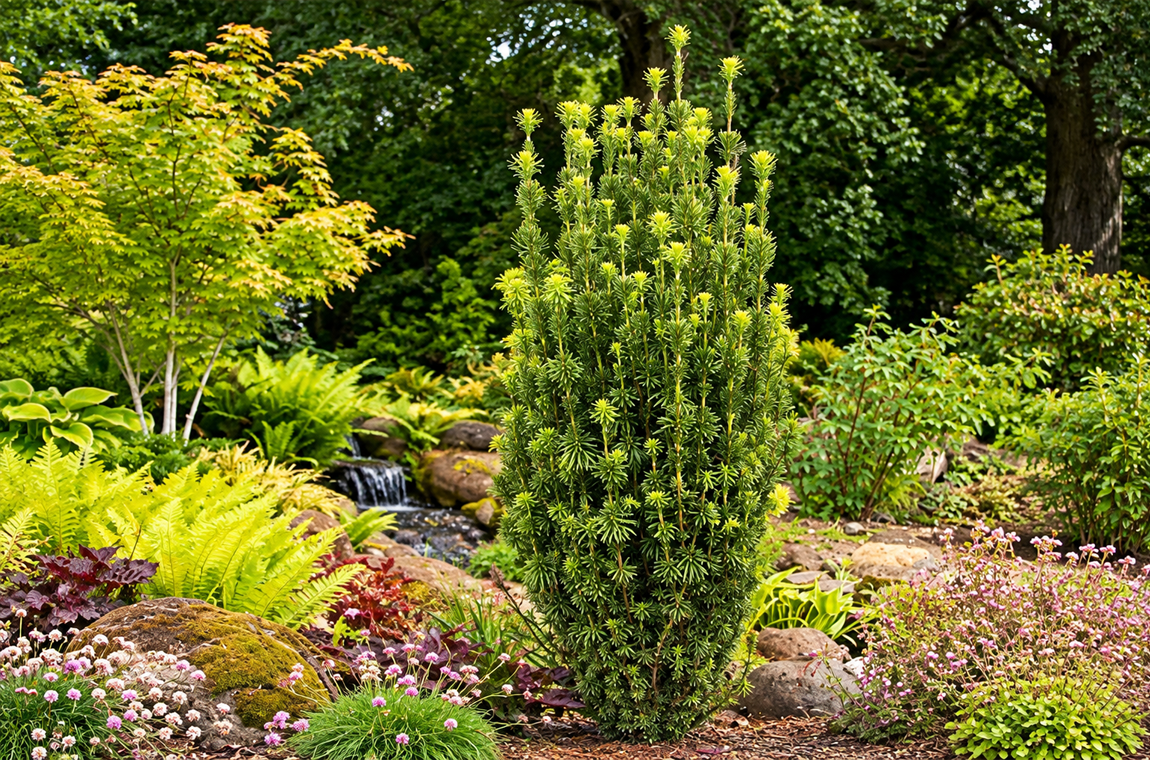
Upright Japanese Plum Yew (Cephalotaxus harringtonia ‘Fastigiata’)
The Upright Japanese Plum Yew (Cephalotaxus harringtonia ‘Fastigiata’) is an outstanding evergreen shrub prized for its vertical form, soft needle-like foliage, and effortless beauty in garden landscapes. With year-round greenery and a slow, columnar habit, it is a favorite for designers and homeowners alike.
What Is the Japanese Plum Yew?
The Upright Japanese Plum Yew is a cultivar of Cephalotaxus harringtonia, an evergreen conifer native to woodland areas of Japan, China, and Korea. It is not a true yew (Taxus), but its foliage resembles that of yews, which is why many gardeners refer to it as a yew.
The cultivar ‘Fastigiata’ stands out for its narrow, upright growth habit, making it ideal where space is limited or where vertical structure is desired.
Key Features & Characteristics
Growth Habit
- Upright, narrow form: Grows tall without spreading widely, making it excellent for tight spaces and vertical accents.
- Slow to moderate growth: Develops gradually over time without rapid size increases.
- Dense foliage: Provides year-round interest in borders, hedges, or mixed beds.
Foliage
- Evergreen: Retains its fine, needle-like foliage throughout the year.
- Soft texture: The needles are softer and slightly wider than those of some traditional yews.
- Deep green color: Its consistent dark green foliage enhances structure in winter gardens.
Hardiness & Tolerance
- USDA Zones 6–9: Performs well in a range of climates.
- Shade tolerant: Thrives in shaded areas where other evergreens may struggle.
- Heat tolerant once established: Can withstand warmer conditions once established.
- Deer resistance: Deer typically avoid this plant, making it useful in wildlife-heavy areas.
Mature Size
Typical plants reach approximately 8–10 feet in height and 3–6 feet in width, although size can vary depending on growing conditions. Its narrow profile makes it suitable for screens, accents, and foundation plantings without overpowering surrounding elements.
Planting & Growing Tips
Choosing the Right Site
Light: Prefers partial shade but can tolerate full sun, particularly in cooler climates.
Soil: Requires well-drained soil and should not be planted in poorly drained or waterlogged areas.
Protection: Performs best when protected from strong winter winds.
Planting Steps
- Dig a hole twice the width and equal depth of the root ball.
- Amend the soil with compost to improve drainage and encourage root growth.
- Place the plant with the top of the root ball level with the surrounding soil.
- Backfill gently and water thoroughly to settle the roots.
- Mulch around the base to retain moisture and regulate soil temperature.
Watering & Maintenance
Water regularly during the first year while the plant becomes established. Once established, it can tolerate moderate drought. Pruning is generally minimal, although light shaping in early spring can help maintain its form. An annual application of balanced fertilizer can support healthy growth.
Landscape Design Ideas
Narrow Garden Borders: Its tall, columnar shape makes it perfect for tight garden borders and narrow foundation spaces, providing vertical interest without crowding nearby plants.
Hedges & Screens: Several plants can be grouped together to create a dense evergreen screen for privacy or to separate different garden areas. It is particularly useful in shaded locations where traditional hedges may struggle.
Accent Plant: One or two specimens can create a focal point in a feature bed. Its fine needle texture contrasts beautifully with broadleaf perennials and flowering shrubs.
Container Gardens: Smaller specimens can be planted in large containers to add height and structure to patios, courtyards, and terrace gardens.
Year-Round Interest: Its dark evergreen silhouette provides structure and depth during winter when deciduous plants lose their foliage.
Common Companion Plants
Hostas & ferns: Provide excellent texture and contrast in shady gardens.
Hydrangeas: Their soft blooms complement the evergreen foliage.
Heuchera (Coral Bells): Adds color around the base of the plant.
These combinations enhance the deep green backdrop while creating greater variety in color and texture.
Deer & Pest Considerations
The foliage is usually ignored by deer, reducing the need for protective fencing or deterrents. Pest problems are generally minimal, and Japanese Plum Yew is typically free from severe insect or disease pressure when planted in suitable conditions.
Frequently Asked Questions
Can Japanese Plum Yew be planted in full sun?
Yes. Although it prefers partial shade, the Upright Japanese Plum Yew can tolerate full sun, particularly in cooler climates.
How fast does it grow?
It has a slow to moderate growth rate and develops its upright habit gradually over 5–10 years without vigorous spreading.
Does it need pruning?
Not necessarily. Light pruning in early spring can be used to shape the plant or control its height.
Can it be used as a standalone tree?
Yes. It can be trained into a small tree form or maintained as a multi-stem shrub, offering flexibility in landscape design.
The Upright Japanese Plum Yew (Cephalotaxus harringtonia ‘Fastigiata’) is a timeless landscape plant that brings elegance, versatility, and year-round beauty to almost any garden. Whether used as a screen, focal point, or part of a mixed landscape, its upright form and refined texture make it a standout choice for gardeners seeking low-maintenance evergreen structure.