
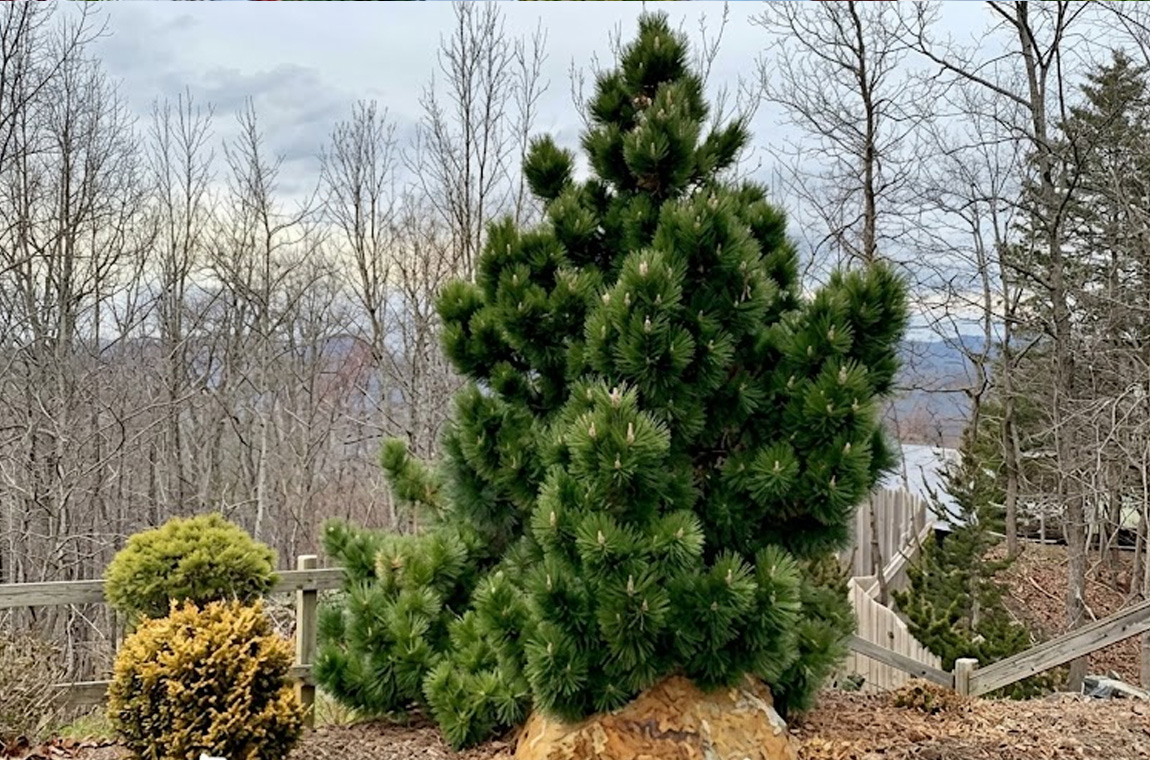
Thunderhead Pine
The Thunderhead Pine, formally known as Pinus thunbergii ‘Thunderhead’, is an ornamental evergreen prized for its dramatic cloud-like form, deep green needles, and silvery-white spring candles. Its sculptural shape provides year-round structure and visual interest in landscapes ranging from compact gardens to larger estates.
What Is the Thunderhead Pine?
Thunderhead Pine is a compact cultivar of Japanese Black Pine (Pinus thunbergii). While the species can reach 60–80 feet, ‘Thunderhead’ was selected for its smaller, garden-friendly proportions.
The cultivar is recognized for:
- Dense, deep green needles arranged in pairs.
- Silver-white new growth or “candles” appearing in late winter and early spring.
- A rounded, billowy form resembling a frozen thundercloud.
Within approximately 10 years, it commonly reaches 6–10 feet tall and wide, although mature specimens can eventually grow larger.
A Brief History
Japanese Black Pine is native to coastal regions of Japan and South Korea, but ‘Thunderhead’ does not occur naturally in the wild. It was selected by horticulturists for its compact habit, dense foliage, and distinctive ornamental character.
The cultivar has become popular in both traditional and contemporary landscapes and has received the Royal Horticultural Society’s Award of Garden Merit.
Distinctive Features
Evergreen Foliage
The needles are deep, glossy green and remain on the tree year-round, providing dependable structure and color.
Silver-White Candles
One of its most striking seasonal features is the appearance of silvery-white candles in late winter and early spring. These new shoots create a dramatic contrast against the dark green foliage.
Billowy Form
As Thunderhead Pine matures, its branches develop rounded, cloud-like masses. Its irregular branching gives each specimen a distinctive sculptural appearance.
Size and Growth
The tree grows at a slow to moderate rate, generally reaching 6–10 feet in both height and spread during its first decade before gradually becoming larger.
Ideal Growing Conditions
Sunlight
Thunderhead Pine performs best in full sun, ideally receiving 6–8 hours of direct sunlight daily. Insufficient light can result in thinner foliage and weaker growth.
Soil
Use well-drained soil, as the roots do not tolerate prolonged waterlogging. It adapts to sandy, loamy, and slightly acidic soils when drainage is adequate.
Hardiness
Thunderhead Pine is generally hardy in USDA Zones 5–9.
Water
Young trees need regular watering while establishing. Once established, they become moderately drought tolerant.
Planting Guide
Choose the Right Site
Select an open, sunny location with good air circulation. Protection from excessive wind can be beneficial, particularly for young trees.
Prepare the Soil
Heavy or compacted soil should be improved to encourage drainage. Neutral to slightly acidic soil is generally suitable.
Planting Technique
Dig a hole approximately twice as wide as the root ball but no deeper. Position the tree with the root crown at or slightly above the soil surface.
Mulching & Watering
Apply a thin layer of mulch around the root zone while keeping it away from the trunk. Water deeply after planting to settle the soil and encourage root establishment.
Maintenance & Care
Pruning & Shaping
Thunderhead Pine usually requires little pruning. Light shaping in early spring or late fall can help maintain symmetry or emphasize its naturally sculptural form.
Seasonal Interest
The spring candles are an important ornamental feature and generally should be left intact unless damaged or poorly formed.
Pests & Diseases
Monitor for common conifer pests such as sawflies and adelgids, as well as fungal problems such as needle cast. Early attention can help protect foliage health.
Winter Protection
Young trees can benefit from mulch around the root zone and protection from drying winter winds, particularly during periods when the ground remains frozen.
Landscaping & Design Uses
Focal Point
Use Thunderhead Pine as a specimen tree in garden corners, entryways, or at the end of a pathway where its sculptural silhouette can stand out.
Container Planting
Smaller specimens can be grown in suitable containers on patios and courtyards, creating a striking evergreen centerpiece.
Companion Plantings
Pair it with dwarf shrubs, ornamental grasses, and flowering perennials to create layered combinations of contrasting textures and forms.
Coastal & Dry Landscapes
Its salt tolerance and drought resistance also make Thunderhead Pine useful for coastal gardens and xeriscape-style landscapes.
Thunderhead Pine in 2026 Garden Design
Thunderhead Pine continues to fit modern landscape trends because it can bridge traditional and contemporary garden styles. Its sculptural shape works particularly well in minimalist and naturalistic landscapes, while its compact form makes it useful for container artistry and curated conifer collections.
Most importantly, its year-round evergreen structure keeps gardens visually interesting even when surrounding plants are dormant.
Final Thoughts
The Thunderhead Pine is more than an ordinary evergreen. With its compact proportions, cloud-like silhouette, dark green foliage, and striking spring candles, it offers the character of a living sculpture.
With the right sunny location, well-drained soil, and basic care, this distinctive pine can become a long-lasting focal point in gardens, courtyards, coastal landscapes, and carefully designed conifer collections.