
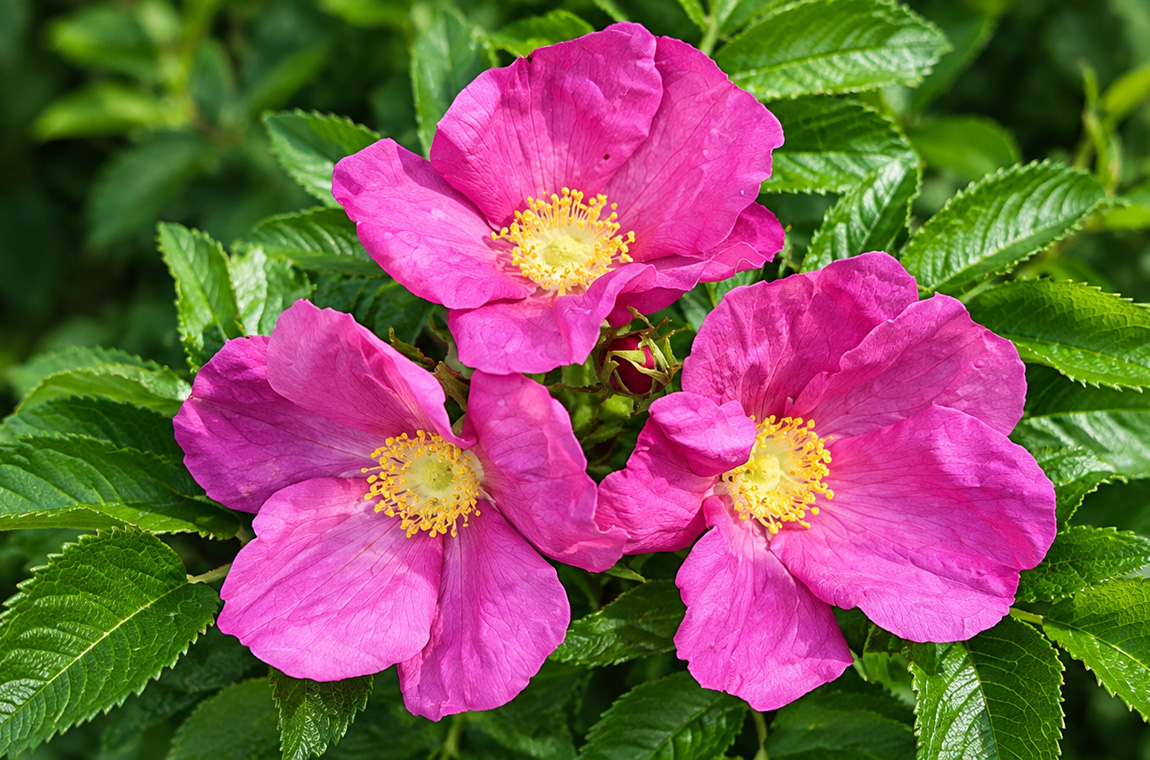
The Rugosa Pink Rose
When you think of roses, visions of delicate petals, rich fragrance, and classic garden elegance come to mind. Among the many varieties, the Rugosa Pink rose (Rosa rugosa) stands out for its hardiness, historical charm, and effortless beauty. Native to eastern Asia, this rose offers fragrance, flowers, attractive foliage, and wildlife value with relatively little maintenance.
A Rose with a Story
Rugosa roses are native to China, Japan, and Korea and were introduced to Europe in the 19th century. The species name rugosa refers to its deeply wrinkled leaves, which give the plant its distinctive textured appearance.
Why “Pink”?
Pink Rugosa varieties are admired for their soft rosy flowers, ranging from pale blush to warm pink. Their natural appearance works beautifully in both informal and structured gardens.
What Makes Rugosa Pink Special?
Unmatched Hardiness
Rugosa roses thrive in cold, windy climates where many other roses struggle. They are often hardy in USDA Zones 2–9, making them suitable for challenging northern landscapes.
Disease Resistance
Unlike many cultivated roses, Rugosa roses naturally resist common problems such as black spot and mildew, reducing the need for intensive maintenance.
Fragrance That Sings
The flowers offer a sweet, deep, classic rose fragrance that can linger throughout the garden.
Texture and Foliage
Thick, glossy, deeply wrinkled leaves provide strong texture and can develop bronze, burgundy, or purple tones in autumn.
Ornamental Hips
After flowering, Rugosa roses produce attractive red-orange hips that extend seasonal interest into fall and winter while providing food for birds.
Plant Profile
Scientific Name: Rosa rugosa
Common Name: Rugosa Pink Rose
Family: Rosaceae
Height & Spread: 3–6 feet tall with a similar spread
Flower Color: Soft to medium pink
Fragrance: Strong, classic rose scent
Bloom Time: Early summer to frost
USDA Hardiness: Zones 2–9
Sun: Full sun, 6+ hours daily
Soil: Well-drained; tolerates poor soil
Water: Moderate
How to Grow and Care for Rugosa Pink
Sunlight
Plant Rugosa Pink in a location receiving at least six hours of direct sunlight. Although it tolerates some partial shade, full sun encourages the strongest flowering.
Soil & Drainage
Rugosa roses adapt to sandy and clay soils as long as drainage is good. Compost can be added to heavy clay to improve soil structure.
Watering
Water consistently after planting until the rose becomes established, usually within 6–8 weeks. Mature plants tolerate drought better than many roses, although regular moisture encourages better flowering.
Fertilizing
Apply a balanced rose fertilizer in early spring. A second, lighter feeding during the growing season can be used if the plant appears to need additional nutrients.
Pruning
Only minimal pruning is necessary. Remove dead or damaged wood in early spring, thin crowded stems to improve airflow, and lightly shape the plant if desired. Its natural mounded form is attractive on its own.
Winter Care
Rugosa roses are highly cold tolerant and generally require little winter protection. In extremely cold areas, a light layer of mulch can help protect the roots.
Bloom and Fragrance
Rugosa Pink produces abundant, fragrant flowers throughout the growing season. Simple flowers typically have 5–7 petals, rather than the heavy double blooms associated with hybrid tea roses. Their simplicity gives them a natural charm, while sturdy stems and clusters of flowers fill the garden with fragrance.
Landscape Uses: Beauty & Function
Hedges & Screens
Dense growth and thorny canes make Rugosa roses excellent for informal hedges, borders, and privacy screens.
Coastal Gardens
Their tolerance of salt and wind makes them especially valuable in coastal landscapes where many plants struggle.
Wildlife Gardens
Flowers attract pollinators, while the hips provide food for birds during fall and winter.
Cottage Gardens
Their relaxed form and charming pink flowers naturally complement cottage and informal garden designs.
Bloom Cycle and Wildlife
Rugosa Pink can provide repeat blooms from early summer through frost. The first flush is often the most abundant, followed by additional flowers during summer when moisture is adequate. In fall, flowers may continue while hips begin forming.
Bees and butterflies visit the flowers, birds feed on the hips, and dense branches can provide shelter for small wildlife.
Problems and Companion Plants
Rugosa roses are generally tough, but good airflow and avoiding overhead watering can help prevent occasional black spot or mildew. Aphids may appear on new growth and can often be managed with a strong stream of water or insecticidal soap.
For companion planting, consider lavender, salvia, ornamental grasses, thyme, or oregano. These plants complement the rose's texture, color, fragrance, and informal character.
Planting Tips
- Choose a sunny, well-drained location.
- Dig a hole about twice as wide as the root ball.
- Mix compost into the removed soil.
- Place the plant with the crown at soil level.
- Backfill and gently firm the soil.
- Water deeply to establish good root contact.
- Apply 2–3 inches of mulch to conserve moisture and suppress weeds.
Why Gardeners Love Rugosa Pink
Rugosa Pink combines low maintenance, reliable performance, beautiful fragrance, seasonal interest, wildlife value, and exceptional hardiness. Pink roses also traditionally symbolize gratitude, joy, elegance, affection, and admiration, adding cultural meaning to their natural beauty.
Final Thoughts
The Rugosa Pink rose is more than a beautiful flower. It is a hardy garden workhorse that offers fragrance, long-lasting blooms, textured foliage, colorful hips, and wildlife benefits. Whether used as an informal hedge, coastal planting, cottage-garden accent, or fragrant border shrub, Rugosa Pink delivers beauty and performance with surprisingly little care.
Easy to grow. Thrives in tough sites. Blooms through the season. Offers year-round interest. There is a reason this classic rose continues to earn a place in gardens around the world.