
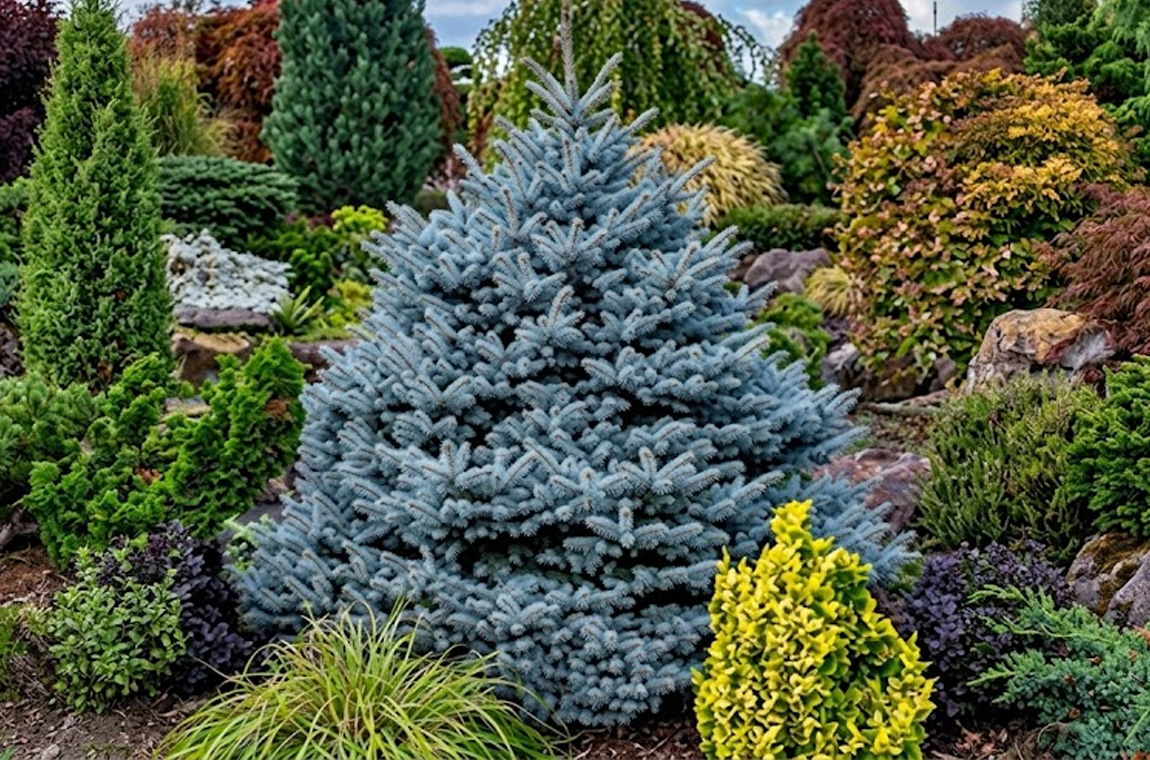
Spruce Trees
Spruce trees (Picea species) are conifers prized for their evergreen foliage, architectural presence, and year-round interest. They range from dwarf, globe-shaped shrubs for small spaces to dramatic cascading forms that create striking focal points. Spruces are also valued for cold hardiness, resilience, and attractive needle colors, especially blue-tinged cultivars.
1. Alberta Spruce (Picea glauca ‘Conica’) — The Classic Conical Evergreen
Overview
Alberta Spruce is a beloved dwarf spruce cultivar known for its dense, conical form and fine texture. It is commonly used in foundation plantings, borders, rock gardens, and mixed evergreen plantings.
Key Traits
- Size: Approximately 5–8 feet tall and 2–3 feet wide
- Zones: 2–7
- Needles: Blue-green to rich green
- Light: Full sun to partial shade
Its classic Christmas-tree shape works beautifully in residential gardens. Slow growth means it maintains its form with little pruning.
Care & Design
Provide well-drained, moderately moist soil and regular watering while establishing. Use as an entryway or patio anchor, pair with spring bulbs, or combine with broadleaf evergreens such as boxwood.
2. Globe Blue Spruce (Picea pungens ‘Globosa’) — Compact & Colorful
Overview
Globe Blue Spruce is a dwarf cultivar prized for its silvery-blue needles and rounded, globe-like form. It is ideal for small landscapes, rock gardens, courtyards, and patios.
Key Traits
- Size: Approximately 3–5 feet tall and wide
- Zones: 2–7
- Needles: Striking blue
- Light: Full sun
Full sun helps develop the strongest needle color. It prefers moist, well-drained soil and requires little pruning. Use it as a specimen near entrances, group it with contrasting conifers, or surround it with low-growing perennials.
3. Little Gem Spruce (Picea abies ‘Little Gem’) — Petite Evergreen Wonder
Overview
Little Gem is a dwarf form of Norway Spruce with a compact rounded shape and fine-textured foliage. Growing only about 1–2 feet tall and 2–3 feet wide, it is excellent for rock gardens, containers, borders, and small landscapes.
Care & Design
It thrives in full sun to partial shade and requires well-drained soil. Water regularly during establishment; mature plants are relatively drought tolerant. Occasional shaping can maintain its neat form. Use it near pathways, patios, colorful perennials, or in containers for year-round structure.
4. Montgomery Blue Spruce (Picea pungens ‘Montgomery’) — Stunning Color
Overview
Montgomery Blue Spruce combines a classic pyramidal form with silvery-blue needles and slow growth. It typically reaches approximately 8–15 feet tall and wide, depending on conditions, and is hardy in Zones 2–7.
Landscape Uses
This cultivar makes an excellent specimen tree, courtyard centerpiece, or architectural focal point. Full sun encourages the best color. Provide well-drained soil and avoid heavy, waterlogged sites. It requires little pruning beyond removing deadwood.
5. Weeping Norway Spruce (Picea abies ‘Pendula’) — Graceful & Dramatic
Overview
Weeping Norway Spruce offers a distinctive cascading, sculptural form unlike traditional upright spruces. It can reach 15–25+ feet tall and 10+ feet wide, depending on training and conditions.
Care & Design
It prefers full sun to part shade and moist, well-drained soil. Light spring pruning and early training can improve form and stability. Its dramatic shape works especially well near water features, garden entrances, lawns, or large planting beds.
Planting & Care: General Spruce Tips
Light & Space
Most spruces perform best in full sun, which supports healthy growth and strong foliage color. Provide enough space for airflow, even with compact cultivars.
Soil & Water
Well-drained soil is essential because heavy, wet conditions can contribute to root problems. Water regularly during the first growing season and mulch around the root zone to retain moisture and keep roots cool.
Maintenance
Spruces generally need minimal pruning. Remove dead, damaged, or crossing branches and monitor for spider mites and other pests, particularly during hot, dry weather. Light fertilization in early spring may help when growth is weak or foliage appears pale.
Design Inspiration
Evergreen Layers
Combine taller varieties such as Montgomery Blue or Weeping Norway Spruce with lower shrubs and flowering perennials to create layered borders with year-round structure.
Contrasts & Textures
Pair Globe Blue and Little Gem with broadleaf evergreens such as rhododendrons for contrasting foliage colors and textures.
Themed Gardens
Blue-needled spruces can anchor cool-color gardens alongside blue-leaf perennials and silver grasses.
Seasonal Highlights
Spruces can become seasonal focal points, whether decorated with lights in winter or surrounded by colorful annuals during summer.
Final Thoughts
Spruces offer versatility, beauty, and structure across many landscape styles. From the petite Little Gem to the dramatic Weeping Norway Spruce, these evergreens provide options for small gardens, courtyards, foundation plantings, and layered borders while delivering lasting foliage and year-round interest.