
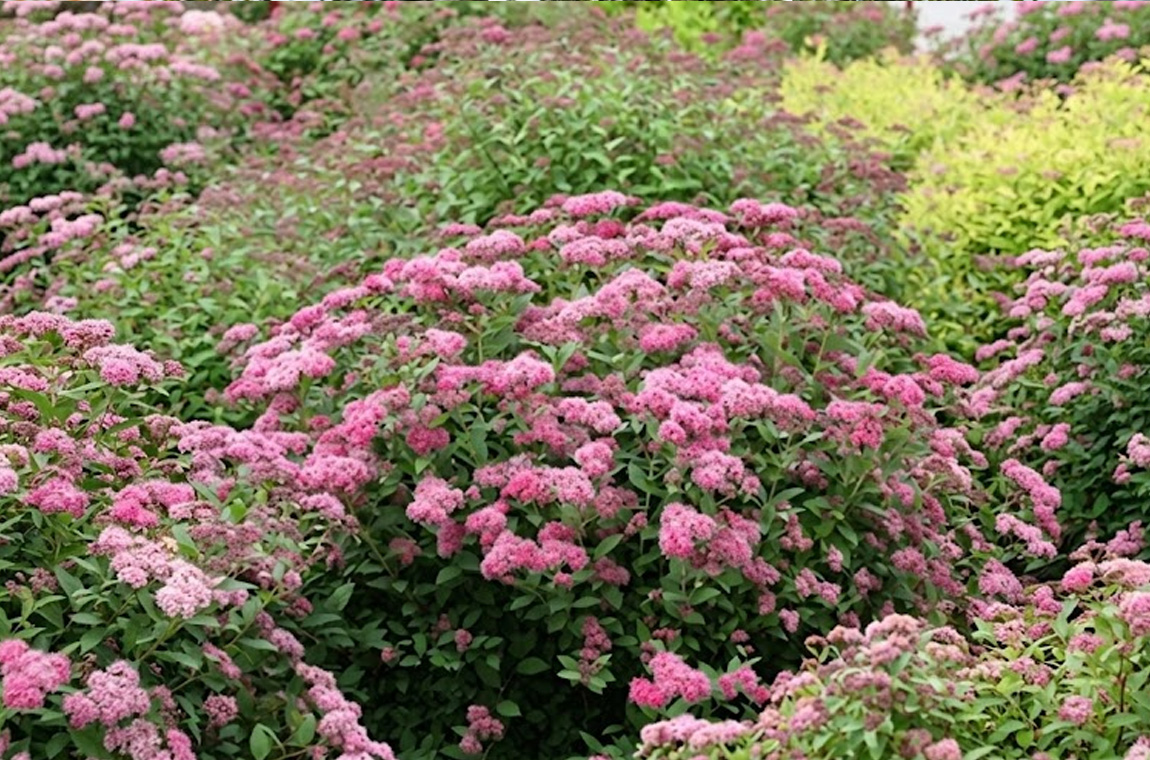
Spirea
Spirea (Spiraea) shrubs are beloved for their bright foliage, abundant flowers, ease of care, and long season of interest. From brilliant golden leaves to masses of tiny blossoms that blanket the branches, spirea offers versatile options for gardens of many styles.
What Is Spirea?
Spirea is a group of deciduous shrubs in the rose family (Rosaceae). These plants are valued for masses of spring and summer flowers, colorful foliage, compact mounded forms, and relatively low maintenance. Many varieties are moderately drought tolerant once established.
Spireas are native to the Northern Hemisphere, particularly Asia and North America. Modern cultivars have been selected for improved foliage color, compact growth, and flowering performance.
1. Gold Flame Spirea (Spiraea japonica ‘Gold Flame’)
Overview
Gold Flame is one of the most popular spirea cultivars, recognized for its bright golden-orange new foliage, which gradually matures to chartreuse, along with soft pink flower clusters.
Key Traits
- Foliage: Gold in spring, chartreuse in summer
- Flowers: Light pink clusters in late spring
- Size: Approximately 2–3 feet tall and wide
- Habit: Rounded and mounded
- Sun: Full sun to light shade
Garden Use
Gold Flame works well in front borders, foundation plantings, mass plantings, and large containers. Its vibrant foliage provides color even before flowering begins.
Care Tips
Use well-drained soil, provide moderate moisture, and prune lightly after flowering. Planting groups of three to five can create stronger visual impact.
2. Gold Mound Spirea
Overview
Gold Mound is valued for its compact habit, golden chartreuse foliage, and abundant pink flowers. It forms a neat, low mound that works particularly well in smaller landscape spaces.
Garden Use
Use Gold Mound in rock gardens, low borders, walkways, foundation edges, and containers. Its golden foliage stands out especially well against darker evergreen plants.
Care Tips
It adapts to many well-drained soils and appreciates regular moisture while tolerating short dry periods. Light shearing after flowering helps maintain a tidy shape.
3. Lemon Princess Spirea (Spiraea japonica ‘Lemon Princess’)
Overview
Lemon Princess features soft lemon-yellow foliage and vivid pink flowers, giving it a bright, whimsical appearance. Its compact rounded form makes it suitable for cottage-style and colorful garden designs.
Garden Use
It pairs beautifully with purple salvia, lavender, white daisies, and blue fescue. The contrast between yellow foliage and pink blooms provides interest throughout the growing season.
Growing Tips
Mulch helps maintain soil moisture, while regular watering is useful during dry periods. Pruning after flowering, including trimming back approximately one-third when appropriate, can encourage a vigorous shape.
4. Van Houttei Spirea (Spiraea × vanhouttei)
Overview
Often called Bridal Wreath Spirea, Van Houttei is known for its gracefully arching branches covered with profuse white flowers in spring. The cascading form creates a dramatic fountain-like display.
Garden Use
It works well as a specimen plant, back-of-border shrub, informal hedge, or cottage-garden feature.
Care Notes
Prune after flowering to maintain its shape. It tolerates a range of soils and prefers consistent moisture. Pairing it with early tulips or daffodils can create an impressive spring display.
Planting and Care Guide
Light
Most spireas perform best in full sun, receiving six or more hours of sunlight daily. Light shade is tolerated, although foliage color and flowering may be less intense.
Soil
Spireas adapt to many soil types, including sandy and clay soils, provided the soil is well drained.
Water
Water regularly during the first year to establish strong roots. Once established, many spireas become moderately drought tolerant.
Pruning
Prune after flowering to remove spent blooms, thin crowded stems, and maintain shape. Regular light pruning encourages vigorous new growth.
Winter Care
Most spireas are hardy in approximately USDA Zones 4–9, depending on cultivar. A layer of mulch can help protect roots in colder climates.
Landscape Design Ideas
Color Band Borders
Combine Gold Flame, Lemon Princess, and Van Houttei to create a colorful and textured border.
Foundation Plantings
Gold Mound and Gold Flame can soften foundation lines while adding bright seasonal color.
Mixed Shrub Beds
Pair spireas with evergreen shrubs to combine seasonal flowers and foliage with year-round structure.
Pollinator Gardens
The flowers attract bees and butterflies, making spireas useful in wildlife-friendly landscapes.
Containers
Compact varieties such as Gold Mound are well suited to containers on patios and balconies.
Seasonal Interest
Spring: Dramatic flower displays, especially from Van Houttei.
Early Summer: Gold Flame and Lemon Princess continue flowering.
Mid–Late Summer: Attractive foliage remains a major feature.
Fall: Some varieties develop fall foliage color while maintaining structural interest.
Winter: Bare branches provide texture in dormant landscapes.
Frequently Asked Questions
Are spireas deer resistant?
Many gardeners find spireas less attractive to deer, although hungry deer may browse them when food is limited.
How long do spireas live?
With proper care, spireas can live 10–15 years or longer and may benefit from rejuvenation pruning as they mature.
Do spireas spread aggressively?
Spireas generally remain in defined clumps and are not considered aggressively invasive.
Final Thoughts
Spireas are colorful, forgiving, and versatile shrubs that can suit a wide range of landscapes. Whether you prefer the golden foliage of Gold Flame, the compact flowering form of Gold Mound, the lemon-yellow color of Lemon Princess, or the cascading white flowers of Van Houttei, there is a spirea for many garden styles.
With relatively simple care and strong seasonal appeal, these shrubs can provide lasting color, flowers, texture, and garden interest year after year.