
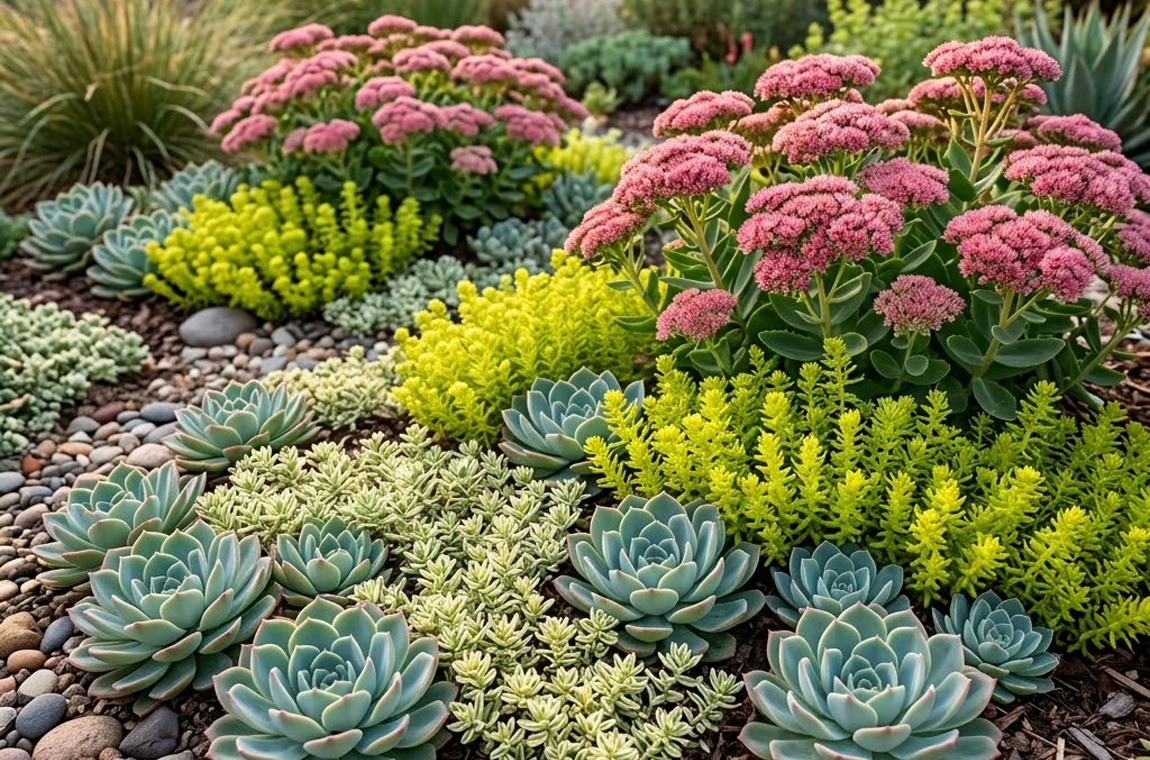
Sedum
What Is Sedum? Sedums — commonly called stonecrops — are a large genus of succulent plants in the Crassulaceae family. They range from tiny ground hugging mats to upright flowering perennials. All sedums share one key trait: fleshy, water storing leaves that make them extremely drought tolerant and easy to grow.
These plants are ideal for:
- Rock gardens
- Pollinator gardens
- Sunny borders
- Containers & mixed succulent planters
- Groundcovers
- Xeriscapes (low water landscapes)
Most sedum varieties like full sun and well drained soil. They’re tough, forgiving, and long lived in USDA zones roughly 3–9 depending on cultivar.
Popular Sedum Varieties & What Makes Them Special
Sedum ‘Autumn Joy’
Sedum Autumn Joy is arguably the most iconic stonecrop in gardens. It forms upright clumps with broad succulent leaves topped by flat, domed flower clusters in late summer and fall.
Key Features
- Pink blossoms that age to rose, bronze, and rich red in fall.
- Grows about 18–24″ tall and wide, perfect for borders or mixed beds.
- Attracts bees and butterflies as a rich late season nectar source — great for pollinator gardens.
- Leaves are fleshy and drought tolerant once established.
Plant Autumn Joy in groups for dramatic late season color and texture, or pair it with ornamental grasses for contrast. Its blooms can also be left standing through winter for visual interest.
Sedum rupestre ‘Angelina’
Angelina sedum is a wildly popular low growing groundcover with bright golden chartreuse foliage that glows in the garden.
Key Features
- Evergreen or semi evergreen foliage that holds color almost year round.
- Spreads into a dense mat, great for edging and rock gardens.
- Produces small yellow star flowers in summer.
- Turns slightly orange or bronze in colder months — adding seasonal interest.
Angelina thrives in full sun and poor, dry soils — conditions where many showier perennials struggle. Its mat forming nature helps suppress weeds and soften hard landscape edges.
Sedum ‘Indian Chief’
Indian Chief is a compact, showy sedum known for dramatic rosy red flower clusters on upright stems.
Key Features
- Flower heads are more intense in color than some other sedums.
- Works beautifully in late season borders and cut flower arrangements.
- Like most sedum, it’s drought tolerant and easy to grow.
Pair Indian Chief with grasses or lighter flowers to make its rich hues pop in the garden.
Hardy Hens and Chicks Mix
Though technically succulents rather than classic sedum, hens and chicks (Sempervivum) are often grouped with sedum in gardens because of their similar care needs and drought tolerance.
Key Features
- Lime green foliage with lovely creamy yellow edges for a two-toned effect.
- Soft pink flowers that emerge in late summer and last weeks.
- Compact size at about 4–6″ tall and up to 18″ wide — perfect for groundcover and containers.
SunSparkler® ‘Lime Twister’
SunSparkler® ‘Lime Twister’ is part of the popular SunSparkler® series — low-growing sedums with eye-catching foliage.
These rosette forming plants spread low along the ground and create a textural contrast to taller sedum varieties — ideal for rock gardens, container edges, or mixed succulent displays.
Sedum Culture: Planting & Care
One of the biggest reasons sedum is so popular is its ease of care — but here are a few tips to help your sedums thrive:
Light
Sedum prefers full sun (6+ hours daily). While some varieties tolerate light shade, maximum color and compact growth come with direct sun exposure.
Soil
They shine in well drained soil and can tolerate poor, sandy, or gravelly conditions. Heavy clay or soggy soil leads to rot, so consider amending with grit or sand for better drainage.
Watering
- New plants: Water regularly until established.
- Established sedum: Very drought tolerant; water sparingly.
Maintenance
- Divide clumps every few years to keep them full and vigorous.
- Deadhead spent blooms to keep beds tidy, or leave seed heads through winter for wildlife food and interest.
Winter Interest
Many sedum varieties persist through winter with attractive dried seed heads and durable foliage — especially Angelina which often stays colorful even in cold months.
Design Inspiration: Where to Plant Sedum
Sedum’s versatility makes it a design favorite in many styles of gardens:
Rock & Alpine Gardens
Low groundcovers like Angelina soften stones and add bursts of color to rockeries.
Mixed Perennial Borders
Tall forms like Autumn Joy enhance late season color and structure.
Pollinator Gardens
Late season blooms offer nectar when other plants are fading.
Containers & Patio Pots
Combine various sedum heights and textures for year round interest on decks and balconies.
Xeriscapes & Dry Slopes
Because sedum thrives with little water and poor soil, it’s perfect for drought resilient landscapes.
Pollinators & Wildlife Benefits
Sedum isn’t just beautiful — it’s good for the garden ecosystem. Many varieties produce abundant nectar and serve as late season food sources for bees, butterflies, and other pollinators. Some gardeners leave seed heads through winter to provide food for birds and winter interest in the landscape.
Companion Plants & Pairings
Here are some great pairings that enhance sedum’s visual and seasonal impact.
| Companion Plant | Why It Works |
|---|---|
| Lavender | Silvery foliage contrasts with sedum texture |
| Ornamental grasses | Adds movement and soft form |
| Echinacea | Summer bloom complement |
| Russian sage | Airy texture plays off sedum structure |
| Coreopsis | Bright summer yellows against bronze/pink sedum blooms |
Together, these combinations create balance, color continuity, and a garden that evolves beautifully through the seasons.
Seasonal Care Checklist
Spring
- Divide clumps if overcrowded.
- Clean up debris from winter.
Summer
- Enjoy blooms.
- Water sparingly.
Fall
- Let seed heads stand for structure and wildlife.
- Watch color transition in foliage.
Winter
- Most sedum varieties die back but hold form; prune in early spring.
Why Sedum Belongs in Your Garden
Whether you’re a beginner gardener or a seasoned pro, sedum has something to offer:
- Low maintenance — drought tolerant and adaptable.
- Versatile — works from rock gardens to borders and containers.
- Long season interest — blooms late, dries attractively, and offers winter form.
- Ecosystem friendly — supports pollinators and birds.
From the glowing carpets of Angelina to the dramatic late season blooms of Autumn Joy and Indian Chief, stonecrop sedums are reliable, resilient, and endlessly garden worthy. Add them to your designs for color, texture, and ease that will bring joy from spring through winter.