
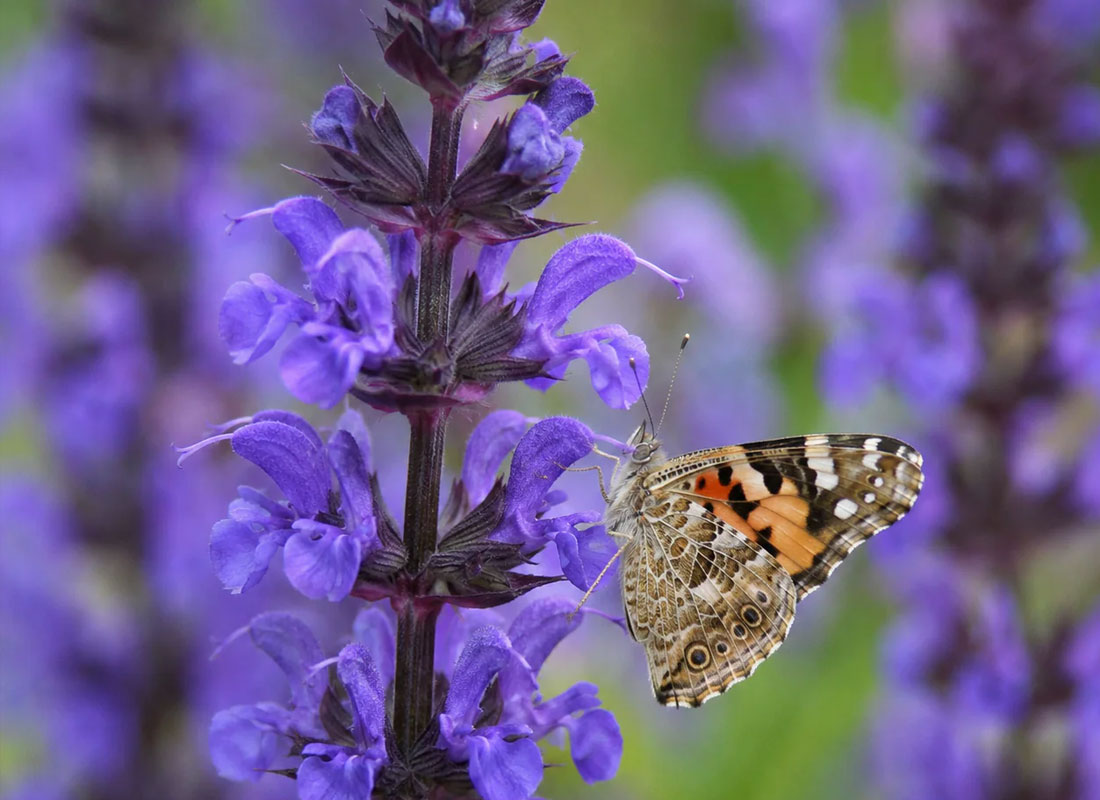
Salvia (May Night)
Salvia ‘May Night’ is a cherished perennial belonging to the Salvia genus (Lamiaceae family), widely known as meadow sage. It’s prized for its early summer display of deep violet-blue flower spikes that rise above aromatic gray-green foliage.
Though the exact naming can vary, you’ll often see it labeled as:
Salvia nemorosa ‘May Night’
Salvia x sylvestris ‘May Night’
Salvia ‘Mainacht’ (its original German name)
This plant first came into prominence in the mid-20th century and has since become a garden classic, even earning the Perennial Plant of the Year award in 1997 for its outstanding qualities.
The Appeal of ‘May Night’
So what makes May Night such a perennial standout?
Magnificent Flower Spikes
One of the most striking features is its spires of deep purple-blue flowers held proudly over the foliage. These showy blooms begin in late spring/early summer and — with good care — can continue well into midsummer.
Pollinator Magnet
Bees, butterflies, and hummingbirds are frequent visitors, feeding on nectar and making this a natural choice for wildlife-friendly gardens.
Easy to Grow
May Night thrives in full sun, tolerates drought once established, and is generally easy to care for — making it suitable for both novice and experienced gardeners.
Versatile Landscape Use
It works beautifully in mixed borders, cottage gardens, rock gardens, containers, or mass plantings along pathways.
Deer & Rabbit Resistant
Like many salvias, its aromatic foliage deters many grazing animals, offering peace of mind in areas with wildlife pressure.
Growing Conditions: How to Plant & Care
Sunlight
For best flowering, plant May Night in full sun (6–8 hours/day). While it will tolerate light shade, too little sun can result in leggy stems and reduced blooms.
Soil
This sage is not fussy about soil — from average garden soil to sandy or gravelly mixes — as long as it drains well. Avoid soil that stays soggy during winter, as this can lead to root issues.
Watering
While fairly drought tolerant once established, young plants benefit from regular watering. Once roots form, water deeply but infrequently to encourage vigorous growth.
Pruning & Deadheading
Deadhead spent flowers regularly to extend the bloom period into later summer.
You can also shear back plants after the first flush to encourage rebloom.
In late fall or early spring, cut back old stems to make way for fresh growth.
Companion Planting
Plant it alongside peonies, daylilies, ornamental grasses, or silver-leafed plants like lamb’s ears for striking contrast and layered texture.
Seasonal Garden Performance
One of the best things about May Night is that it offers seasonal interest across several months of the gardening year:
Spring
Emerging foliage adds fresh color to the garden, with flower spikes beginning in late spring.
Early to Mid Summer
Peak bloom time — this is when May Night shines best, filling borders with color and attracting wildlife.
Late Summer
With routine deadheading and good site conditions, aggressive gardeners can enjoy a second wave of flowers later in the season.
Fall & Winter
In colder zones, the plant dies back. In milder climates, foliage may persist through winter before you prune in early spring.
Propagation & Planting Tips
Starting from Seed or Cuttings
May Night can be grown from seed, though germination takes patience and space. A more reliable route is using rooted nursery stock or stem cuttings, especially for gardeners wanting consistent bloom quality.
Timing
Plant in spring after frost or in early fall when temperatures cool. This gives roots time to establish before the next season arrives.
Dividing Clumps
Every 3–4 years, divide clumps in spring to rejuvenate plants and maintain vigor.
Design Uses in the Landscape
Salvia ‘May Night’ is an incredibly versatile plant that fits into many garden styles:
Mixed Borders
Use it to bridge bold, summer-blooming perennials. Its spiky flower form contrasts beautifully with rounded shapes like coreopsis, coneflower, and rudbeckia.
Containers & Patios
Its upright form and long bloom period make it a lovely choice for containers — pair with annuals for color contrast.
Pollinator Gardens
Packed with nectar, this salvia is a top pick for bee and butterfly gardens — and with hummingbirds too.
Naturalistic & Cottage Gardens
It blends beautifully with ornamental grasses and soft-colored perennials to create a relaxed, meadow-like feel.
Wildlife & Environmental Benefits
Beyond beauty, May Night supports garden ecology:
Attracts Beneficial Insects
Bees, butterflies, and even hummingbirds visit for nectar — making your garden more vibrant and alive.
Deer & Rabbit Resistant
Many gardeners enjoy peace of mind knowing this plant is less appealing to browsing animals.
Low Maintenance
Once established, it’s drought tolerant and doesn’t demand constant care — ideal for low-maintenance landscapes.
Troubleshooting & Common Issues
Though generally hardy, a few garden conditions can challenge Salvia ‘May Night’:
Too Much Shade
Low light can cause leggy, floppy growth with fewer blooms. Place in full sun where possible.
Poor Drainage
Saturated soil — especially in winter — can lead to fungal issues. Improve drainage and avoid heavy, soggy sites.
Pests
Occasionally, whiteflies, aphids, or spider mites may appear. Regular inspection and healthy airflow keep problems minimal.
Final Thoughts: Why ‘May Night’ Is a Garden Must-Have
Salvia May Night is one of those rare plants that combines visual impact, garden versatility, wildlife value, and ease of care — making it a true go-to perennial for almost any outdoor setting. Whether planted in mass for bold color, mixed into a cottage border, or featured in pollinator gardens, it delivers season after season.
If you’re seeking a reliable, showy perennial that rewards with weeks of vibrant blooms and minimal effort — May Night salvia should be at the top of your plant list.