
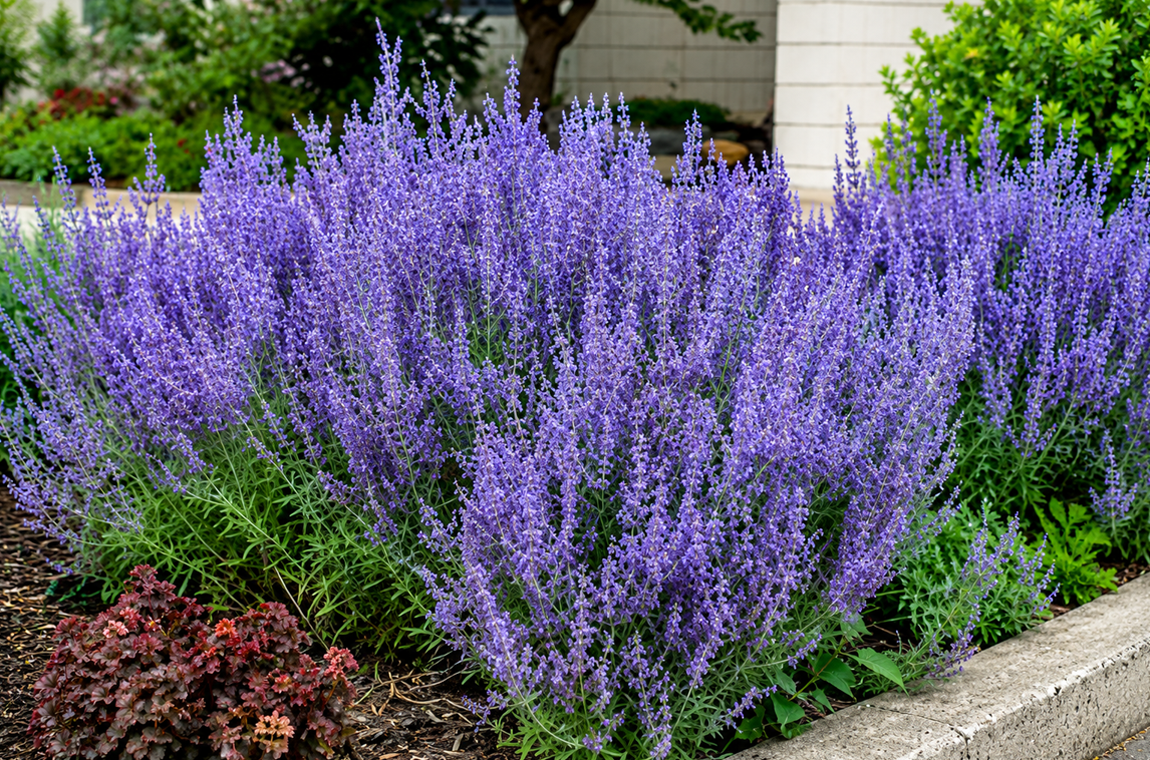
Russian Sage (Perovskia atriplicifolia)
If you’re planning a garden that lasts all season — vibrant, fragrant, and easy to grow — then Russian sage should top your plant list.
Known for its silvery foliage and clouds of lavender blue flowers, Russian sage adds elegance and versatility to landscapes large and small. Once established, this perennial thrives with minimal care, tolerates heat and drought, and remains attractive to pollinators like bees and butterflies.
Despite its common name, Russian sage isn’t a true sage plant (Salvia) but rather a member of the mint family with botanical ties to Perovskia atriplicifolia — now also reclassified in some sources as Salvia yangii.
Whether you’re a seasoned gardener or a beginner, Russian sage is a low fuss beauty that delivers big seasonal impact. Let’s dive into everything you need to know about growing, caring for, and designing with this stunning perennial.
What Is Russian Sage?
Russian sage (Perovskia atriplicifolia) is a semi woody perennial (sometimes treated as a subshrub) prized for its aromatic silvery foliage and airy spires of lavender blue flowers that bloom from midsummer into fall.
It belongs to the mint family (Lamiaceae) and — while not edible like culinary sage — releases a pleasant herbal scent when its leaves are brushed or crushed.
Key Plant Traits
Leaves: Silver green, aromatic, finely textured
Flowers: Lavender blue spikes lasting weeks
Height: Typically 2–4 feet (60–120 cm)
Spread: 2–4 feet (60–120 cm)
Bloom Time: Midsummer through early fall
Hardiness: USDA zones ~4–9 (varies by cultivar)
This combination of features makes Russian sage striking in garden borders, mixed beds, and water wise landscapes.
The Look & Feel: Form and Flower
What makes Russian sage so appealing is its air filled texture and supremely soft color palette.
Although the flowers are small, they’re borne in clusters along tall stems, creating misty plumes of lavender that move beautifully in the breeze.
The silvery foliage creates contrast with greens and warmer hues in the garden, while the floral texture adds lightness and depth between denser plants.
Unlike some heavier perennials, Russian sage rarely looks “busy” — it provides structure without crowding, making it a versatile design element in both formal and naturalistic plantings.
Growing Russian Sage: Conditions & Care
One of the biggest reasons gardeners love Russian sage is its low maintenance nature. Here’s how to help it thrive:
Light
Russian sage loves full sun — at least 6–8 hours of direct sunlight daily. Too much shade can lead to leggy growth and fewer blooms.
Soil
Well drained soil is essential — this plant does not like standing water.
Sandy or rocky soils are fine; Russian sage even thrives in poor, dry conditions.
Neutral to slightly alkaline pH is ideal.
Because its roots prefer oxygen over moisture, heavy clay soils should be amended with grit or compost to improve drainage.
Watering
New plants: Water regularly until established.
Established plants: Russian sage is drought tolerant and prefers sparse watering once established. Overwatering can weaken the plant and reduce blooms.
Airflow & Spacing
Allow 2–3 feet of space between plants to ensure good airflow — this helps maintain foliage health and reduces the risk of fungal issues.
Pruning & Maintenance
Pruning Russian sage properly can improve blooming and shape:
Spring Pruning
In early spring (or late winter), cut back last year’s stems to about 6–12 inches above the ground. This encourages fresh, vigorous new growth and helps keep the plant compact.
Deadheading
Removing spent flowers isn’t strictly necessary but can improve aesthetics and encourage further bloom production throughout the season.
Long Term Care
Divide plants every 3–4 years if they become too large — Russian sage slowly spreads and can benefit from renewal over time.
Popular Russian Sage Cultivars
Gardeners now enjoy several cultivars that vary in size, color intensity, and form:
Blue Spire
A classic choice with tall flower spikes and deep lavender blue blooms — ideal as a back of border accent.
Denim ’n Lace
Sky blue flowers on upright stems give a fuller, uniform look — great in mixed beds and borders.
Blue Jean Baby
A more compact option that fits well in smaller gardens or sunny containers.
Sage Advice
An award winning variety with rich purple hues and strong, upright growth — excellent for hot, dry areas.
Classic Perovskia
Traditional Russian sage with soft purple blooms and airy habit — perfect in cottage or meadow style gardens.
Each cultivar offers unique advantages for landscape design, whether you prefer formal structure or relaxed naturalism.
Designing With Russian Sage
Russian sage’s airy texture and color make it a designer favorite for many garden styles:
Mixed Borders
Use Russian sage as a middle border filler to contrast strong shapes like coneflowers, daylilies, or ornamental grasses.
Pollinator Gardens
With its long bloom time and nectar rich flowers, it attracts bees, butterflies, and even hummingbirds.
Water Wise Landscapes
Perfect for xeriscapes or gardens focused on drought tolerance, Russian sage holds its own in dry, sunny conditions.
Containers
Choose a compact variety and plant Russian sage in large pots with well draining mix for patio borders or deck accents.
Mediterranean or Cottage Gardens
Pair with warm tones like oranges, yellows, or reds — coneflowers, black eyed Susans, and yarrow are all excellent companions.
Wildlife & Ecological Benefits
Besides beauty, Russian sage supports garden biodiversity:
Attracts pollinators: Bees, butterflies, and hummingbirds love the blooms.
Deer & rabbit resistant: Undesirable to many browsing animals due to aromatic foliage.
Mosquito deterrent: The aromatic oils in the leaves may help repel mosquitoes.
Whether you’re creating a pollinator haven or just a colorful outdoor space, Russian sage helps support natural garden ecosystems with minimal maintenance.
Common Problems & Solutions
Like any garden plant, Russian sage has a few considerations:
Excess Moisture
Poor drainage or overwatering can lead to root rot — always ensure soil drains well and avoid soggy conditions.
Insufficient Sun
Too much shade results in leggy growth with weak flowering. If blooms are sparse, relocate to sunnier areas.
Lack of Pruning
Old woody stems can reduce new bloom vigor — regular spring pruning promotes bushier, healthier plants.
Seasonal Care Checklist
Spring: Prune back old stems; divide if needed
Early Summer: Enjoy first blooms; check spacing
Mid to Late Summer: Deadhead lightly; monitor water needs
Fall: Leave structure for winter interest or cut back after frost
Winter: Protect from extreme cold in colder zones with mulch
Final Thoughts: A Garden Classic With Modern Appeal
Russian sage is more than just a perennial — it’s a garden transformer. With silvery foliage that glows in sunlight, delicate lavender plumes that dance in the breeze, and a resilience few plants match, Russian sage blends beauty, performance, and low maintenance like few other garden perennials.
Whether you’re designing a pollinator patch, a water wise landscape, or a cottage garden border, Russian sage brings color, texture, and ecological value all season long. Give it the conditions it loves — sun, well drained soil, and space to stretch — and this stunning perennial will reward you with months of magical blooms.