
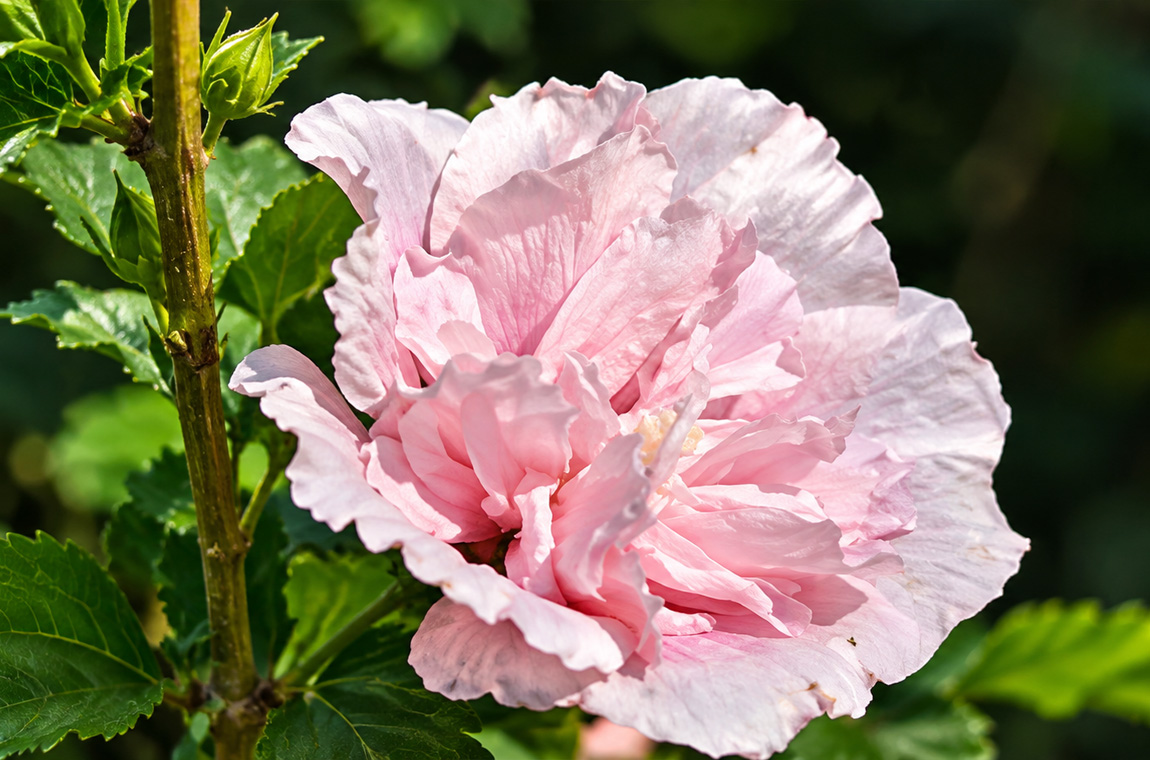
Rose of Sharon
Rose of Sharon (Hibiscus syriacus) is a long-blooming deciduous shrub that adds color, texture, and seasonal interest to landscapes across USDA hardiness zones approximately 5–9. Unlike tropical hibiscus, it is hardy and adaptable, producing beautiful flowers from midsummer through fall.
The Chiffon® series, particularly Blue Chiffon® and Pink Chiffon®, is known for double flowers, elegant structure, and landscape versatility. These cultivars are excellent choices for gardeners looking for a classic ornamental shrub with distinctive blooms.
The Chiffon® Series: Unique Cultivars
Blue Chiffon® Rose of Sharon
Blue Chiffon® is prized for its unusual blue-lavender flowers. The blooms feature a distinctive frilly, ruffled center that creates an elegant appearance in midsummer gardens.
Key Traits
- Mature height: 8–12 feet
- Spread: 6–10 feet
- Blooming: Flowers develop on new wood.
- Wildlife: Attracts bees, butterflies, and hummingbirds.
- Tolerance: Heat, drought, and salt tolerant once established.
- Uses: Specimen planting, screens, hedges, mixed borders, and perennial beds.
Its cool flower color works beautifully with blues, lavenders, and silvery foliage, while also creating contrast with warm flowers such as rudbeckias and daylilies.
Pink Chiffon® Rose of Sharon
Pink Chiffon® produces soft double pink flowers that give the shrub a romantic and full appearance.
Key Traits
- Similar size and growth habit to Blue Chiffon®.
- Dense, fully double flowers.
- Suitable for hedges, privacy screens, and garden accents.
- Excellent for cottage and traditional gardens.
- Heat and deer tolerant.
Pair Pink Chiffon® with green foliage plants, purple salvia, or white coneflowers for a soft summer planting scheme.
Planting and Growing Guide
Choosing the Right Spot
Rose of Sharon performs best in full sun, receiving at least six hours of direct sunlight each day. Choose well-drained soil because the plant tolerates average garden conditions but does not perform well in constantly wet ground.
Allow approximately 6–10 feet of space between plants to provide adequate airflow and room for mature growth. In hotter climates, some afternoon shade can help reduce stress during extreme heat, particularly for newly planted shrubs.
Watering
Rose of Sharon becomes fairly drought tolerant once established, but regular moisture encourages healthy growth and abundant flowering.
Water deeply once or twice a week during dry periods, adjusting according to soil conditions and weather. Container-grown plants may need more frequent watering. Avoid constantly saturated soil, which can contribute to root problems.
Fertilizing
Apply a slow-release shrub fertilizer in early spring to support healthy growth and flowering. Compost or a balanced fertilizer can also help improve soil quality.
Avoid excessive nitrogen because it can encourage foliage growth at the expense of flowers.
Pruning: When and How
Rose of Sharon blooms on new wood, making late winter or early spring the ideal time for pruning.
Pruning Tips
- Remove old or weak stems to encourage fresh growth.
- Leave a central leader if creating a small-tree form.
- Use light trimming during the growing season to maintain shape.
- Avoid heavy summer pruning because it can reduce flowering.
Deadheading is optional. Removing spent flowers can improve appearance and may reduce unwanted self-seeding in varieties that produce seeds.
Wildlife and Garden Benefits
Blue Chiffon® and Pink Chiffon® can contribute to pollinator-friendly landscapes. Bees and butterflies visit the flowers, while hummingbirds may also be attracted to the blooms.
Rose of Sharon is also generally avoided by deer, making it useful in landscapes where deer pressure is a concern.
Landscape Design Ideas
1. Flower Hedge or Privacy Screen
Plant Chiffon® shrubs in a row with approximately 6–10 feet between plants to create a flowering screen along property lines or garden borders.
2. Mixed Border Statement
Combine Rose of Sharon with Russian sage, coneflowers, black-eyed Susans, and ornamental grasses. These combinations provide contrasting colors, textures, and vertical interest from summer into fall.
3. Specimen Plant
A single Rose of Sharon near a patio, entryway, or garden focal point can create a strong seasonal display.
4. Container Gardening
Smaller Blue Chiffon® or Pink Chiffon® plants can be grown in large containers on patios and decks. Use a sufficiently large pot with good drainage and provide regular watering.
Common Challenges and Solutions
Seedling Spread
Traditional Rose of Sharon can self-seed in some regions. Low-seed or sterile varieties, including many Chiffon® cultivars, can help reduce unwanted seedlings. Removing seed pods can also limit seed production.
Pests and Diseases
Rose of Sharon is generally resilient but can occasionally experience aphids, whiteflies, or minor leaf spots. Proper spacing, good airflow, and regular observation can help keep problems manageable.
Seasonal Garden Calendar
Spring: Plant after frost, apply slow-release fertilizer, and prune to shape.
Summer: Monitor watering and enjoy abundant blooms from July into fall.
Fall: Remove spent flowers if desired and add mulch around the root zone.
Winter: In colder regions, maintain a layer of mulch around the base to help protect the roots.
Final Thoughts
Rose of Sharon, especially Blue Chiffon® and Pink Chiffon®, combines long-lasting flowers, structural height, and wildlife appeal. Whether used as a focal point, flowering hedge, or part of a mixed border, these adaptable shrubs can bring reliable summer-to-fall color and beauty to a wide range of landscapes.