Proper Grading and Drainage: How We Eliminate Mold Problems at the Source
One of the most stressful problems a homeowner can face is mold inside their home. It doesn’t just affect the appearance of a space — it affects air quality, comfort, and peace of mind. Over the years, we’ve had countless calls that begin with the same concern:
“We’ve treated the mold already… but it keeps coming back.”
At Louis Contino Landscaping Inc., we’ve learned that when mold keeps returning, the issue is rarely just inside the house. In many cases, the real problem starts outside, with improper grading and drainage allowing water to collect around the foundation.
This is especially common on Long Island, where soil conditions, older homes, coastal weather, and past construction changes often combine to create hidden moisture problems.
In this article, we’ll explain why grading and drainage matter so much, what we typically see when we evaluate properties with mold concerns, and how correcting exterior conditions can permanently solve moisture issues instead of just covering them up.
Why Mold Is Often a Landscaping Problem (Not an Indoor One)
Mold needs three things to grow:
- Moisture
- Organic material
- Limited airflow
Homes naturally contain organic materials like wood framing, drywall, insulation, and dust. Once moisture is introduced and allowed to linger, mold growth becomes almost unavoidable.
Many homeowners focus on interior solutions such as:
- Dehumidifiers
- Air purifiers
- Waterproof wall coatings
- Repeated mold remediation
While these can help reduce symptoms, they don’t stop water from entering the home in the first place. If water continues to collect outside the foundation, moisture pressure builds — and mold eventually returns.
What We Look for When We Walk a Property
When a homeowner calls us about moisture or mold concerns, we don’t start by guessing. We start by walking the entire property.
Some of the most common issues we see include:
- Soil sloping toward the house instead of away
- Low areas where water pools after rainfall
- Downspouts dumping roof water directly at the foundation
- Patios or walkways pitched incorrectly
- Compacted soil that doesn’t absorb water
- Landscapes that evolved over time without a drainage plan
Often, these issues develop gradually, sometimes years after a home was built or renovated. Homeowners are usually surprised to learn that a patio added years ago or a slight grade change can slowly create serious moisture problems inside the home.
What Proper Grading Really Means
Grading is the process of shaping the soil so water flows away from the foundation, not toward it.
Proper grading:
- Slopes soil away from the house on all sides
- Eliminates low spots that trap water
- Directs runoff toward safe drainage paths
- Prevents water from sitting against foundation walls
Even well-built foundations are not designed to withstand constant moisture pressure. When grading is incorrect, water accumulates and begins forcing its way through joints, cracks, and porous materials.
How Poor Drainage Leads Directly to Mold
Water always follows gravity. When it has nowhere to go, it settles at the lowest point — often the foundation.
Over time, this leads to:
- Damp basement walls
- Elevated indoor humidity
- Moist insulation and framing
- Musty odors
- Mold growth behind walls and flooring
This is why mold often returns even after remediation. The source of the moisture was never addressed.
Common Drainage Problems We See on Long Island Homes
Because of Long Island’s unique conditions, certain problems show up repeatedly:
1. Flat or Reverse Grading
Soil that slopes toward the house, often caused by settlement or improper backfill.
2. Downspouts with No Discharge Plan
Roof runoff is a major source of water. When downspouts release water at the foundation, they overload the soil quickly.
3. Compacted Soil
Heavy equipment, foot traffic, and construction compress soil, preventing absorption.
4. Hardscape Without Drainage Consideration
Patios, walkways, and driveways installed without pitch or drainage solutions trap water against the house.
Why “Waterproofing” Alone Is Rarely Enough
Many homeowners invest heavily in interior waterproofing solutions:
- Sealants
- Vapor barriers
- Basement wall coatings
These may help temporarily, but they don’t eliminate the pressure of water building up outside the foundation. Think of it like holding back water with paint — eventually, it finds a way through.
Correct grading and drainage relieve that pressure before water ever reaches the structure.
Our Approach to Solving Moisture Problems
At Louis Contino Landscaping Inc., we approach drainage the same way we approach landscape design — holistically.
Step One: Full Property Evaluation
We analyze:
- Overall slope of the yard
- How water moves during heavy rain
- Roof runoff patterns
- Existing drainage systems
- Relationship between hardscape and lawn areas
This full-picture approach allows us to design solutions that actually work long-term.
Regrading: Resetting the Foundation Environment
Regrading reshapes the soil so water naturally flows away from the house.
This process may include:
- Removing soil built up against foundation walls
- Adding clean fill to low areas
- Compacting soil properly to prevent future settling
- Creating smooth transitions to surrounding landscape
Even modest grading corrections can dramatically reduce moisture intrusion.
Drainage Systems That Actually Work
Depending on the property, we may install:
French Drains
Subsurface systems that collect and redirect groundwater away from the foundation.
Dry Wells
Underground structures that allow water to safely disperse into the soil.
Swales
Shallow channels that guide surface water away naturally.
Catch Basins
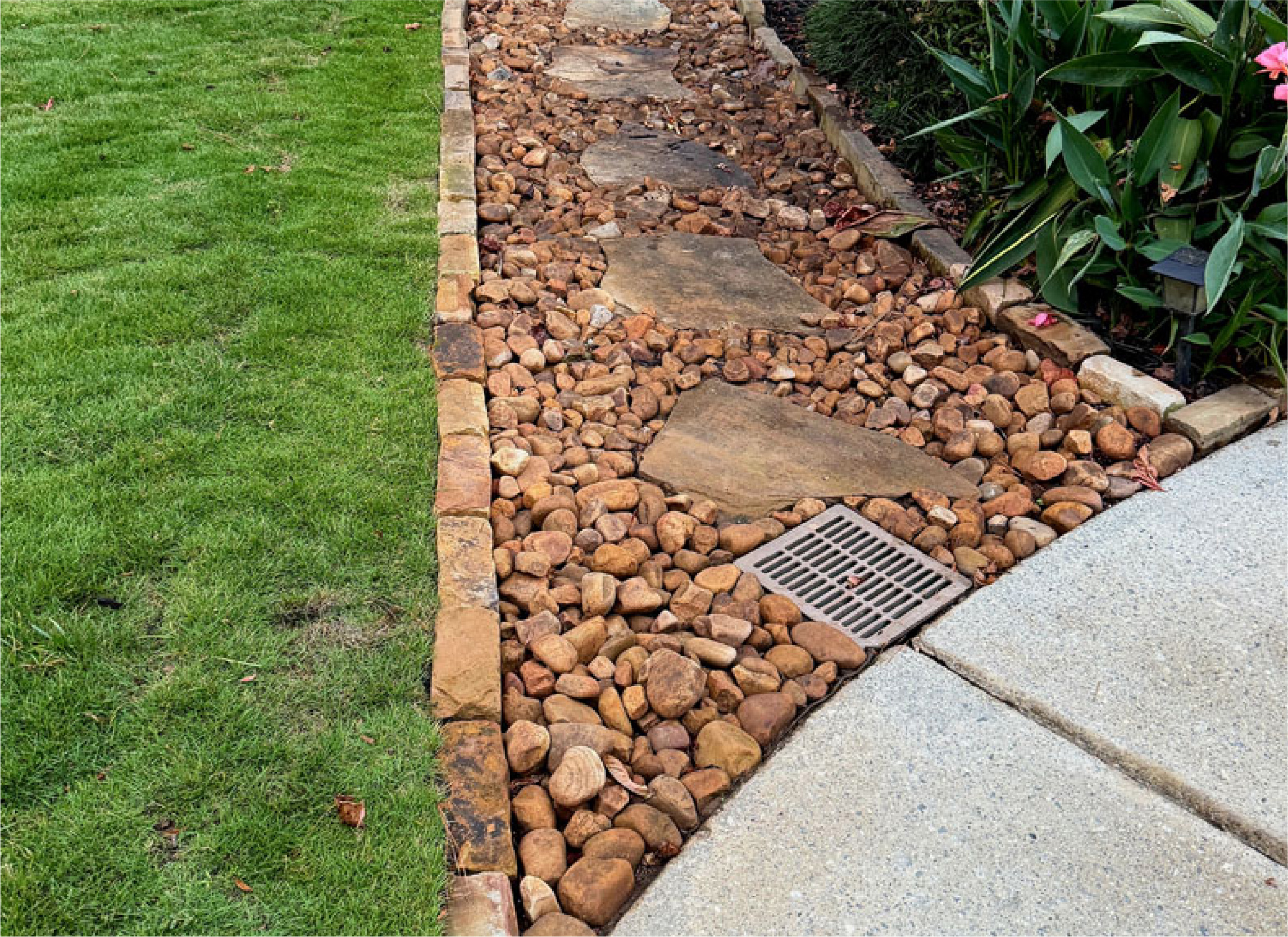
Installed in low areas, patios, or driveways to capture runoff.
Downspout Extensions and Piping
Simple but critical components that prevent roof water from saturating foundation soil.
Each solution is selected based on how water behaves on that specific property.
How Hardscape Impacts Drainage and Mold Risk
Patios and walkways can either protect a home — or create serious problems.
We often see patios pitched toward the house, trapping water at the foundation. At Louis Contino Landscaping Inc., every hardscape project includes:
- Proper pitch away from the structure
- Drainage integration when needed
- Transitions that prevent water from collecting
Hardscape should always work with drainage, not against it.
New Construction vs Older Homes
Drainage issues affect both new and older homes, but for different reasons.
- Older homes often suffer from settled soil and outdated drainage methods
- Newer homes may have grading disturbed during construction
In both cases, water management must be corrected after the fact to protect the structure.
When You Should Call a Professional
You should strongly consider professional grading and drainage work if:
- Mold keeps returning
- Your basement smells musty
- Water pools near your foundation
- You’re planning new landscaping or hardscape
- You want a permanent solution
Drainage work protects your home’s structure, indoor air quality, and long-term value.
Why Homeowners Trust Louis Contino Landscaping Inc.
We don’t treat grading and drainage as an afterthought.
Our approach focuses on:
- Long-term performance
- Protecting the home, not just the yard
- Solutions tailored to each property
- Preventing future problems, not just fixing current ones
We take pride in solving issues homeowners have dealt with for years — often without realizing the solution was right outside.
Final Thoughts: Stop Mold Where It Starts
Mold inside a home is rarely just an indoor problem. In many cases, it’s the result of years of unmanaged water around the foundation.
By correcting grading and installing proper drainage systems, homeowners can:
- Eliminate moisture intrusion
- Improve indoor air quality
- Protect their foundation
- Prevent mold from returning
If you’re dealing with moisture or mold concerns and want a solution that actually lasts, Louis Contino Landscaping Inc. is here to help starting from the ground up.