
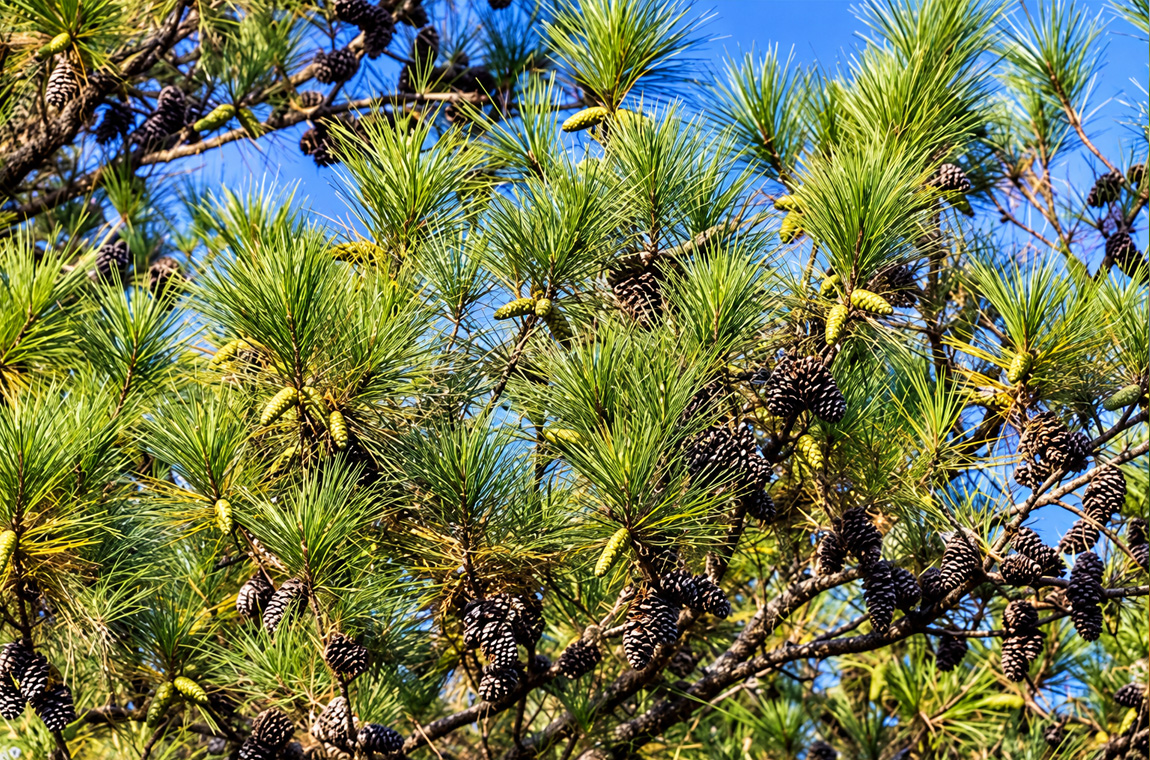
Pine Varieties for the Northeast
Pine trees are versatile, durable, and visually powerful elements in Northeast landscape design. At Louis Contino Landscaping, based in Oyster Bay and serving Long Island and surrounding areas, we use pines to create privacy screens, wind buffers, natural woodland settings, and year-round structure.
Whether your property is a waterfront estate exposed to salt spray, a suburban backyard requiring privacy, or a sloped property needing erosion control, the right pine variety can enhance both function and appearance.
1. Eastern White Pine (Pinus strobus)
The Eastern White Pine is an iconic native pine of the Northeast. It is elegant, fast-growing, and highly adaptable.
Key Characteristics
- Height: 50–80 feet, potentially exceeding 100 feet
- Spread: 20–40 feet
- Growth Rate: Fast
- Soft, bluish-green needles grouped in bundles of five
We use Eastern White Pine for large-scale privacy screening, estate buffering, woodland restoration, and wind protection. Its soft, flowing canopy creates a natural appearance and works well on larger properties in Oyster Bay, Old Brookville, and Upper Brookville.
Consideration: These trees require considerable space. Proper spacing prevents overcrowding as they mature.
2. Austrian Pine (Pinus nigra)
The Austrian Pine is known for its dark green color, rugged durability, and dense branching structure.
Key Characteristics
- Height: 40–60 feet
- Spread: 20–40 feet
- Growth Rate: Moderate
- Tolerates wind and urban pollution
This variety performs well in wind-exposed properties, coastal areas, roadside plantings, and larger commercial installations. Its dense structure makes it effective as a windbreak, especially in areas affected by nor’easters and coastal winds.
Austrian Pine provides a bold, structured appearance compared with Eastern White Pine.
3. Scotch Pine (Pinus sylvestris)
The Scotch Pine is recognized for its orange-toned bark and historic use as a Christmas tree.
Key Characteristics
- Height: 30–60 feet
- Spread: 20–35 feet
- Growth Rate: Moderate to fast
- Distinctive orange upper bark
Scotch Pine works well for rustic properties, large naturalized settings, and informal woodland edges. Its looser branching habit creates a more open appearance than Austrian Pine.
4. Japanese Black Pine (Pinus thunbergii)
The Japanese Black Pine is a strong choice for selected coastal properties.
Key Characteristics
- Height: 20–60 feet
- Spread: 20–40 feet
- Growth Rate: Moderate
- Exceptional salt tolerance
It handles salt air, sandy soil, coastal wind, and drought conditions. This makes it valuable for waterfront properties along Long Island’s North Shore and South Shore.
Its sculptural trunk structure creates visual interest near patios, pools, and modern landscapes.
5. Mugo Pine (Pinus mugo)
The Mugo Pine is a low-growing pine shrub rather than a large tree.
Key Characteristics
- Height: 2–5 feet for dwarf forms
- Spread: 3–6 feet
- Growth Rate: Slow to moderate
- Dense, compact growth
We use Mugo Pine for foundation plantings, rock gardens, slopes for erosion control, and pool landscaping. It requires minimal pruning and maintains its shape well.
6. Pitch Pine (Pinus rigida)
The Pitch Pine is native to Long Island’s Pine Barrens and performs well in sandy or poor soil conditions.
Key Characteristics
- Height: 30–50 feet
- Spread: 20–35 feet
- Highly drought tolerant
- Thrives in sandy soils
Its rugged, native appearance makes it suitable for woodland restoration, estate buffering, and environmentally sensitive sites.
Choosing the Right Pine
At Louis Contino Landscaping, we consider soil type, salt exposure, available space, and the desired appearance before selecting a pine variety.
- Sandy soil: Pitch Pine and Japanese Black Pine
- Salt exposure: Japanese Black Pine
- Large properties: Eastern White Pine
- Smaller spaces: Mugo Pine
- Soft and natural appearance: Eastern White Pine
- Bold and structured appearance: Austrian Pine
- Coastal sculptural appearance: Japanese Black Pine
Design and Maintenance Tips
Proper Spacing: We calculate mature width rather than focusing only on the tree’s current size. Adequate spacing improves airflow and reduces overcrowding.
Mulching: A 2–3-inch layer of natural mulch helps retain moisture and regulate soil temperature.
Irrigation: Newly planted pines require consistent watering during the first 12–18 months.
Pruning: Avoid excessive pruning because pines generally do not regenerate from old wood. Strategic pruning is essential.
Our Approach at Louis Contino Landscaping
We evaluate drainage, grading, sun exposure, zoning requirements, property setbacks, and the scale of the home before installation. We also select specimen sizes suitable for the property and use professional installation techniques.
Pines are frequently combined with ornamental grasses, deer-resistant shrubs, and stone elements to create balanced, natural compositions.
Final Thoughts
Pine trees provide year-round greenery, privacy, wind protection, wildlife habitat, and long-term landscape structure. From the elegance of Eastern White Pine to the coastal resilience of Japanese Black Pine and the compact form of Mugo Pine, there is a pine variety suited to many Northeast properties.
At Louis Contino Landscaping, we select the right pine for each property’s conditions, design goals, and long-term landscape needs.