
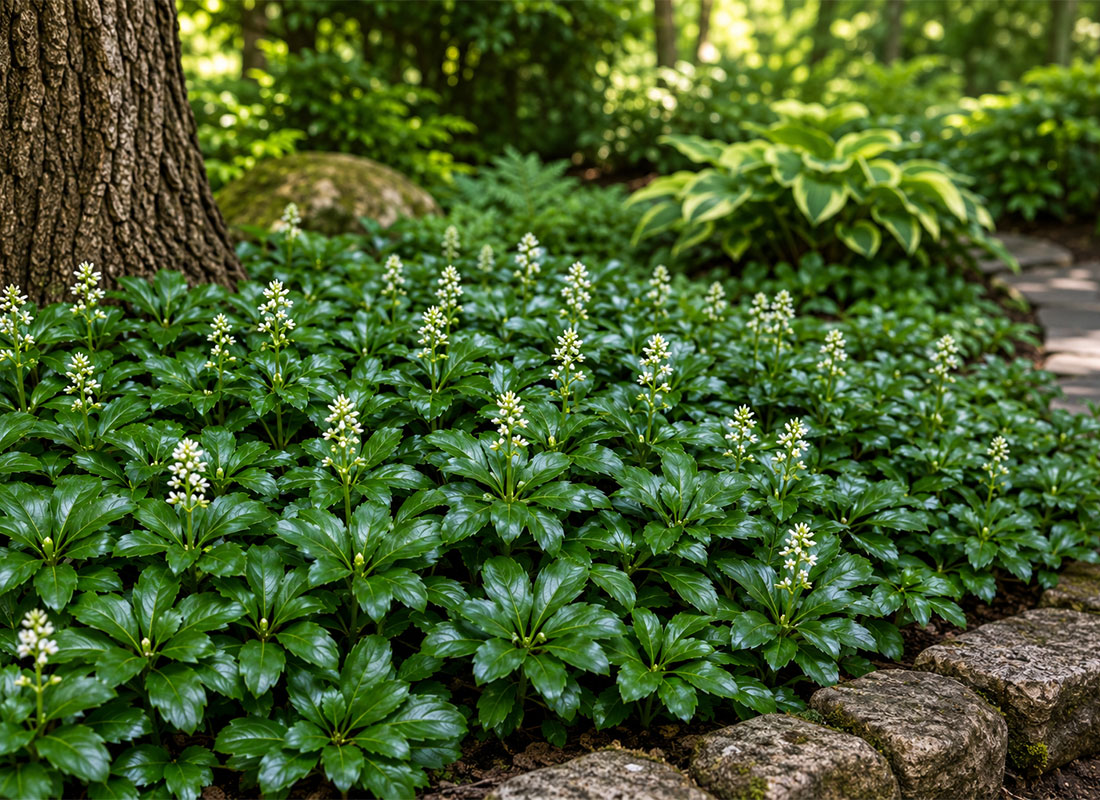
Pachysandra
What Is Pachysandra?
Pachysandra (pronounced pak-i-SAN-dra) is a low-growing evergreen perennial groundcover in the Boxwood family (Buxaceae). Its glossy dark green foliage stays attractive throughout the year, even in winter, and produces small, subtle white flower spikes in spring. It spreads via underground rhizomes, forming a dense carpet that suppresses weeds and stabilizes soil.
Deer & Rabbit Resistance — What You Need to Know
One of pachysandra’s biggest selling points is that it’s considered deer- and rabbit-resistant. That means animals like deer and rabbits typically avoid eating it because of its bitter taste and chemical defenses. Many gardeners plant it specifically to reduce browsing pressure and protect their landscape beds.
Important nuance: “Resistant” does not mean deer-proof — hungry deer in harsh conditions may still nibble on vegetation that’s normally unappetizing. But in most typical garden situations, pachysandra remains untouched.
Why Gardeners Love Pachysandra
Beautiful Year-Round Foliage
Pachysandra’s dense green leaves form a lush carpet all year long, providing continuous color and interest in shady areas where grass and many flowering plants struggle.
Perfect for Shady Spots
This plant thrives in partial to full shade, making it ideal for under trees, along shady borders, and beside buildings where sunlight is limited. Grass often won’t grow in these spots, but pachysandra flourishes.
Weed Suppression
Because it spreads and fills in quickly, pachysandra acts as a living mulch, suppressing weed growth and reducing maintenance time once established.
Erosion Control
The network of roots and runners helps hold soil in place on slopes, embankments, and shaded banks. This makes pachysandra a practical choice for erosion-prone areas.
Low Maintenance
Once planted, pachysandra requires minimal care — no mowing, minimal watering after establishment, and rarely needs fertilizers or trimming.
Best Places to Grow Pachysandra
- Under mature shade trees — where turf and perennials often fail.
- Foundation plantings around houses and buildings.
- Woodland gardens and naturalized beds.
- Slope and erosion control plantings.
- Hard-to-plant corners and borders where other plants struggle.
Pachysandra Varieties Worth Knowing
Pachysandra terminalis (Japanese Spurge)
The most common form grown in landscapes, this version forms a dense evergreen carpet 6–12 inches tall. It’s vigorous and very adaptable to shade conditions.
- Often simply sold as “pachysandra”
- Evergreen foliage
- Deer- and rabbit-resistant
- Great for mass plantings
‘Green Carpet’
A compact selection of P. terminalis with especially tidy growth and glossy leaves. It’s perfect for formal beds as well as informal woodland settings.
Allegheny Pachysandra (P. procumbens)
A native alternative sometimes recommended for lower invasiveness and slightly different growth habit. It has fragrant white spring flowers and can be especially appealing to wildlife other than deer.
How to Plant Pachysandra
Choose the Right Spot
- Light: Partial to full shade (bright, indirect light is best).
- Soil: Prefers slightly acidic, moist but well-drained soil.
- Spacing: Place plants about 6–12 inches apart so they have room to spread.
Planting Steps
- Prepare the soil by loosening and amending with organic matter.
- Place the plants slightly deeper than they were in their pots.
- Water thoroughly after planting to help roots establish.
- Add a light mulch around the plants to regulate moisture and discourage weeds.
Tip: Early spring or early fall are the best seasons to plant, giving the roots time to establish before extreme weather hits.
Watering & Care
Watering
- Water well the first season as roots establish.
- Once established, pachysandra is moderately drought tolerant and rarely needs supplemental water.
Fertilizing
- Not strictly necessary, but a balanced slow-release fertilizer or organic compost in early spring promotes dense growth.
Pruning
- Not required most years, but light trimming in early spring can tidy up winter-damaged foliage.
Winter Care
Because it’s evergreen, pachysandra holds its color during winter. In very cold zones, a light mulch can protect plants from freeze-thaw cycles.
Landscaping Ideas with Pachysandra
- Main Groundcover: Cover large shady areas where grass won’t grow — under trees, beside fences, or along driveways.
- Accent Beds: Create soft fall-backs around taller shrubs or perennials like hostas and hydrangeas.
- Floral Borders: Plant alongside spring bulbs — daffodils and tulips — for seasonal blooms followed by lush green cover.
- Hardscape Edging: Define walkways, patios, and stone borders for a classic, clean effect.
Challenges & Considerations
- Not Foot-Traffic Friendly: Avoid planting where people will regularly walk.
- Volutella Blight: A fungal disease can occasionally affect pachysandra, especially in humid, wet conditions. Good air circulation helps prevent this.
- Spread Monitoring: Pachysandra can spread beyond intended areas if not edged or controlled. Regular checks in spring and early summer help contain it.
Deer Resistance — A Deeper Look
The term “deer resistant” stems from pachysandra’s bitter taste and chemical composition — deer tend to avoid it in favor of more palatable plants. Hungry deer in extreme conditions may still nibble on young plants. Temporary protective measures like fencing can help young plantings establish.
Final Thoughts
Whether you’re battling shade, pests, weeds, or erosion, pachysandra is one of the most versatile and attractive evergreen groundcovers. Its combination of low maintenance, year-round color, and animal resistance makes it a smart investment for both novice and experienced gardeners.