
Outdoor Decking: Design, Materials, and Expert Installation for Long Island Homes
Outdoor decking is one of the most transformative investments you can make in your property. A well-designed deck extends your living space, increases home value, and creates a seamless transition between indoor comfort and outdoor beauty. Whether overlooking a waterfront property in Oyster Bay, a wooded lot in Northport, or a suburban backyard in Nassau County, the right decking solution enhances both lifestyle and long-term durability.
At Louis Contino Landscaping Inc., outdoor decking is never just a platform — it is a fully integrated architectural feature that complements the landscape, hardscape, and overall property design.
Why Outdoor Decking Is a Smart Investment
Outdoor decks provide:
- Expanded entertainment space
- Increased property value
- Enhanced curb appeal
- Functional outdoor dining and lounging areas
- Improved flow between home and landscape
In Long Island’s four-season climate, decking must withstand snow, rain, salt air (especially near waterfront areas), and intense summer sun. Material selection and installation method are critical to ensuring longevity and structural integrity.
Types of Outdoor Decking Materials
Choosing the right decking material depends on budget, aesthetics, maintenance expectations, and site conditions.
1. Pressure-Treated Wood Decking
Pressure-treated lumber is one of the most common and cost-effective decking materials.
Advantages:
- Affordable
- Widely available
- Easy to work with
- Can be stained or painted
Considerations:
- Requires regular sealing or staining
- Susceptible to warping over time
- Prone to splinters if not maintained
For clients looking for traditional aesthetics on a budget, pressure-treated wood remains a reliable option when properly maintained.
2. Cedar & Redwood Decking
Natural hardwoods like cedar and redwood offer richer color tones and improved resistance to insects.
Benefits:
- Natural resistance to decay
- Beautiful grain patterns
- Lighter weight than treated lumber
Maintenance:
- Needs oiling or sealing
- Can fade to silver-gray if untreated
These materials are ideal for high-end residential projects where aesthetics are a priority.
3. Composite Decking
Composite decking is manufactured from wood fibers and recycled plastics. It has become extremely popular across Long Island.
Pros:
- Low maintenance
- No splintering
- Resistant to rot and insects
- Long lifespan
Cons:
- Higher upfront cost
- Can become warm in direct sun
Composite decking is an excellent solution for homeowners seeking long-term durability with minimal upkeep.
4. PVC Decking
PVC decking is fully synthetic and extremely resistant to moisture.
Ideal For:
- Waterfront homes
- Pool areas
- High-moisture environments
PVC decking does not absorb water, making it especially beneficial for properties exposed to salt spray along Long Island’s North Shore.
Structural Considerations for Deck Installation
Proper deck construction requires more than surface boards.
1. Footings & Foundations
- Concrete piers below frost line
- Proper drainage around footings
- Code-compliant anchoring systems
2. Framing
- Pressure-treated structural lumber
- Joist spacing for weight load
- Ledger board flashing to prevent water infiltration
3. Railings & Safety
- Code-compliant guardrails
- Stair lighting
- Baluster spacing regulations
In Nassau and Suffolk Counties, building permits are typically required. A professional design-build team ensures all local codes are met.
Popular Deck Design Styles
Deck design should complement architecture and landscape.
Elevated Decks
Perfect for sloped properties or homes with raised foundations. Elevated decks can incorporate:
- Under-deck drainage systems
- Built-in seating
- Multi-level platforms
Ground-Level Decks
Ideal for:
- Flat properties
- Seamless lawn integration
- Contemporary design aesthetics
Ground-level decks create a natural extension of patio spaces.
Multi-Level Decking
Multi-tier decks define functional zones such as:
- Dining area
- Lounge area
- Fire feature space
- Outdoor kitchen
This design is particularly popular for larger properties throughout Long Island.
Integrating Decking with Landscape Design
A deck should not feel detached from the landscape. Proper integration includes:
- Strategic plantings around perimeter
- Privacy screening trees
- Lighting design
- Transition steps to patios or pools
For example, pairing decking with ornamental grasses or evergreen privacy hedges softens structural lines and enhances year-round appeal.
Decking Around Pools
Decking is frequently used in conjunction with pool construction.
Considerations:
- Slip resistance
- Heat retention
- Drainage planning
- Transition to pavers or coping
Composite and PVC materials are especially beneficial in pool environments.
Outdoor Features That Enhance Decking
Decks become destination spaces when enhanced with:
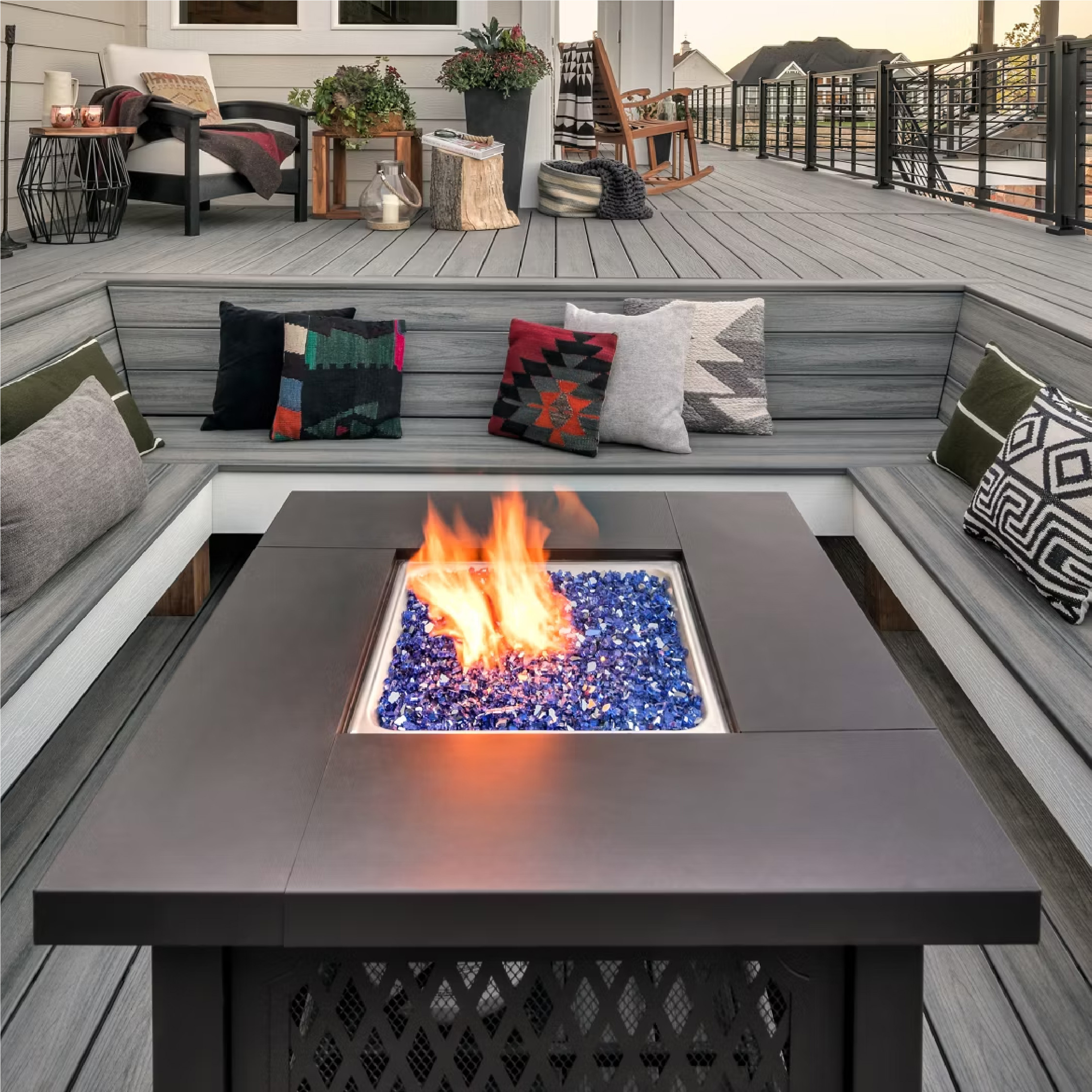
- Built-in benches
- Outdoor kitchens
- Pergolas
- LED stair lighting
- Fire pits or fire tables
- Glass or cable rail systems
Strategic lighting improves both safety and ambiance, especially during Long Island summer evenings.
Maintenance & Longevity
Wood Deck Maintenance:
- Annual cleaning
- Staining every 1–3 years
- Fastener inspections
Composite/PVC Maintenance:
- Occasional washing
- Inspecting substructure
- Minimal refinishing required
Professional installation dramatically reduces long-term repair issues.
Permits and Local Regulations
Deck projects often require:
- Building permits
- Zoning compliance review
- Property line setback verification
- Structural load calculations
Municipalities across Oyster Bay, Huntington, Northport, and surrounding areas enforce specific requirements. Working with experienced contractors streamlines the approval process.
Sustainability in Decking
Eco-conscious homeowners increasingly choose:
- Recycled composite materials
- FSC-certified wood
- Sustainable framing methods
- LED low-voltage lighting
Sustainable decking contributes to environmental responsibility while maintaining durability.
Cost Factors for Outdoor Decking
Several variables affect pricing:
- Material choice
- Size and square footage
- Elevation and structural complexity
- Custom features
- Permit requirements
While pressure-treated wood is the most budget-friendly, composite and PVC materials often provide better long-term value.
The Design-Build Advantage
A professional design-build firm offers:
- 3D renderings
- Material samples
- Structural engineering
- Permit coordination
- Integrated landscape planning
This ensures the deck complements patios, planting beds, driveways, and outdoor living features cohesively.
Outdoor Decking for Long Island Climate
Long Island weather presents challenges:
- Freeze-thaw cycles
- Salt air corrosion
- Heavy snow loads
- UV exposure
Proper flashing, stainless fasteners, reinforced framing, and moisture barriers are essential to long-term performance.
Increasing Property Value with Decking
Real estate professionals consistently report that outdoor living spaces increase buyer interest. A professionally built deck can:
- Boost resale value
- Enhance staging appeal
- Differentiate your home in competitive markets
Especially in coastal communities, outdoor entertaining space is highly desirable.
Final Thoughts
Outdoor decking is more than lumber and fasteners — it is an extension of your home’s architecture and lifestyle. When designed properly, it integrates seamlessly with landscaping, enhances usability, and withstands Long Island’s demanding climate conditions.
From traditional wood to advanced composite systems, selecting the right material and professional installation team makes all the difference.
If you are considering upgrading your backyard with custom decking, thoughtful design and structural precision ensure your outdoor space remains beautiful, safe, and functional for decades.