
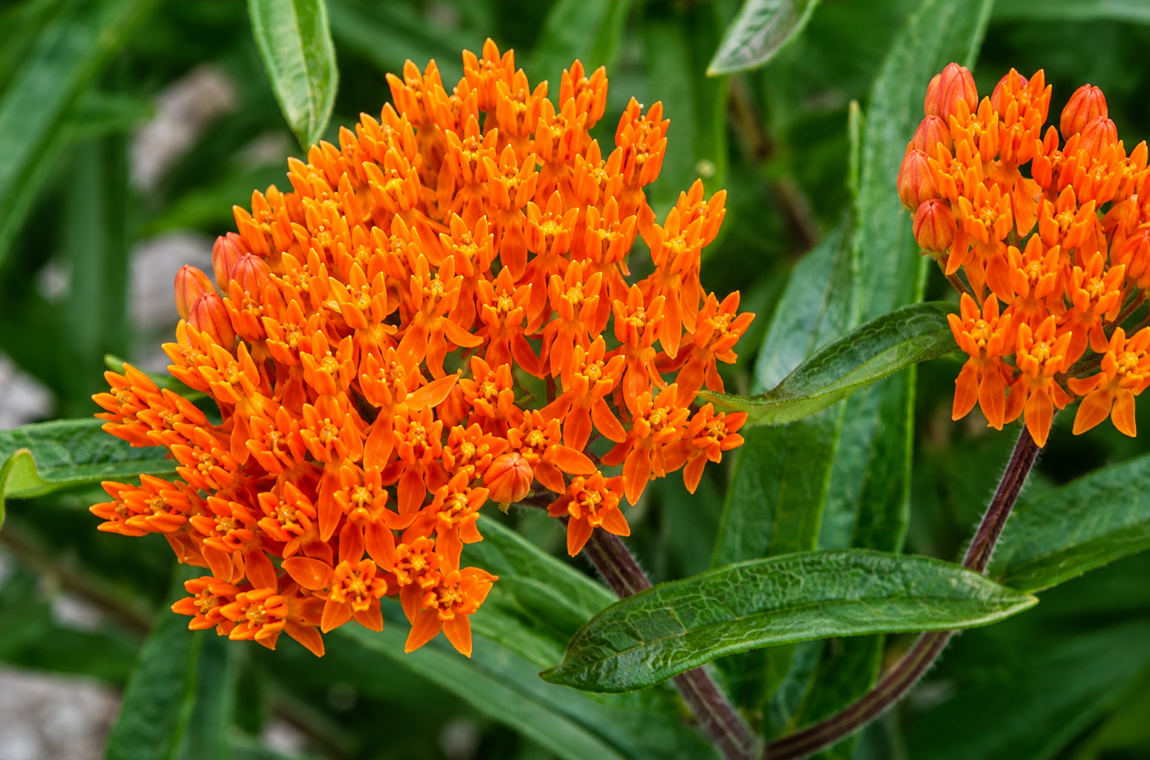
Orange Butterfly Weed
Orange Butterfly Weed — also known as Butterfly Weed, Orange Milkweed, or by its scientific name Asclepias tuberosa — is a perennial wildflower in the milkweed family. Unlike many milkweeds, it lacks the milky sap typical of its relatives but still plays a crucial role in natural ecosystems.
Native to large swaths of North America, A. tuberosa thrives in open areas such as fields, forest edges, and prairies. Its compact stature (typically 1–3 ft tall and wide) makes it ideal for borders, butterfly gardens, and xeriscapes, while its brilliant orange blooms are a magnet for butterflies, bees, and other beneficial insects.
A Burst of Color: Orange Flowers That Wow
One of the most striking features of Butterfly Weed is its dense clusters of bright orange flowers. Blooming from early to late summer, these showy blooms add a splash of fiery color that contrasts beautifully with greens and purples in mixed perennial plantings.
Though orange is the most common hue, occasional cultivars may lean toward red or yellow orange tones — lending diversity to garden palettes while maintaining that warm, cheerful glow.
Why Grow Butterfly Weed? Benefits for Gardeners and Wildlife
Pollinator Paradise
Butterfly Weed earns its name by attracting a parade of pollinators throughout the growing season. Adult butterflies (especially monarchs and swallowtails), bees, and hummingbirds are regular visitors to its nectar rich blooms. Monarch butterflies also use this plant as a host plant, laying eggs on its leaves, which then provide food for caterpillars.
This ecological function makes orange butterfly weed invaluable in efforts to support pollinator health, particularly as populations like monarchs face habitat loss.
Low Maintenance and Tough
Once established, Butterfly Weed is remarkably low maintenance. It’s drought tolerant thanks to its deep taproot and thrives in well drained, poor soils where other plants struggle. Regular watering and fertilizing aren’t necessary, and it seldom requires pest management beyond keeping an eye out for common sap feeders like aphids.
Biodiversity Champion
Because it supports a wide range of beneficial insects, from bees to wasps and beetles, Butterfly Weed contributes to a healthy, diverse garden ecosystem. Its deep roots also help stabilize soil and prevent erosion.
Deer Resistant
Many gardeners appreciate that Butterfly Weed is not typically eaten by deer or rabbits, making it a smart choice for landscapes where browsing wildlife can be a problem.
Growing and Caring for Orange Butterfly Weed
Sunlight & Soil
For best performance, plant Butterfly Weed in a full sun location — at least 6–8 hours of direct light per day. It prefers well drained, dry to average soils and can tolerate sandy or rocky textures. Poorly drained, wet soils increase the risk of crown rot.
Spacing and Planting
Space plants about 18–24 inches apart to allow airflow and healthy growth. If planting from seed, know that it can take 2–3 years before flowering as the taproot establishes. Young plants transplant more easily before that deep root forms, so choose planting times carefully.
Watering and Feeding
• Water: Moderate watering until established; drought tolerant afterward.
• Fertilizer: Not typically needed — feeding can lead to leggy growth.
• Mulch: Use mulch around young seedlings to retain moisture and prevent soil splash, which can spread disease.
Deadheading and Seasonality
Deadheading spent blooms encourages more flowers and prolongs interest through summer. After frost, leaving stalks standing can add winter interest and provide seed for birds; cut back in early spring before new growth begins.
Propagation
Butterfly Weed can be grown from seed (best after cold stratification) or cuttings taken in late spring. Dividing established plants is possible but challenging due to the deep taproot.
Landscape Uses and Design Ideas
Butterfly & Pollinator Gardens
Place orange Butterfly Weed among other nectar rich plants like purple coneflower (Echinacea), black eyed Susan (Rudbeckia), and blazing star (Liatris) to create a pollinator friendly garden that blooms all season long.
Prairie and Naturalized Areas
Butterfly Weed fits beautifully in meadows, prairies, and native plant landscapes. Its free flowering habit and self seeding nature make it a star in naturalistic designs, especially when massed in drifts.
Xeriscaping & Sun Gardens
Thanks to its drought tolerance, Butterfly Weed is an excellent choice for xeriscapes, rock gardens, and sunny borders where water use is minimized.
Beyond Bloom: Fall and Winter Interest
After flowering, Butterfly Weed produces attractive seed pods that add texture to fall gardens. These pods eventually split and release seeds, feeding birds and helping the plant spread somewhat naturally. Leaving dried stems through winter creates visual interest and wildlife habitat.
Companion Plants That Complement Orange Butterfly Weed
Pair Butterfly Weed with plants that offer contrasting color or texture:
• Purple coneflower (Echinacea) – bold purple contrasts orange blooms.
• Little bluestem (Schizachyrium scoparium) – airy grasses soften flowers.
• Black eyed Susan (Rudbeckia hirta) – cheerful yellow flowers with dark centers.
• Salvia and perennial sages – vertical spikes bring pollinators aplenty.
Final Thoughts: A Garden Essential
Orange Butterfly Weed (Asclepias tuberosa) is more than a stunning accent plant — it’s an ecological powerhouse that supports pollinators, enriches biodiversity, and brings long lasting color to gardens with minimal fuss. Whether you’re building a butterfly garden, planting a prairie meadow, or simply want a splash of bright orange against a summer sky, Butterfly Weed deserves a starring role.