
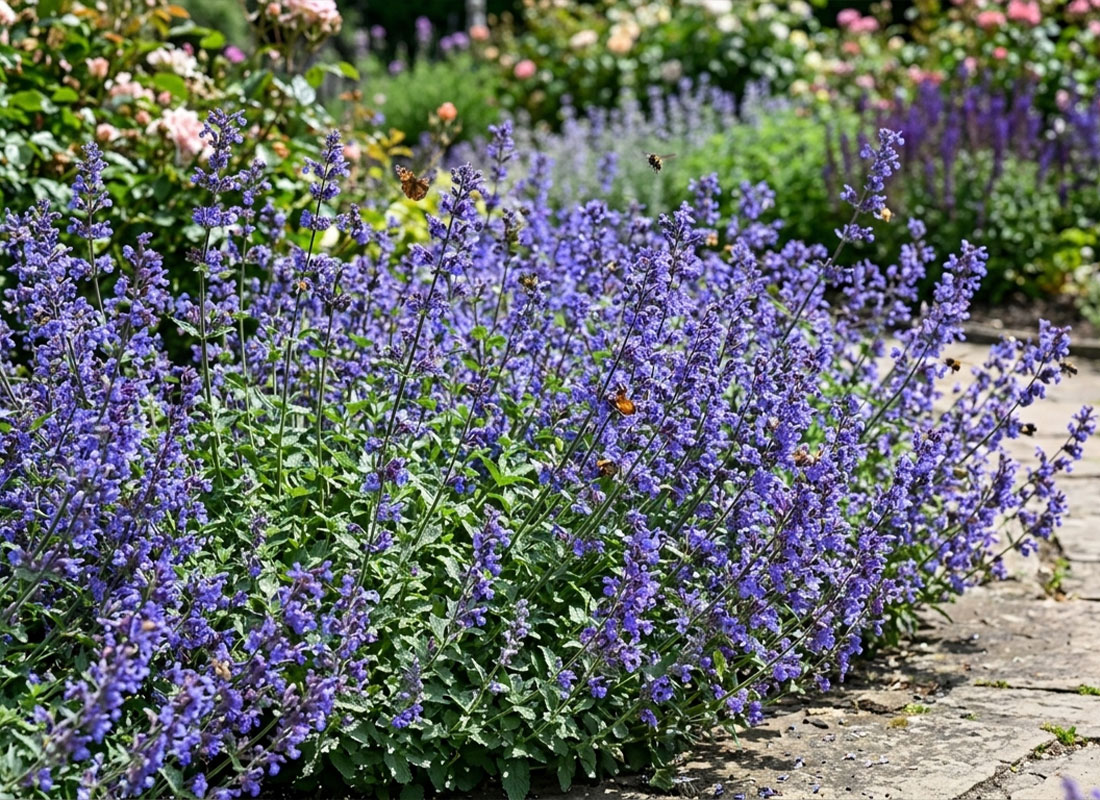
Nepeta ‘Cat’s Pajamas’ (Catmint)
Nepeta ‘Cat’s Pajamas’ is a cultivar of catmint (Nepeta spp.), a group of aromatic, mounding perennials prized for:
Long bloom periods (often spring through fall)
Aromatic gray-green foliage
Tolerance of heat, drought, and poor soils
Attraction of bees, butterflies, and other pollinators
While many catmints are great performers, ‘Cat’s Pajamas’ stands out for its compact habit, rich lavender-blue flowers, and incredible garden reliability.
Deer & Rabbit Resistance — Why It Works
One of the biggest reasons gardeners choose Nepeta ‘Cat’s Pajamas’ is because it’s deer and rabbit resistant. Let’s break down why that matters — and how it actually works.
What “Deer & Rabbit Resistant” Means
When a plant is labeled deer and rabbit resistant, it doesn’t mean it will never be touched — but rather that these animals tend to avoid it in favor of more palatable plants when food is available.
With Cat’s Pajamas, both deer and rabbits rarely browse the foliage because:
The foliage is aromatic and slightly fuzzy — textures many herbivores find unappealing.
Catmint leaves contain essential oils (similar to true mints) that many browsers dislike.
The plant’s high-density fibrous structure isn’t as attractive as tender greens.
Many gardeners report that while deer might skirt around the catmint, they leave it largely untouched even when other perennials are being eaten.
In short: Nepeta ‘Cat’s Pajamas’ is one of the safer bets if you want a colorful perennial that lives to grow another day even where wildlife roams.
Growing Conditions — How to Get It Right
Like most Nepeta cultivars, Cat’s Pajamas is forgiving — but it shines brightest under the right conditions.
Light
Full sun: Ideal — produces the most blooms and best compact form.
Light shade: Acceptable, but may bloom less profusely.
Soil
Well-drained soil: Essential — catmint hates “wet feet.”
Soil type: Tolerates a wide range (sandy, loam, even clay if drained).
Soil pH: Neutral to slightly alkaline ideal.
Water
Regular watering for establishment.
Once established, drought-tolerant — a big plus in low-irrigation landscapes.
Hardiness
Depending on the specific Nepeta parentage, Cat’s Pajamas generally thrives in USDA Zones 4–9 (check your tag), making it adaptable to a broad range of climates.
Care & Maintenance
One reason catmint is beloved by gardeners is because it’s low maintenance — so long as a few basics are followed.
Pruning & Deadheading
Trim spent blooms to encourage constant reblooming.
Shear mid-season (early summer) to keep plants compact and tidy.
Cut Back in Fall or Spring
In late fall or early spring, cut plants back to the ground to promote fresh new growth.
Division
Divide clumps every 2–3 years to keep plants vigorous and prevent woody centers.
Avoid Over-Fertilizing
Too much fertilizer → too much leafy growth and floppy stems.
Catmint prefers lean soils — overfeeding reduces its natural tidy form.
Pollinator Magnet & Wildlife Benefits
One of the coolest features of Nepeta ‘Cat’s Pajamas’ is its wildlife value.
Attracts Bees & Butterflies
Lavender-blue flowers are nectar-rich.
Bees (honeybees, bumblebees, native bees) love it.
Butterflies visit throughout the bloom season.
Other Beneficial Insects
Pollinators bring more life to your garden.
Hoverflies and other helpers visit the blooms.
Even better: Cat’s Pajamas blooms for months, providing a long-lasting food source.
Landscape Design Ideas
Here are creative ways to use Nepeta ‘Cat’s Pajamas’ in your garden:
1. Border Edging & Path Softening
Nepeta’s mounded shape and long bloom season make it great along walkways and borders.
Use it to:
Frame beds
Soften hard edges
Transition between lawn and flower beds
2. Mass Planting for Seasonal Color
Plant in drifts for impactful color swaths.
This works especially well in meadow-style gardens.
3. Containers & Patio Pots
Compact habit = container-friendly.
Try with:
Lavender
Salvia
Rosemary (if your climate allows)
Geraniums
4. Cottage Garden Mix
Pair with classic perennials for that timeless garden charm.
Great companions:
Echinacea (coneflower)
Coreopsis
Rudbeckia (black-eyed Susan)
Salvia
Allium
Companion Plants That Shine With Cat’s Pajamas
Choosing plants that complement both form and bloom time makes your garden sing all season.
Spring & Early Summer
Allium — adds architectural bloom early
Lavender — similar textures and fragrance
Nepeta varieties — mix heights and bloom colors
Summer & Fall
Echinacea — bold flowers
Coreopsis — long summertime color
Rudbeckia — great contrast with blue catmint
Salvia — extended pollinator visits
Common Problems & Solutions
Although Nepeta ‘Cat’s Pajamas’ is easy to grow, a few issues can pop up:
Floppy Growth
Why: Too much fertilizer or too much shade.
Fix: Cut back, reduce feeding, and ensure full sun.
Pests
Generally rare — catmint’s scent deters many common pests.
What to do:
Handpick slugs/snails
Use organic controls if needed
Winter Tips
In cold climates, a light mulch layer protects roots while plants are dormant.
Propagation — Grow More!
Want more catmint?
Division
Divide every 2–3 years
Early spring or early fall ideal
Cuttings
Take softwood cuttings in spring
Root in moist mix
Why Gardeners Love Cat’s Pajamas
Here’s a quick summary of what makes Nepeta ‘Cat’s Pajamas’ such a great garden perennial:
Benefits
Deer & rabbit resistant
Long bloom season
Pollinator magnet
Low maintenance
Heat & drought tolerant
Great in borders, drifts, containers
Considerations
Likes full sun
Needs good drainage
If you want a plant that performs without constant fuss and still gives month after month of blooms, catmint is a top choice — and Cat’s Pajamas is one of its best.
Seasonal Garden Timeline
Here’s how Cat’s Pajamas plays out through the year:
Spring: Fresh green foliage emerges
Early Summer: Buds form
Midsummer: First strong flush of blooms
Late Summer: Continued flowering with deadheading
Fall: Seedheads add structure; cut back after frost
Winter: Dormant; mulch if needed
Final Thoughts
Nepeta ‘Cat’s Pajamas’ is the kind of plant that delivers beauty, longevity, and resilience — all while standing up to deer and rabbits that might eat other flowers. Its lavender-blue hues, aromatic foliage, and pollinator power make it a perennial worth growing in almost any garden.