
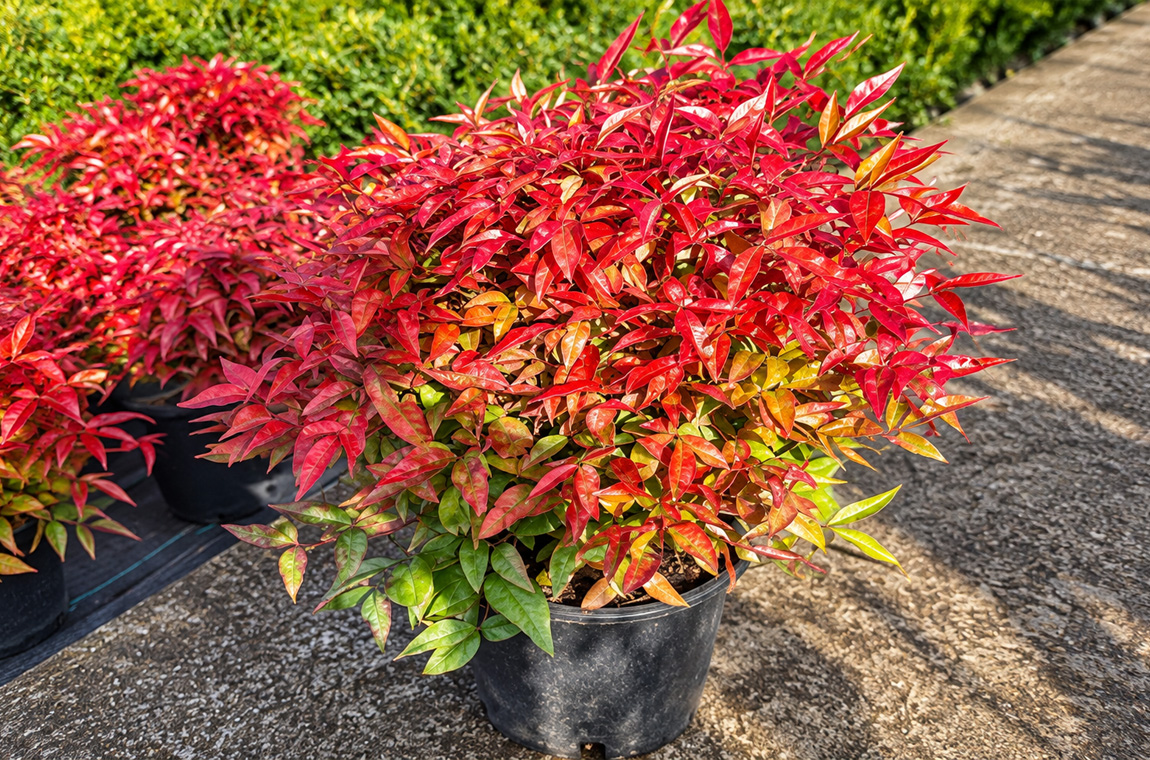
Nandina Varieties (Heavenly Bamboo) for Northeast Landscapes
Nandina, commonly called heavenly bamboo, is a shrub that provides four-season interest, from fresh spring growth and summer structure to fiery fall tones and winter color. In the Northeast, especially along Long Island, cultivar selection matters because of cold snaps, wind, and varying sun exposure.
Some nandinas stay compact for foundation beds, while others grow taller and may produce berries, bringing wildlife-safety and invasiveness considerations. This guide explores useful nandina varieties, their appearance, size, landscape applications, and important considerations for choosing the right plant.
First: What “Nandina” Really Is
Despite its bamboo-like canes, nandina is not bamboo. It is a woody shrub (Nandina domestica) with upright stems and finely textured foliage.
Many selections are semi-evergreen in colder climates, holding leaves during mild winters while developing bronze, red, or thinner foliage after harsh weather. Nandina is generally grown in USDA Zones 6–9, depending on cultivar and site protection.
Key Considerations for Northeast Gardens:
- Choose proven hardy cultivars.
- Provide winter wind protection.
- Ensure good drainage and avoid wet feet.
The Big Caution: Berries and Invasiveness
Nandina Berries Can Be Dangerous for Birds
Nandina berries contain compounds that can release cyanide. Cedar waxwings have been associated with documented toxicity events involving berry consumption.
Invasiveness Considerations
Wild-type nandina has demonstrated invasive behavior in parts of the United States, particularly the Southeast. Regulations may also vary by region.
Louis Contino Landscaping Recommendation:
When clients want the nandina look, we focus on sterile or non-fruiting selections and suggest alternatives when appropriate.
How to Choose the Right Nandina Variety
Mature Size:
- 1–2 feet: Edging and tight borders
- Around 3 feet: Foundation beds and massing
- 4–8 feet: Screening or background structure
Color Goals:
- Winter red and orange
- Lime or chartreuse new growth
- Soft pink foliage accents
Sun and Shade
Most nandinas develop stronger color with more sun, while many tolerate partial shade.
Wildlife and Maintenance
Choose sterile or non-fruiting cultivars when wildlife safety and low maintenance are priorities.
Best Nandina Varieties for Northeast Landscapes
1) ‘Fire Power’ — The Classic Dwarf Red
‘Fire Power’ typically grows around 1–2 feet tall and wide. It is known for deep red fall and winter foliage, making it useful for tight spaces and clean landscape lines.
Best Uses:
- Front-of-bed planting
- Sunny foundation beds
- Containers near entrances
Design Tip:
Repeat it in groups of 3–7 for a crisp, architectural look, then soften edges with ornamental grasses or spring bulbs.
2) ‘Gulf Stream’ — Compact and Full
‘Gulf Stream’ commonly grows around 3 feet tall with a similar spread. It provides dense texture, seasonal color, and more presence than smaller dwarf varieties.
It is noted for rarely producing fruit and is commonly discussed as a lower-fruiting option.
Best Uses:
- Foundation beds
- Layered shrub borders
- Low mass planting
3) ‘Blush Pink’ — A Soft Color Accent
‘Blush Pink’ offers pink new growth and year-round foliage interest. Its compact habit works well in modern landscape palettes and smaller planting areas.
Best Uses:
- Front entrances
- Mixed shrub borders
- Containers
It pairs well with boxwood, inkberry, or pieris.
4) Standard Nandina Domestica Types
Traditional forms can reach approximately 4–8 feet and are more likely to flower and produce berries.
In exposed Northeast locations, performance may depend on winter protection and suitable site conditions.
Why We’re Cautious:
- Higher chance of berries
- Greater spread concerns
- Winter exposure may affect appearance
For taller screening on Long Island, Louis Contino Landscaping often considers alternatives such as inkberry holly and selected viburnums.
Planting and Care Tips
Light
Full sun to partial shade works well for most nandinas. More sunlight generally produces stronger red and orange coloration.
Soil and Drainage
Nandina performs best in well-drained soil with consistent moisture during establishment. Avoid soggy areas.
Watering
- First season: Deep watering 1–2 times weekly, depending on rainfall and soil type.
- After establishment: Moderate drought tolerance, although occasional deep watering during summer heat improves appearance.
Mulch
Apply a 2–3-inch mulch layer to help retain moisture and buffer temperature changes. Keep mulch away from stems.
Pruning
Thin older canes selectively at the base rather than shearing nandina into a box shape. Its natural form generally looks more attractive.
Which Nandina Should You Choose?
- Small, modern look: ‘Fire Power’
- Three-foot massing shrub: ‘Gulf Stream’
- Soft color accent: ‘Blush Pink’
- Wildlife safety priority: Sterile or non-fruiting cultivars
Northeast-Friendly Alternatives
If you like nandina’s winter interest but want alternatives, consider:
- Winterberry holly: Seasonal berries and winter color
- Inkberry holly: Evergreen structure
- Aronia: Fall color and wildlife-supporting berries
These options can be blended into landscape designs to provide seasonal interest.
Need Help Picking the Right Variety?
At Louis Contino Landscaping, we design planting plans based on sun exposure, soil conditions, deer pressure, and winter wind, helping your shrubs look intentional and polished throughout the year.