
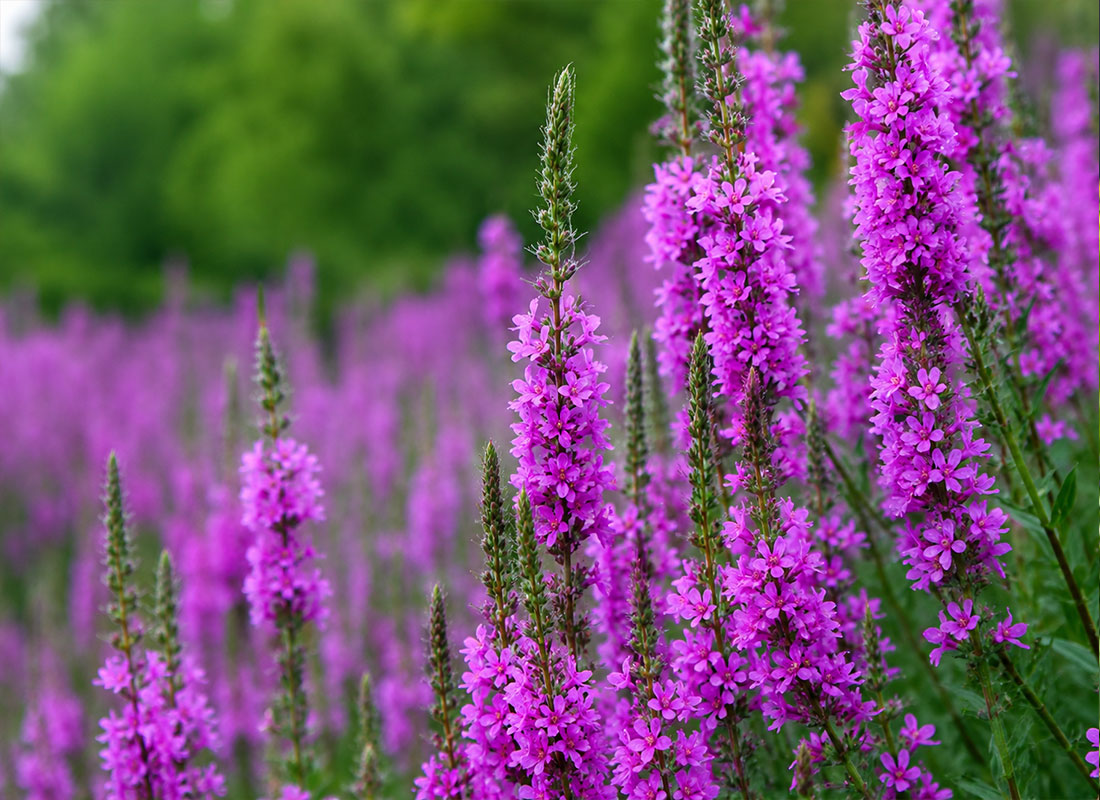
Lythrum ‘Purple Loosestrife’
Lythrum salicaria, commonly called purple loosestrife, is instantly recognizable due to its tall spikes of purple magenta flowers, often seen rising above wet soils and along water margins. Historically, it was introduced into North America as an ornamental garden plant, admired for its long summer bloom and vibrant color. But its story has changed dramatically — from ornamental to a problematic invasive species across much of the United States and Canada.
Purple loosestrife is native to Eurasia and parts of northern Africa but has naturalized widely in North America. It grows upright stems that can reach 3 10 ft tall, topped with dense spikes of purple magenta flowers from mid summer into fall.
Identification & Key Features
Here’s how to identify purple loosestrife in the landscape:
Growth Form
Height: Commonly 3–6 ft, sometimes up to 10 ft in optimal wetland conditions.
Stems: Multiple upright stems forming a clump; stems are square shaped (4 sided), a useful trait for identification.
Leaves: Lance shaped (narrow and pointed) leaves are typically opposite on the stem and sometimes appear whorled.
Flowers
Color: Bright purple, magenta, or pinkish toothed petals.
Arrangement: Small flowers are densely arranged on elongated spikes.
Bloom Time: Blooming generally occurs July through September.
Seeds & Spread
Purple loosestrife produces millions of tiny seeds per plant that are easily distributed by wind, water, animals, equipment, and even muddy boots — contributing to rapid spread.
Once established, even tiny fragments of root or stems can sprout new plants.
Deer & Wildlife — What Happens If It’s in Your Yard?
Contrary to many ornamental flowers, purple loosestrife is not generally planted for deer resistance. In fact:
It’s not a preferred food for most deer, but herbivory (e.g., by deer or muskrats) doesn’t typically control populations.
Scientific evidence indicates deer and other large grazers find its woody stems and coarse foliage less palatable compared to native wetland plants such as cattails.
However, this plant’s ecological impact on wildlife habitat is the real concern: it often displaces native plants that are essential food or shelter for ducks, amphibians, insects, and other species.
Why Purple Loosestrife Is Considered Invasive
At first glance, purple loosestrife’s tall spires and long bloom might seem ideal for gardens — but its ecological behavior is anything but garden friendly.
Invasive Traits
A single mature plant can produce up to 2.5–2.7 million seeds annually.
Seeds float in water and disperse widely, enabling rapid colonization of wetlands, pond edges, ditches, and streams.
Dense growth forms monotypic stands that crowd out native vegetation, reduce plant diversity, and degrade essential habitat for wildlife.
It’s been listed as a noxious weed or prohibited species in many U.S. states, making sale, transport, or cultivation illegal in those areas.
Simply put: while purple loosestrife is beautiful, its tendency to displace native plants and disrupt wetland ecosystems makes it a serious management issue.
Growing Conditions
Where It Thrives in the Wild
In natural or semi natural settings, purple loosestrife favors:
Full sun and moist soils, but it tolerates a range of conditions including partial shade.
Wetlands, marsh margins, irrigation ditches, pond and stream edges, and damp meadows.
It can withstand both standing water and fluctuating water levels.
This adaptability is part of why it spreads so aggressively outside its native range.
Garden Considerations: Should You Plant It?
The short answer: no — not in most North American landscapes.
Because Lythrum salicaria is:
Highly invasive;
Difficult to control once established;
Illegal to sell or cultivate in many states;
Harmful to native plants and wildlife habitat;
Many state conservation agencies and extension services strongly discourage planting purple loosestrife as an ornamental.
Even cultivars once marketed as “sterile” can cross pollinate with wild plants and produce viable seed — so risks remain high.
How Purple Loosestrife Is Managed
In conservation contexts, purple loosestrife control requires persistence. Methods include:
Biological Control
Loosestrife beetles (Galerucella spp.) have been introduced in many areas to eat foliage and help reduce plant vigor.
Manual Methods
Careful removal of entire plants, roots and all, is essential.
Cutting flower spikes before seeds form can limit spread.
Dispose of removed plants responsibly — do not compost or leave fragments that could resprout.
Herbicides
In some natural areas, carefully applied herbicides are used by professionals to treat large infestations.
Note: Any removal should follow local guidelines, since wetlands and waterways may be regulated.
Native Alternatives With Similar Color & Benefits
If what you love about purple loosestrife is color, pollinator appeal, or vertical accents, there are responsible native alternatives that provide similar garden value without environmental harm:
Blazing Star (Liatris spicata)
Tall spikes of vibrant purple flowers
Excellent for pollinators including butterflies and bees
Native to prairies and wet meadows
Purple Coneflower (Echinacea purpurea)
Long lasting summer blooms
Attracts butterflies and birds
Works well in perennial borders
Verbena (Verbena bonariensis)
Airy clusters of purple flowers on tall slender stems
Great for mixed borders and pollinator gardens
Salvia (Salvia nemorosa and cultivars)
Rich violet flower spikes
Attractive to bees and hummingbirds
Performs beautifully in garden beds
These options deliver color, structure, and wildlife value — without risk of ecological invasion.
Deer & Wildlife Friendly Garden Strategy
For gardeners who also want deer resistant plantings, combining native species with proven deer avoiders and pollinator plants can create a robust, beautiful garden that supports local ecosystems:
Use native perennials like purple coneflower, blazing star, and salvia
Include grasses and structural plants to diversify form
Provide nectar sources and shelter for bees and butterflies
Add seasonal interest with shrubs and seed heads for birds
This approach helps build a resilient garden that’s aesthetically pleasing and ecologically sound.
Final Thoughts
Purple loosestrife (Lythrum salicaria) is a fascinating plant biologically and visually — with tall, dramatic flower spikes that once made it appealing as a garden ornamental. But across much of North America, it is now understood as a major invasive threat to natural wetlands and native plant communities.
Rather than encouraging its cultivation, gardeners and land stewards are encouraged to:
Learn to recognize and manage purple loosestrife where it appears;
Choose native, non invasive alternatives for color and pollinator support;
Support healthy ecosystems with plant selections that benefit local wildlife.