
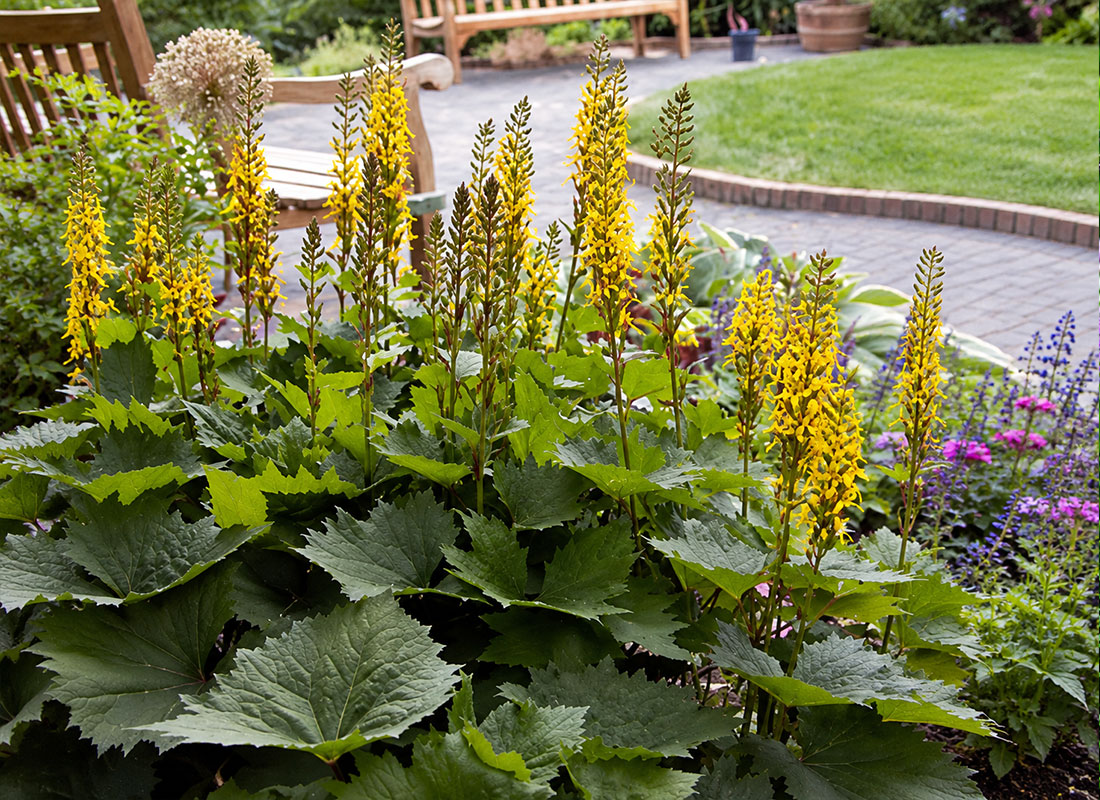
Ligularia ‘The Little Rocket’
If your garden has shade, moisture, and hungry deer, finding plants that thrive — not just survive — can feel like a challenge. Enter Ligularia ‘The Little Rocket’, a compact yet commanding perennial that brings bold foliage, vertical flower spikes, and reliable deer resistance to shady and partially shaded landscapes.
With its glossy, dark green leaves and upright towers of golden-yellow flowers, The Little Rocket proves that shade gardens don’t have to be quiet or boring. This plant offers strong architectural presence, dramatic contrast, and mid-to-late summer blooms that light up darker corners of the garden.
Let’s take a deep dive into why Ligularia ‘The Little Rocket’ is a must-have for shade lovers and deer-weary gardeners alike.
What Is Ligularia ‘The Little Rocket’?
Ligularia is a genus of moisture-loving perennials in the Asteraceae (daisy) family, native to parts of Asia and Europe. They are known for their large, bold foliage and tall spikes of daisy-like yellow flowers.
‘The Little Rocket’ is a compact cultivar of Ligularia stenocephala, bred to deliver all the drama of larger ligularias in a smaller, more manageable size.
Key characteristics:
- Botanical name: Ligularia stenocephala ‘The Little Rocket’
- Common name: Ligularia ‘The Little Rocket’
- Plant type: Herbaceous perennial
- Habit: Upright clump with vertical flower spikes
- Special traits: Deer resistant, shade tolerant, moisture loving
While many ligularias can be massive, sprawling plants, ‘The Little Rocket’ stays tidy and vertical — making it far easier to fit into modern gardens, borders, and mixed shade plantings.
Size, Shape & Growth Habit
Despite the word “little” in its name, this ligularia still delivers big visual impact.
- Height: 24–36 inches in bloom
- Width: 18–24 inches
- Habit: Upright, clumping, architectural
The plant forms a dense basal mound of glossy green leaves in spring. As summer arrives, tall, narrow flower spikes shoot upward like rockets — hence the name — creating dramatic vertical accents that contrast beautifully with lower, mounding shade plants.
This upright growth habit makes ‘The Little Rocket’ especially valuable for:
- Adding height in shade borders
- Creating visual rhythm along paths
- Serving as a focal point in woodland gardens
Bold Foliage That Anchors the Garden
Even when not in bloom, Ligularia ‘The Little Rocket’ earns its place in the garden thanks to its large, shiny, heart-shaped leaves.
Foliage highlights:
- Deep, glossy green color
- Thick, substantial texture
- Strong contrast with fine-textured plants like ferns or grasses
The leaves create a lush, almost tropical feel — especially valuable in shady areas that can otherwise feel flat or dull. They act as living mulch, shading the soil and helping retain moisture around the plant’s base.
In garden design, ligularia foliage functions as an anchor plant, grounding lighter textures and helping unify mixed plantings.
Flowering Display: Vertical Drama in Summer
Ligularia ‘The Little Rocket’ blooms in mid to late summer, a time when many shade plants have already finished flowering.
Flower characteristics:
- Tall, narrow spikes
- Bright golden-yellow, daisy-like blooms
- Flowers open gradually from bottom to top
- Strong contrast against dark foliage
The upright spikes bring movement and structure to shade gardens, standing tall among hostas, astilbes, and ferns. The yellow blooms are especially effective at brightening shady areas, catching light and drawing the eye upward.
Deer Resistance: A Major Garden Advantage
One of the standout features of Ligularia ‘The Little Rocket’ is its strong deer resistance.
Why deer avoid ligularia:
- Thick, coarse leaves
- Bitter taste
- Tough texture
While no plant is completely deer-proof, ligularia is consistently rated as deer resistant, especially compared to tender shade plants like hostas or hydrangeas. In landscapes with regular deer pressure, gardeners often find ligularia remains untouched while neighboring plants are browsed.
This makes it an excellent choice for:
- Woodland edges
- Rural and suburban gardens
- Shade gardens near natural areas
Light Requirements: Shade Is Its Sweet Spot
Ligularia ‘The Little Rocket’ performs best in partial shade to full shade.
- Ideal light: Morning sun with afternoon shade
- Tolerates: Full shade
- Avoid: Hot, full sun — especially in dry conditions
Too much direct sun can cause the leaves to wilt or scorch, particularly if soil moisture is low. In cooler climates, the plant can tolerate more sun, provided the soil stays consistently moist.
Moisture & Soil: The Key to Success
If there’s one thing ligularia demands, it’s moisture.
Soil preferences:
- Rich, organic soil
- Moist but well-drained
- High in organic matter
Ligularia thrives near:
- Ponds or streams
- Low-lying garden areas
- Irrigated shade beds
Dry soil is the fastest way to stress this plant. When moisture is insufficient, the leaves may droop dramatically — a clear signal that watering is needed. Fortunately, ligularia recovers quickly once watered.
Mulching with compost or shredded leaves helps:
- Retain soil moisture
- Keep roots cool
- Improve soil structure
Planting Ligularia ‘The Little Rocket’
When to plant:
- Spring is ideal
- Early fall also works in mild climates
How to plant:
- Choose a shaded or partially shaded site
- Amend soil with compost or organic matter
- Dig a hole as deep as the root ball and twice as wide
- Plant at the same depth as in the container
- Water thoroughly and mulch well
Space plants 18–24 inches apart to allow good air circulation and room for mature growth.
Maintenance & Care
Ligularia ‘The Little Rocket’ is relatively low maintenance when its moisture needs are met.
Ongoing care:
- Water regularly, especially during hot or dry weather
- Remove spent flower spikes if desired for a tidier look
- Cut back foliage in late fall or early spring
In colder climates, foliage dies back in winter. Leave the spent leaves in place until spring to protect the crown, then clean up as new growth emerges.
Hardiness & Longevity
- USDA Hardiness Zones: 4–8
- Cold tolerance: Excellent
- Heat tolerance: Moderate (with moisture)
In suitable conditions, ligularia is a long-lived perennial that slowly expands into a larger clump over time. Division is rarely necessary but can be done in spring if plants become crowded.
Pollinators & Wildlife Benefits
While deer avoid it, pollinators appreciate ligularia’s blooms.
Attracts:
- Bees
- Butterflies
- Beneficial insects
The late-season nectar is especially valuable when other shade plants are no longer flowering. Birds may also visit the garden for insects attracted to the plant.
Landscape Design Ideas
Ligularia ‘The Little Rocket’ shines in a variety of garden styles:
1. Shade Borders
Use it as a vertical accent among hostas, heuchera, and astilbe.
2. Woodland Gardens
Plant along woodland edges where soil stays moist and light is filtered.
3. Moisture-Loving Beds
Combine with plants like:
- Astilbe
- Rodgersia
- Ferns
- Iris (Japanese or Siberian)
4. Near Water Features
Ligularia looks especially at home near ponds or streams, where consistent moisture supports lush growth.
5. Contrast Planting
Pair bold ligularia leaves with:
- Fine-textured grasses
- Ferns
- Dark-leaved heucheras
The contrast in texture elevates the entire planting.
Common Problems (And How to Avoid Them)
Wilting leaves
Cause: Dry soil
Solution: Increase watering and mulch
Leaf scorch
Cause: Too much sun
Solution: Provide more shade
Slug damage
Cause: Moist environments
Solution: Hand-pick or use organic slug controls if needed
Overall, ligularia has few serious pest or disease issues when grown in appropriate conditions.
Why Ligularia ‘The Little Rocket’ Belongs in Your Garden
This plant checks a lot of boxes for shade gardeners:
Deer resistant
Thrives in shade
Bold, architectural foliage
Late-season flowers
Excellent for moist soils
Low maintenance with proper watering
If you struggle to find plants that stand out in shade and stand up to deer, Ligularia ‘The Little Rocket’ is one of the most reliable and rewarding choices you can make.
Final Thoughts
Ligularia ‘The Little Rocket’ proves that shade gardens can be bold, dramatic, and full of life. With its glossy foliage, golden flower spikes, and dependable deer resistance, it brings structure and brightness to places where many plants fade into the background.
Give it moisture, give it shade, and this plant will reward you year after year — launching bright yellow “rockets” into your garden just when you need them most.