
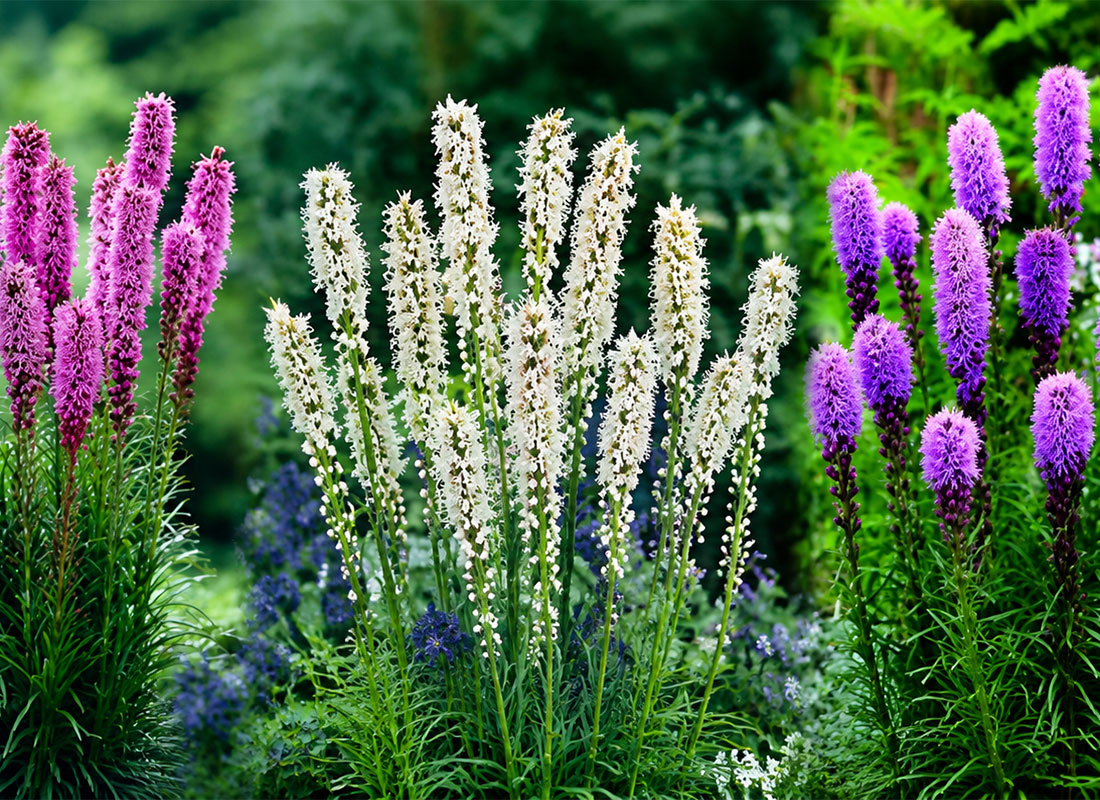
Liatris (Blazing Star)
If you want a perennial that brings bold vertical color, wildlife-friendly nectar, and reliable deer resistance, Liatris — commonly called Blazing Star or Gayfeather — is one of the most valuable plants you can add to your garden. These native North American perennials are known for their long spires of button-like flowers that rise above neat foliage in mid-summer and continue blooming into fall, attracting butterflies, bees, hummingbirds, and even songbirds later in the season.
Whether you’ve never grown liatris before or you’re planning a meadow, pollinator garden, or colorful perennial border, this guide will show you everything you need to know — including top varieties, planting and care, landscape uses, and seasonal interest.
What Is Liatris?
Liatris are herbaceous perennials in the Asteraceae family — the same family as coneflowers and asters — native to prairies, meadows, and open woodlands across much of North America. These plants are especially prized for:
- Tall, architectural flower spikes rising from grass-like foliage
- Late summer to fall blooms when other perennials are winding down
- Exceptional attraction to pollinators like butterflies and bees
- Deer and rabbit resistance compared with many other flowering plants
- Drought tolerance and easy care once established
The classic common name blazing star comes from the plant’s striking fireworks-like flower spikes that light up gardens with strong vertical accents.
Bloom Time & Garden Performance
Liatris typically blooms from mid-summer through early fall, filling your garden with rich color when many other plants are past their peak. The flowers open sequentially from top to bottom, a unique trait among many flowering perennials.
These spikes can persist for weeks, and in many places the dried seedheads remain attractive and valuable for wildlife long after blooming has ended. This extended interest makes Liatris a favorite in:
- Prairie plantings
- Pollinator gardens
- Wildflower and meadow gardens
- Mixed perennial borders
- Cut flower gardens
Deer & Rabbit Resistance
One of the biggest reasons gardeners love Liatris is its general resistance to deer and rabbits — a quality shared by many of its native prairie counterparts. While no plant is absolutely deer-proof, the fibrous texture of Liatris foliage and flower stems make it much less appealing to browsing animals compared to tender perennials.
Garden guides and plant catalogs often list blazing star among deer-resistant choices, meaning it’s much less likely to be heavily damaged by wildlife under normal conditions — a huge bonus for gardens in suburban and rural areas where deer roam.
Liatris Varieties — Colors, Heights & Uses
There are over 30 species of Liatris and many cultivars, each offering something slightly different in height, bloom color, and form. Here’s a look at some of the most popular and garden-worthy:
Liatris spicata – Dense Blazing Star (Classic Choice)
Perhaps the most well-known species in gardens, Liatris spicata has tight spikes of purple flowers rising above clumps of narrow, grass-like leaves. It typically grows 2–4 feet tall and is excellent for strong vertical accents in perennial borders or prairie designs.
Popular cultivars include:
- ‘Kobold’ – A more compact form roughly 18–24″ tall with rosy-lavender blooms, great for smaller gardens or front of border plantings.
- ‘Floristan White’ / ‘Alba’ – White-flowered selections that provide a softer look and contrast beautifully with traditional purple types.
- ‘Floristan Violet’ – Deep violet blooms with strong stems great for cutting and garden height impact.
These spikes make spectacular cut flowers for arrangements and lasting dried displays as well.
Liatris ligulistylis – Meadow or Rocky Mountain Blazing Star
A slightly taller species that can reach up to 5 feet, Liatris ligulistylis produces looser, more feathery flower spikes that look amazing in prairie and meadow settings. It’s particularly good at attracting monarch butterflies and other pollinators.
This is a great choice when you want height and airy form at the back of a border or in naturalistic plantings.
Liatris pycnostachya – Prairie Blazing Star
Sometimes known as Tall or Prairie Gayfeather, this species also offers tall, purple spikes that rise prominently in the garden and excel in meadow or wildflower designs. Pollinators swarm these blooms, and they bring excellent vertical structure when planted in drifts.
Liatris aspera – Rough Blazing Star
Liatris aspera has slightly larger, more open flowerheads and does particularly well in dry, rocky soil where other plants may struggle. It can reach 3–5 feet and is excellent in low-maintenance native plant gardens.
Liatris scariosa – Eastern Meadow Blazing Star
A larger species that can grow 3–5 feet tall, Liatris scariosa produces rose-purple spikes later in the season. It thrives in sunny, lean soil and is perfect for meadow plantings and wildlife habitat gardens.
Liatris microcephala – Dwarf Blazing Star
For smaller spaces and rock gardens, Liatris microcephala — literally the dwarf blazing star — produces compact flower heads and works beautifully among low perennials, groundcovers, or stonework.
How to Grow Liatris Successfully
Growing Liatris is surprisingly easy, especially when you give it the conditions it thrives in naturally.
Light
Liatris loves full sun — at least 6+ hours of direct sunlight per day — which ensures the best bloom display and strong stems. Some species tolerate light afternoon shade, but flowering is best in sun.
Soil
These plants are adaptable but prefer well-drained soil. They tolerate poor to moderately fertile soil and do not like heavy, waterlogged clay, which can cause corm rot in winter.
Amending heavy soils with compost or grit helps improve drainage.
Watering
- First season: Keep soil evenly moist while roots establish.
- After established: Liatris is surprisingly drought tolerant and only needs occasional deep watering during prolonged dry spells.
Maintenance
- Deadhead spent blooms to encourage more flower production and keep a clean look.
- Leave some seedheads if you want winter interest and food for birds.
- Cut back stems in late fall (or early spring) before new growth emerges to tidy the garden.
Pollinators & Wildlife Value
Liatris is a pollinator magnet and should be a cornerstone plant in any wildlife-friendly garden. Its nectar-rich flowers attract:
- Butterflies (including monarchs)
- Bees (both native and honey bees)
- Hummingbirds
After blooming, the seeds provide food for songbirds like finches in fall and winter.
Pair it with coneflowers, black-eyed Susans, asters, and native grasses to build a garden buzzing with life and color throughout the warm months.
Landscape & Design Ideas
Here’s how to use Liatris creatively in your yard:
1. Pollinator Border
Plant mix of Liatris spicata, Echinacea, and Rudbeckia for a vibrant lane that blooms midsummer into fall.
2. Prairie or Meadow Garden
Group taller species like L. ligulistylis and L. aspera for naturalistic, meadow-style plantings.
3. Cut Flower Garden
Use Kobold or ‘Floristan White’ to supply continuous blooms perfect for bouquets.
4. Mass Plantings
Masses of blazing star spikes create stunning rhythm and color flows down long borders or mixed beds.
5. Container Gardening
Deep containers filled with compact cultivars like L. spicata ‘Kobold’ make eye-catching patio accents.
Final Thoughts
Whether you’re designing a wildlife garden, a low-maintenance perennial border, or a bustling pollinator habitat, Liatris stands out as a versatile, stunning, and truly valuable perennial:
- Tall vertical spikes brighten late summer landscapes
- Excellent nectar source for pollinators
- Very good deer and rabbit resistance
- Adaptable to a range of soils and climates
- Works in modern, prairie, cottage, and meadow designs
With varieties ranging from short and compact to towering and dramatic, there’s a Liatris to fit nearly every garden space and design vision.
Plant a few this spring or fall, and soon you’ll enjoy weeks of dazzling blooms and a garden full of fluttering wings.