
Leucothoe Varieties for Northeast Landscapes (Shade-Loving Evergreen Color You’ll Actually Keep)
If you’ve got a shady foundation bed, a damp woodland edge, or that tricky side-yard where grass never quite makes it, Leucothoe (pronounced loo-KOH-tho-ee) is one of the most dependable shrubs we use at Louis Contino Landscaping for Long Island and the greater Northeast. It gives you year-year structure, glossy evergreen foliage, and multi-season color—bronze, burgundy, red flushes, and variegation—without demanding full sun.
Leucothoe is in the Ericaceae family, the same acid-loving family as rhododendrons, azaleas, and pieris. It shines in moist, acidic, organically rich soils and part shade to shade. Its spring flowers are subtle white, urn/bell-like blooms, while the foliage remains the main attraction.
Why Leucothoe Works So Well in the Northeast
Shade and woodland conditions: Most varieties perform best in partial shade, with many tolerating full shade, making them valuable beneath mature trees.
Moisture: Leucothoe performs well in reliably moist soils, rain-garden edges, and damp low areas, provided drainage is not stagnant.
Evergreen structure: Its graceful, arching habit provides structure without creating the rigid “hedge look,” blending naturally with ferns, hosta, hellebores, and hydrangeas.
Winter interest: Foliage often develops wine, bronze, or burgundy tones in cold weather, adding color when the rest of the landscape is dormant.
The Main Species You’ll See
Leucothoe fontanesiana
Often called drooping leucothoe or mountain doghobble, this classic landscape species has an arching evergreen form and many cultivars selected for compact size or stronger foliage color. It prefers moist, acidic soil and sheltered sites and is less tolerant of wind and drought.
Leucothoe axillaris
Also known as coastal doghobble, this evergreen shrub prefers acidic, humus-rich soil, shade or part shade, and protection from wind and drought stress.
On Long Island, wind exposure is especially important near water or open lawns. Where sites are breezy, we may create a sheltered planting pocket or select a more wind-tolerant shrub.
Best Leucothoe Varieties for Landscape Use
SCARLETTA (‘Zeblid’) — Compact “Color Machine”
SCARLETTA® is compact and tidy, making it excellent for foundation beds. New growth emerges red, shifts toward green with red tones, and develops bronze/wine coloration in fall and winter. Its dense mound also works well in mass plantings.
Best uses include under windows, along shady walkways, and on slopes for erosion control and weed suppression. Planting multiples creates a more intentional rhythm.
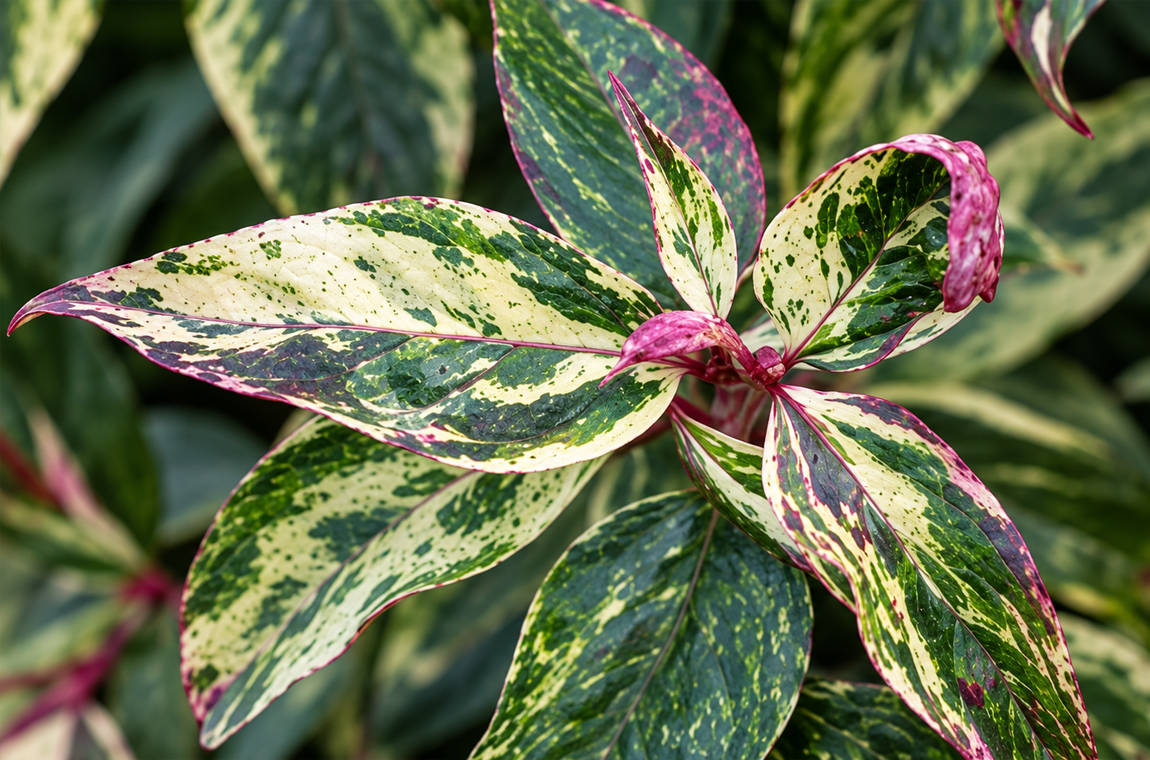
‘Girard’s Rainbow’ — Variegated Foliage
This cultivar brings variegation with pink/red flashes to dark shade gardens. It works well near entryways, in front of dark evergreens, and with ferns and hellebores.
For the strongest visual effect, pair variegated foliage with deep green backgrounds such as rhododendron or pieris.
‘Royal Ruby’ / Ruby-Toned Selections
Ruby-toned selections are valued for strong winter burgundy and work well as winter-color accents in mixed evergreen beds or near outdoor lighting.
Leucothoe axillaris Selections
These provide a more natural look than a clipped hedge and work well for woodland edges, shady privacy layers, and rain-garden edges where soils remain consistently moist.
Classic Leucothoe fontanesiana
The species form offers a graceful cascading habit, glossy leaves, and small white spring flowers. It works well in natural woodland gardens, shady slopes, and beneath mature trees.
How to Choose the Right Variety
Choose SCARLETTA® (‘Zeblid’) for a compact shrub, strong red/bronze seasonal color, and clean mass planting.
Choose ‘Girard’s Rainbow’ for variegation and visual brightness near entries or patios.
Choose species or larger forms for a natural, arching woodland appearance, mid-layer screening, or evergreen massing beneath taller plants.
Planting and Care
Light: Best in partial shade; tolerates full shade. Sun is possible only with consistent moisture and protection from heat and wind.
Soil: Prefers acidic, organically rich, evenly moist soil that is not swampy.
Water: Inconsistent watering is a major reason Leucothoe struggles, especially during its first season, in windy locations, and during late-summer dry spells.
At Louis Contino Landscaping, we treat Leucothoe as a “moisture-managed shrub,” using proper soil preparation, organic matter, mulch, and drip irrigation where appropriate. A 2–3-inch mulch ring helps conserve moisture, protect roots, and improve soil structure.
Pruning and Common Issues
Leucothoe generally needs little pruning. Light shaping after flowering and removal of damaged or crossing stems are usually sufficient. Heavy late-season pruning may reduce spring flowers.
Common problems include winter burn, wind stress, summer drought stress, and overly alkaline soil. Sheltered locations, mulch, windbreaks, compost, drip irrigation, and appropriate soil preparation can help maintain healthy growth.
Design Ideas for Northeast Landscapes
Leucothoe works particularly well in foundation plantings, shady slopes, under-tree beds, partially shaded pool or patio edges, and rain-garden moisture zones.
SCARLETTA® is especially useful for compact foundation beds, while massed Leucothoe creates a finished understory when combined with ferns, hellebores, pachysandra, and woodland sedges such as Carex.
Bringing It All Together
If you want a shrub that makes shady spaces feel intentional without becoming a high-maintenance headache, Leucothoe is one of the best “designer plants” for Northeast landscapes.
Choose SCARLETTA (‘Zeblid’) for compact red/bronze foliage, ‘Girard’s Rainbow’ for variegated brightness, and Leucothoe fontanesiana / axillaris types for graceful woodland massing and natural evergreen structure.
At Louis Contino Landscaping, choosing the right variety and placing it where it can remain evenly moist and protected is key to creating a landscape that stays polished and beautiful for years.