
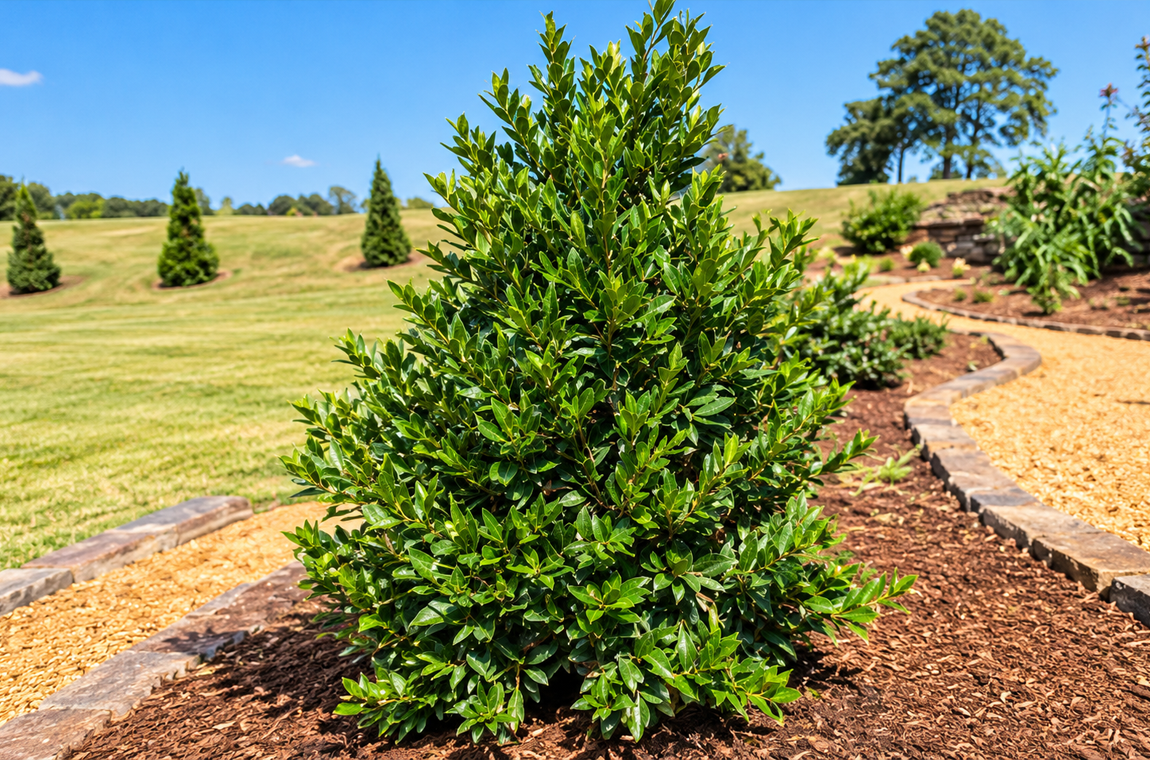
Laurel Varieties for Northeast Landscapes (and How We Use Them at Louis Contino Landscaping)
Laurels are some of the most useful “backbone” plants we install in Northeast landscapes. They can act as privacy screens, foundation shrubs, evergreen structure, and even deer-resistant fillers in the right locations. But “laurel” can mean different plants depending on who you ask—mountain laurel (Kalmia), cherry laurel (Prunus laurocerasus), skip laurel, English laurel, and even true bay laurel (Laurus nobilis), which is usually not hardy outdoors in our winters. On Long Island and across the broader Northeast, choosing the right laurel variety comes down to sun exposure, wind, salt, soil type, drainage, deer pressure, and how quickly you need screening.
At Louis Contino Landscaping, we design and build landscapes in the Northeast with plant choices that look great year-round and hold up in real-life conditions—coastal wind, winter burn, sandy soils, wet pockets, and deer pressure.
What Homeowners Mean by “Laurel” in the Northeast
In everyday landscaping conversations, “laurel” usually refers to evergreen shrubs used for screening. The most common include Cherry Laurel (Prunus laurocerasus), including ‘Schipkaensis’ or Skip Laurel, Mountain Laurel (Kalmia latifolia), and sometimes Spotted Laurel (Aucuba japonica), which is not a true laurel but is used similarly in shade.
Each plant has a different role: one may provide fast evergreen screening, another offers native flowers and woodland character, while another is a dependable shade plant.
1) Skip Laurel (Prunus laurocerasus ‘Schipkaensis’)
Skip Laurel is one of the most common evergreen privacy shrubs we use when a client wants a dense, clean-looking screen without waiting forever. It has glossy dark green foliage, is typically narrower than many cherry laurels, and responds well to pruning.
It can reach 6–10 feet or more, depending on pruning, with medium to fast growth once established. It works especially well for property-line privacy, evergreen structure near patios and pools, and taller foundation plantings.
Skip Laurel prefers sun to part shade, well-drained soil, and consistent watering during establishment. We watch for winter burn, poor drainage, and deer browsing, particularly during difficult winters. Proper spacing, soil preparation, and irrigation help create a continuous, healthy hedge.
2) English Laurel (Prunus laurocerasus)
English Laurel is often used as a catch-all term for cherry laurel types with broader leaves. It offers big, bold evergreen foliage and dense screening potential and can create an “estate-like” appearance when mature and maintained.
It is best suited to larger, sheltered properties with less wind exposure. Common concerns include winter burn, leaf desiccation, poor drainage, and legginess when not properly maintained.
We use English Laurel types when the site is protected, not overly salty, and not exposed to severe wind.
3) Compact / Dwarf Cherry Laurel Options
Compact cultivars provide the clean look of laurel without creating a 10-foot hedge. They work well in foundation plantings, evergreen massing, modern or formal designs, and partially shaded understory landscapes.
They are easier to maintain than full-size screens and blend well with hydrangeas, ornamental grasses, and perennials.
4) Mountain Laurel (Kalmia latifolia)
Mountain Laurel is a native evergreen broadleaf shrub known for spectacular late-spring or early-summer flowers and classic woodland character. It offers white, pink, or rose blooms depending on cultivar and provides year-round evergreen presence.
It commonly reaches 5–15 feet but grows more slowly than cherry laurels. Rather than serving as an instant privacy hedge, it works beautifully as an accent, woodland-edge planting, or naturalistic screen.
Mountain Laurel prefers acidic soil, excellent drainage, part shade, and filtered sun. It does not perform well in soggy conditions, heavy clay, or full blasting sun with reflective heat. We specify it when clients want a premium native evergreen that pairs naturally with rhododendrons, azaleas, pieris, ferns, and shade perennials.
5) Spotted Laurel / Aucuba (Aucuba japonica)
Aucuba is not a true laurel, but it is a valuable shade plant in Northeast landscapes. It handles deep shade better than many evergreen shrubs, while variegated forms can brighten dark corners.
It works well in north-facing foundation beds, under trees, and urban shaded residential sites. It needs protection from harsh winter winds, and deer may browse it depending on the site.
At Louis Contino Landscaping, Aucuba is one of our go-to options when homeowners say, “Nothing grows on that side of my house.”
6) True Bay Laurel (Laurus nobilis)
True Bay Laurel is the culinary “bay leaf” plant commonly sold as a patio plant. In the Northeast, it is generally not reliably hardy outdoors year-round.
For this region, keep it in a pot during summer and bring it indoors or into a protected space for winter. It works beautifully as a formal accent near entryways and patios.
How to Choose the Right Laurel for Your Property
For fast privacy screening, Skip Laurel or a suitable cherry laurel cultivar is often the smart choice, provided the site drains well and wind exposure and deer pressure are considered.
For a native flowering evergreen, choose Mountain Laurel when soil is acidic, drainage is good, sunlight is filtered or part shade, and you are patient with its slower growth.
For shade and evergreen coverage, consider Aucuba in protected areas, particularly near foundations.
Planting and Maintenance Tips We Follow
Soil and drainage come first. Most laurel problems in Northeast landscapes come from drainage issues. We evaluate low spots, downspout discharge, soil composition, and grading before planting.
Watering during establishment is essential. We typically recommend deep watering 2–3 times per week early on, depending on weather, along with mulching and avoiding overwatering in poorly drained areas.
Pruning depends on the desired look. Formal hedges may require light pruning 1–2 times per year, while natural screens generally need minimal pruning and selective shaping. Aggressive late-season shearing should be avoided because new growth can be winter tender.
Winter protection matters in exposed sites. Proper siting, natural windbreaks, case-by-case anti-desiccant sprays, and avoiding reflective hot spots can help protect laurels from winter drying.
Laurel in Landscape Design
A laurel hedge can become either a simple “green wall” or a designed, high-end backdrop that enhances patios, pools, and plantings.
At Louis Contino Landscaping, we commonly use three approaches: an Evergreen Backdrop layered with hydrangeas, ornamental grasses, and perennials; a Layered Privacy Screen combining laurels with upright evergreens and flowering shrubs; and an Entry/Foundation Frame using compact laurels or shade-tolerant “laurel-like” shrubs to frame architecture and soften corners.
Final Thoughts: Laurel Can Be Incredible—When It Matches the Site
Laurel varieties can be one of the best investments in a Northeast landscape because they provide year-round structure. The key is choosing the right type for your property’s conditions.
If you want quick privacy, Skip Laurel is often a smart, clean option. If you want native beauty and seasonal blooms, Mountain Laurel is unmatched in the right soil. And if you’re battling shade, Aucuba may save the day.
If you’re on Long Island or anywhere in the Northeast and want a landscape that looks great in every season, Louis Contino Landscaping can help you pick the right evergreen strategy—laurels included—and design it so it feels intentional, layered, and high-end.