
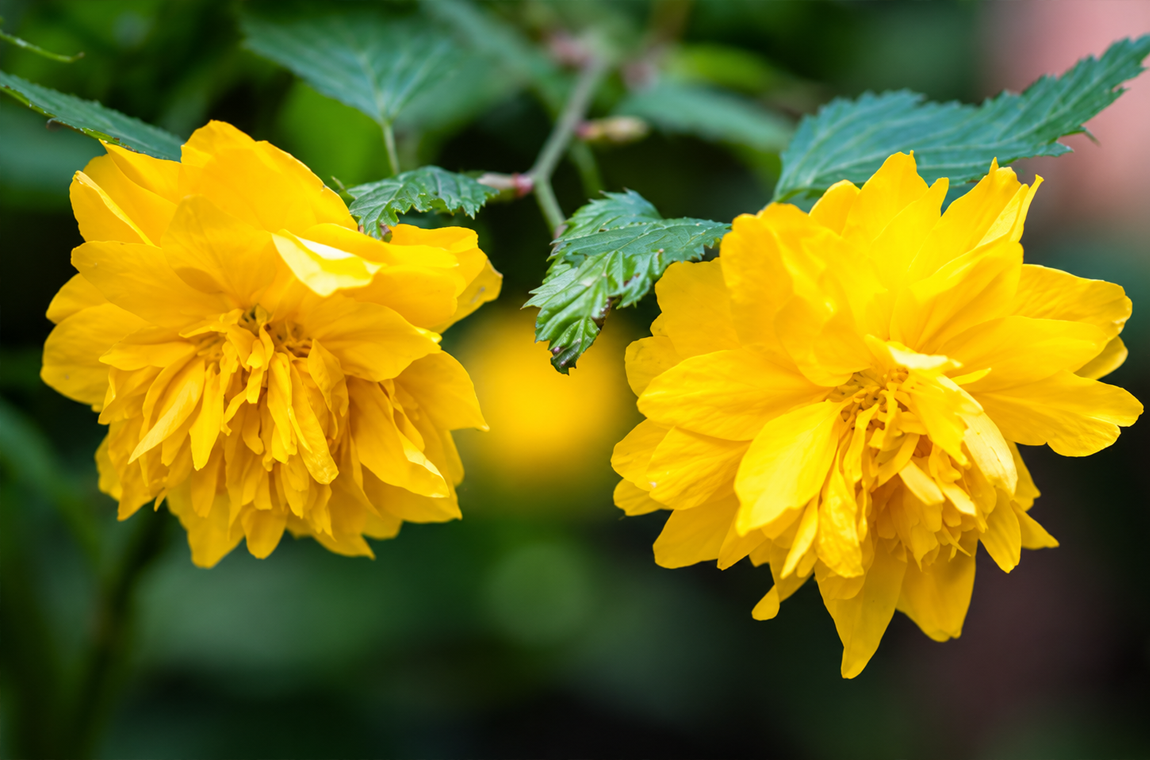
Kerria (Deer Resistant)
When designing landscapes across Long Island and the greater Northeast, we balance beauty, durability, and practicality. One of the most common concerns homeowners share with Louis Contino Landscaping is deer pressure. From Oyster Bay to Northport, waterfront estates to wooded properties, deer browsing can devastate planting plans overnight.
That’s why Kerria japonica, commonly known as Japanese Kerria, is such a valuable addition to Northeast landscapes. With brilliant golden spring blooms, graceful arching stems, shade tolerance, and strong deer resistance, Kerria is an understated but powerful plant for thoughtful landscape design.
What Is Kerria?
Kerria japonica is a deciduous flowering shrub native to East Asia and part of the rose family (Rosaceae). It offers arching, fountain-like stems, bright yellow flowers in early to mid-spring, fresh green bark for winter interest, and adaptability to shade.
Two popular forms are Kerria japonica (single form) with five-petaled golden flowers and Kerria japonica ‘Pleniflora’, which produces double, pom-pom style blooms. Both are considered deer resistant and are excellent options for properties surrounded by woodland or open space.
Is Kerria Truly Deer Resistant?
No plant is 100% deer proof. However, Kerria is widely recognized as deer resistant because it is not highly palatable, deer tend to avoid its stems and foliage, and it lacks the tender growth deer prefer.
Across Nassau and Suffolk counties, Kerria has shown significantly better resistance to browsing than hydrangeas, hostas, azaleas, or arborvitae. At Louis Contino Landscaping, we prioritize structural shrubs like Kerria for properties with heavy deer traffic to reduce long-term maintenance and replacement costs.
Why Kerria Works So Well in the Northeast
Cold Hardiness: Kerria thrives in USDA Zones 4–9, making it suitable for Long Island, Westchester, Connecticut, Northern New Jersey, and Upstate New York. Even when extreme cold causes minor dieback, it rebounds quickly in spring.
Shade Tolerance: Kerria performs beautifully in partial shade, woodland edges, north-facing foundations, and under open canopy trees. This makes it particularly useful on mature Long Island properties with large oaks and maples.
Adaptability: Kerria tolerates clay soils, sandy coastal soils, slightly acidic to neutral pH, and urban pollution.
Seasonal Interest in Long Island Landscapes
Spring: Kerria typically blooms from April to early May, producing bright yellow flowers before many other shrubs and creating an early-season focal point.
Summer: After flowering, it develops lush green foliage that provides soft screening, structural mass, and a naturalistic garden feel.
Fall: Leaves may turn soft yellow before dropping, providing a subtle seasonal transition.
Winter: Its green bark remains visible through winter, offering understated color against snow or dormant landscapes.
Design Applications in Northeast Landscaping
At Louis Contino Landscaping, Kerria is integrated into complete landscape designs rather than simply installed as an individual plant.
Woodland Garden Borders: Kerria works well along property edges, wooded transitions, and naturalized garden beds, where it blends beautifully with ferns and shade perennials.
Deer-Resistant Foundation Planting: It provides spring interest, soft structure, and lower deer damage risk.
Informal Hedges: When planted 3–4 feet apart, Kerria creates a loose, natural hedge for garden room definition, soft screening, and transitional planting.
Coastal Applications: In certain Long Island coastal locations, Kerria performs well when protected from direct salt spray and can handle sandy soils better than many flowering shrubs.
Companion Plants for Deer-Resistant Gardens
Kerria can be paired with Boxwood, Inkberry (Ilex glabra), Spirea, Nepeta (Catmint), Russian Sage, and ornamental grasses. Layering these plants creates height variation, texture contrast, and extended seasonal interest while combining aesthetic beauty with practical resilience.
Soil, Planting, and Watering Requirements
Light: Partial shade is ideal. Kerria tolerates full sun with adequate moisture but should be protected from deep, dense shade.
Soil: Well-draining soil is preferred. It tolerates clay and benefits from organic amendment. When installing Kerria, Louis Contino Landscaping incorporates compost into the backfill and ensures proper drainage, especially on properties with heavy soil.
Watering: Newly planted Kerria requires consistent watering during its first growing season. Once established, it has moderate drought tolerance but prefers even moisture and should not remain saturated. Drip irrigation can promote root establishment and reduce water waste.
Pruning, Maintenance, and Growth Habit
Kerria blooms on old wood, so it should be pruned immediately after flowering. Remove dead or weak stems and thin older canes to encourage fresh growth. Avoid late summer or fall pruning because it can remove next year’s flower buds.
Kerria is low maintenance and does not require constant trimming. Typical mature size is 6–8 feet high and 6–8 feet wide, with an arching, fountain-like form. It can spread slowly through suckers, which may be beneficial in naturalized settings but can be managed in formal gardens.
Kerria in High-End Landscape Design
For luxury properties across Long Island, Kerria adds early-season drama, understated elegance, and soft transitional structure. It works especially well in English-inspired gardens, cottage-style landscapes, and naturalistic woodland designs.
At Louis Contino Landscaping, our design-build process considers site analysis, soil evaluation, deer pressure assessment, custom planting design, professional installation, and long-term maintenance planning.
Creating a Deer-Resistant Landscape Strategy
Kerria is one part of a comprehensive deer-resistant approach. Strategic plant selection, proper spacing, mulching, layered plantings, and physical barriers where needed all contribute to a landscape that is designed for both beauty and resilience.
Final Thoughts
Kerria is an exceptional yet often overlooked shrub for Northeast landscapes. Its vibrant yellow spring blooms, graceful habit, shade tolerance, and strong deer resistance make it a smart, practical choice for Long Island homeowners.
Whether enhancing a woodland garden, upgrading foundation plantings, or creating a deer-resistant landscape from scratch, Kerria offers beauty and reliability.
At Louis Contino Landscaping, we specialize in designing and building resilient landscapes tailored to the unique challenges of the Northeast.