
Kale Varieties: A Complete Guide for Northeast Landscapes
Kale adds beauty and practical value to Northeast gardens. At Louis Contino Landscaping, we value its texture in modern Long Island designs.
What Exactly Is Kale?
Kale is a leafy green in Brassica oleracea, the species that includes cabbage, broccoli, cauliflower, and Brussels sprouts. It belongs to the Acephala group, producing open leaves rather than a tight head. Its sculptural growth adds texture and color. It thrives in cool Northeast spring and fall weather.
Why Kale Works So Well in Northeast Landscaping
Kale offers cold tolerance, seasonal performance, textural contrast, and edible and decorative value. Many varieties improve in flavor and color after frost. Cornell Cooperative Extension lists it as a cool-season crop for early spring planting in New York.
The Main Kale Types You Should Know
1. Curly Kale (Scotch Kale)
Curly kale has heavily ruffled green or deep purple leaves. Its texture adds movement, fills beds, and contrasts with smooth-leaf plants such as hostas. It is also useful for cooking and decorative edible displays.
Design Tip – Louis Contino Landscaping
Plant curly kale along raised garden bed edges to soften hard lines created by stone or pavers.
2. Lacinato Kale (Dinosaur or Tuscan Kale)
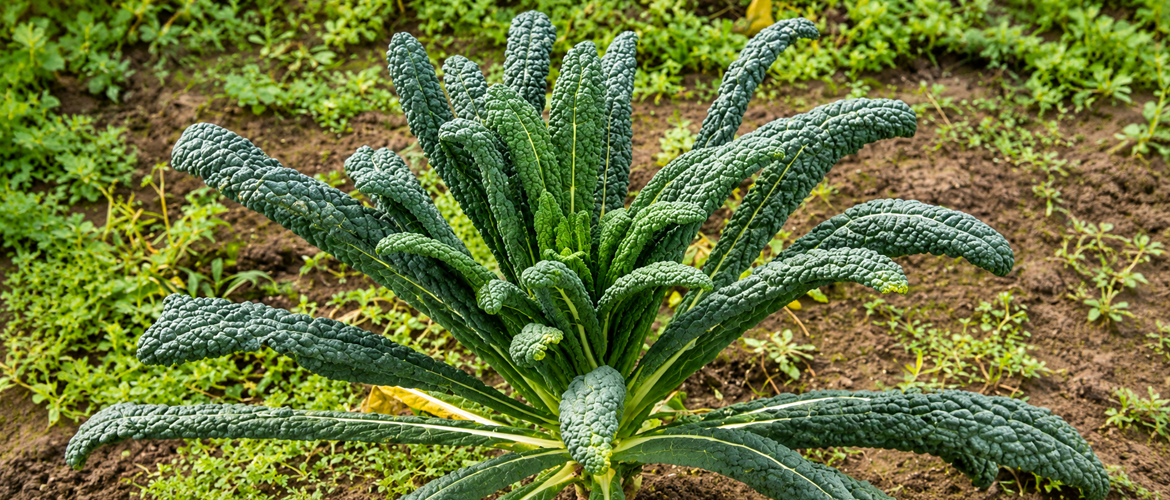
Also called black kale or cavolo nero, Lacinato has long, narrow, blistered blue-green leaves. Its vertical form and dark color suit modern or Mediterranean-style landscapes. Its tender leaves are popular in salads and sautés.
Design Tip
Pair Lacinato kale with lavender, salvia, ornamental grasses, or Long Island bluestone hardscapes.
3. Red Russian Kale
Red Russian kale has purple stems and flat, fringed leaves. Its foliage deepens in cool weather, and its flavor is often sweeter after frost.
Design Tip
Use it in fall displays around patios or fire features, where red tones complement autumn landscapes.
4. Siberian Kale
Siberian kale has broad, flat leaves and strong cold tolerance. Its open growth suits edible gardens and can withstand Long Island's windy coastal conditions.
5. Ornamental Kale (Flowering Kale)
Primarily grown for visual impact, ornamental kale produces bold rosettes in white, pink, purple, and green. It provides fall and winter color, resembles a living flower in cool weather, and makes a strong container focal point.
Design Tip
At Louis Contino Landscaping, ornamental kale is a favorite late-season replacement for summer annuals, keeping entrance planters polished into winter.
Color and Texture in Landscape Design
Kale offers green, blue-green, purple, and burgundy tones. Against stone patios, gravel pathways, or structured hedges, its foliage adds soft texture.
Pairing Ideas
Curly kale with boxwood hedges.
Red Russian kale with ornamental grasses.
Lacinato kale with bluestone patios.
Ornamental kale with fall chrysanthemums.
Growing Kale in the Northeast (Long Island Focus)
Kale performs best in moderate temperatures and can be planted early in spring when soil is workable.
Planting Tips
Choose full sun to partial shade.
Use well-draining, compost-enriched soil.
Space plants 12–18 inches apart.
Water consistently without making soil soggy.
Seasonal Strategy
Spring: Plant early for edible harvest.
Summer: Partial shade can reduce stress.
Fall: Enjoy strong visual and flavor quality.
Late fall: Many varieties remain attractive after frost.
Kale as an Edible Landscape Element
Edible landscaping combines beauty and function. Kale's attractive foliage, long season, and flexibility make it suitable for front-yard, patio, formal, or natural gardens.
At Louis Contino Landscaping, we use kale in raised cedar beds, kitchen gardens, and poolside herb gardens where structure and texture matter.
Why Homeowners Love Kale in Their Landscapes
Kale looks luxurious without being expensive, thrives in cooler weather, offers edible value, and suits small urban yards or large estates. Thoughtfully incorporated, it can make an edible garden look upscale and intentional.
Final Thoughts
Kale combines beauty, seasonality, and practicality for Northeast homeowners and landscape professionals. From curly kale’s dramatic texture to ornamental kale’s late-season color, there is a variety for every landscape style.
Whether you are creating a kitchen garden or adding seasonal texture around a patio, kale can elevate the design while remaining easy to maintain — a smart planting strategy we prioritize at Louis Contino Landscaping.