
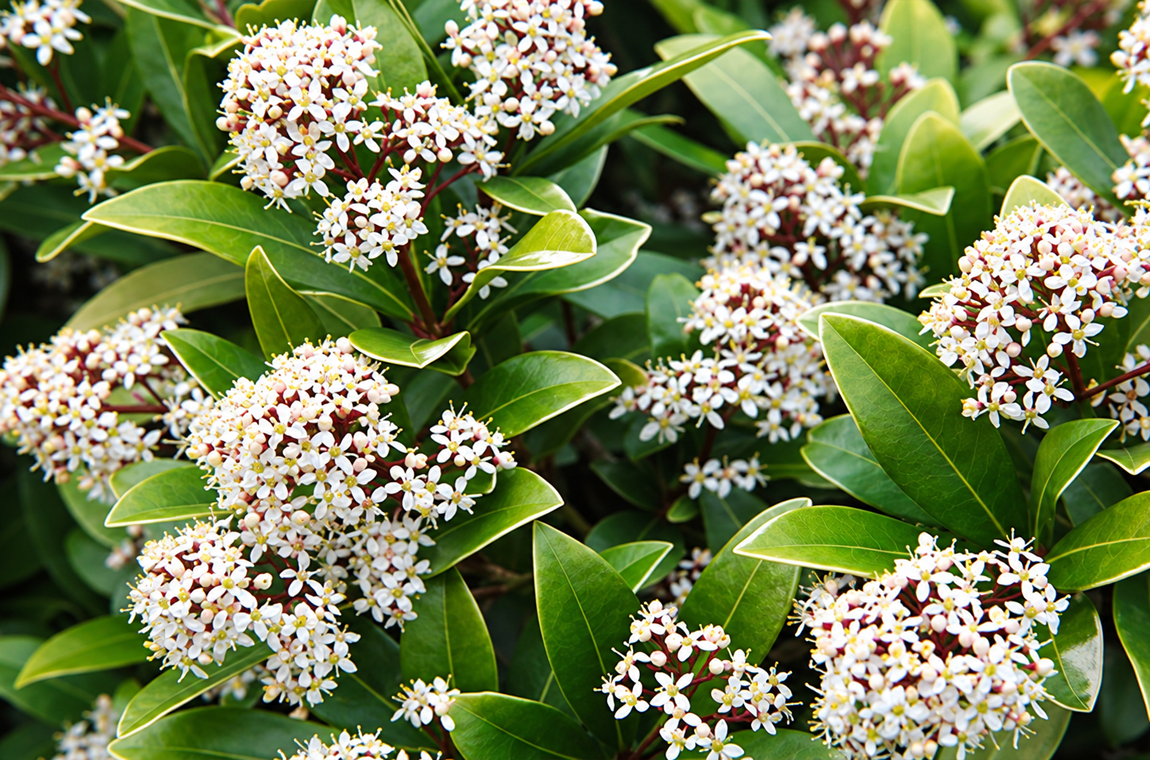
Japanese Skimmia Female (Skimmia japonica) - A Deer-Resistant Evergreen for Northeast Landscapes
If you’re looking for a low-maintenance, deer-resistant evergreen that stays tidy, looks polished year-round, and adds structure to shaded garden areas, Japanese Skimmia “Female” (Skimmia japonica) is a valuable choice for Northeast landscapes. At Louis Contino Landscaping Inc., we use skimmia to address a common challenge on Long Island and across the Northeast: creating evergreen interest in shade while dealing with deer, winter wind, and seasonal maintenance.
Skimmia is compact, glossy, and naturally refined. It works beautifully in foundation plantings, woodland edges, shady walkways, and understory layers where you want a polished landscape without constant pruning.
1) What Is Japanese Skimmia “Female”?
Japanese skimmia (Skimmia japonica) is a broadleaf evergreen shrub known for glossy, leathery green leaves, compact rounded growth, fragrant spring flowers, and showy berries on female plants when properly pollinated.
“Skimmia Female” refers to a female selection. Skimmia is dioecious, meaning male and female flowers occur on separate plants. Female skimmia can produce berries, but a compatible male skimmia nearby is needed for pollination. Without one, the plant may still flower beautifully, but berry production can be limited or absent.
The berries are one of the main attractions, adding seasonal color through fall and sometimes winter while the evergreen foliage continues providing structure.
2) Deer Resistant
Skimmia is commonly considered deer resistant and typically performs well in deer-prone areas compared with plants such as hosta, arborvitae, and many hydrangeas.
However, no plant is completely deer proof. During harsh winters or periods of food scarcity, deer may browse almost anything. For areas with heavy deer pressure, strategic placement, deer deterrents, and layered plantings with other deer-resistant selections can help protect the landscape.
3) Why Skimmia Works So Well
Evergreen structure in shade
Skimmia is a useful shade-tolerant evergreen, making it suitable for north-facing foundations, areas beneath tall trees, shaded entry paths, and side yards that receive limited sunlight.
A naturally designed look
Its rounded, neat form generally requires little pruning, making it ideal for homeowners who want a high-end appearance with low maintenance.
Flowers, berries, and year-round foliage
Skimmia provides fragrant spring blooms, berry interest on female plants, evergreen foliage, and winter structure when many other garden plants disappear. It also works well as part of layered professional planting designs.
4) Light, Soil, and Water Requirements
Best light: Part shade to shade, with morning sun and afternoon shade being ideal. Bright, dappled shade can also work well.
Avoid: Hot direct afternoon sun and exposed southern or western locations without protection, as winter sun and wind can cause leaf burn.
Skimmia performs best in moist, well-drained, acidic to slightly acidic soil rich in organic matter. Long Island’s sandy soils may drain quickly, so soil improvement, mulch, and consistent irrigation can help prevent summer drought stress.
Avoid waterlogged locations because excessive moisture can contribute to root rot.
5) Cold, Wind, and Winter Protection
Broadleaf evergreens can experience winter wind desiccation, coastal salt exposure, freeze-thaw cycles, and late-winter sunscald.
For exposed Long Island or Northeast coastal properties, skimmia performs better in a protected microclimate, such as near a structure, behind a hedge, in a courtyard, or beneath a light tree canopy. Mulching can provide additional root protection, while temporary burlap wind protection may help smaller plants during their first winter.
6) The “Female” Advantage: Berries and Pollination
If berries are a priority, remember that female skimmia needs a compatible male skimmia nearby for pollination.
For a stronger berry display, we may design a small planting cluster with several female plants and at least one discreetly positioned male plant. This creates a more intentional planting and improves the opportunity for consistent seasonal berry production.
7) Professional Landscape Uses
Skimmia is particularly effective in shaded foundation plantings, where its refined foliage complements stone, brick, and siding. It also works well in shaded entry gardens, woodland edges, and understory layers beneath mature trees.
In protected entry areas, skimmia can also be used in large containers to provide evergreen presence and seasonal interest.
8) Maintenance and Common Problems
Skimmia generally needs minimal maintenance. Remove dead or damaged branches, use light shaping when necessary, keep mulch away from the stems, and provide consistent water during establishment. Don’t shear skimmia like a hedge; its natural rounded form is part of its appeal.
Most problems result from placing the plant in the wrong conditions. Excessive sun and wind can cause leaf scorch or winter burn, alkaline or dry soil can reduce vigor, and waterlogged soil can cause root rot. Proper site selection, soil preparation, drainage, and protection are key.
9) Is Japanese Skimmia “Female” Right for Your Property?
Skimmia is a strong choice if you want a compact, refined evergreen for shade or part shade, a deer-resistant option, and seasonal interest from flowers and berries with proper pollination planning.
It may not be ideal for full sun with exposed wind, extremely salty open coastal locations, or constantly wet, poorly drained soil.
At Louis Contino Landscaping Inc., we design landscapes that remain beautiful through deer pressure, winter weather, shade conditions, and everyday maintenance. We can help choose the right shrubs, build layered planting plans, improve soil and drainage, and select deer-resistant combinations suited to Northeast landscapes.