
Ilex Varieties for Northeast Landscapes
The genus Ilex, commonly known as hollies, is a versatile group of plants for Northeast landscapes. We use hollies for year-round structure, privacy, wildlife value, and reliable performance in Long Island’s climate. They suit formal patio hedges, naturalized borders, and winter-interest plantings across residential properties.
Why Ilex Works Well in the Northeast
Long Island landscapes experience cold winters, humid summers, deer pressure, and varied soils. Many hollies adapt well, prefer acidic soil, tolerate pruning, and provide evergreen foliage. Their ability to retain leaves through winter is especially useful when deciduous plants lose their screening value and the landscape needs definition. Berry-producing varieties add winter color and food for birds.
Hollies provide evergreen structure, screening, varied mature sizes, pruning flexibility, and seasonal berries. Many grow in sun or partial shade.
Popular Ilex Categories
Japanese hollies are fine-textured boxwood alternatives; inkberries are native evergreens; American and hybrid hollies offer larger forms and berries; winterberry is deciduous with colorful winter fruit.
Japanese Holly — Ilex crenata
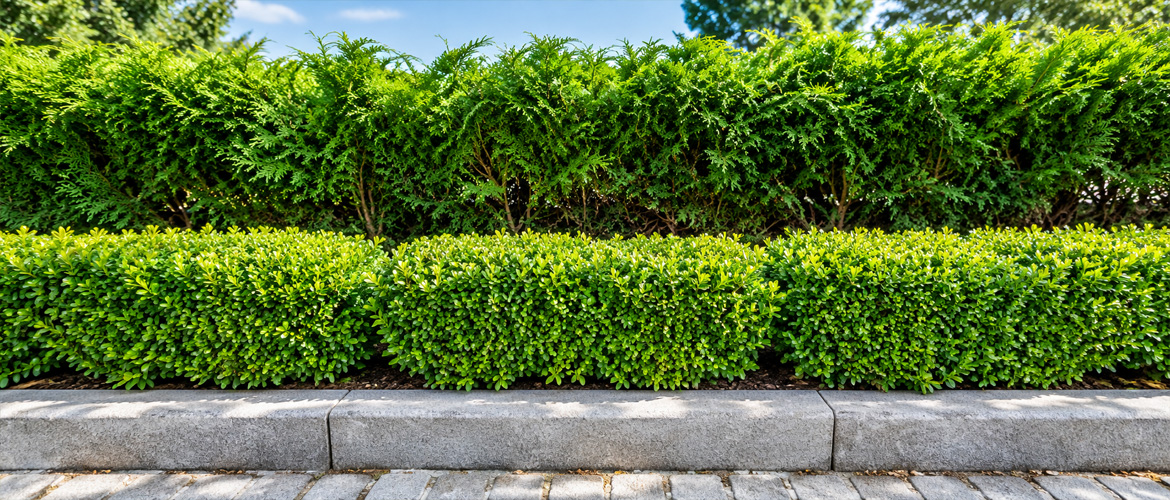
Japanese holly has small leaves and dense evergreen foliage, making it a useful boxwood alternative. It suits formal hedges, foundation beds, poolside edging, and entrances. Growth is slow to moderate, with moderate deer resistance.
Popular cultivars
‘Helleri’ is naturally mounded.
‘Soft Touch’ has softer leaf texture.
‘Sky Pencil’ provides a narrow vertical accent.
Ornamental grasses or perennials soften its lines around patios and hardscapes. Select a cultivar according to the available width and height, since even compact-looking plants need room to reach their mature dimensions.
Inkberry Holly — Ilex glabra
Inkberry is a native evergreen with a relaxed form, suited to naturalized and coastal landscapes. It supports wildlife and tolerates wetter soils than many evergreens, making it useful in rain gardens, drainage areas, foundation beds, and soft screening.
American Holly — Ilex opaca
American holly has glossy, spiny leaves, a pyramidal form, and red berries on female plants. It can become a small tree and focal point near entrances or larger homes. A male plant nearby is needed for pollination and berry production.
Hybrid Hollies
Hybrid hollies combine hardiness, dense foliage, and berry production. Fast-growing ‘Nellie R. Stevens’ can reach 15 to 30 feet and suits privacy screens, pool boundaries, and background planting. It can be pruned into formal shapes.
Winterberry — Ilex verticillata
Winterberry is a deciduous native holly with bright berries on bare stems after leaf fall. It adds winter color, suits moist areas and rain gardens, and feeds birds. Pair it with grasses or evergreens. A male pollinator is needed for fruit production. For the strongest display, place compatible plants where pollination can occur and consider the berry color when planning nearby seasonal plantings.
Chinese and Meserve Hollies
Chinese holly (Ilex cornuta) has bold foliage, drought tolerance, and spiny leaves suited to foundation plantings and security hedges.
Blue hollies (Ilex × meserveae) are hardy hybrids with blue-green foliage and berries, useful for evergreen structure and accents in colder locations.
Design and Maintenance Tips
Layer hollies for depth: use tall hybrids as a background screen, inkberry in the middle, and Japanese holly along the front. Lower varieties preserve sightlines around patios and pools, while winterberry adds seasonal interest.
For Long Island, choose suitable, well-drained soil; many hollies prefer acidic conditions. Mulch, feed lightly in spring when appropriate, and prune in late winter or early spring. Most need consistent moisture but dislike waterlogging; inkberry and winterberry suit wetter sites.
Common mistakes to avoid
Ignoring pollination needs when berries are desired.
Shearing too aggressively and losing natural form.
Choosing a variety without allowing for mature size.
Planting in highly alkaline soil, which can cause yellowing leaves.
Choosing the Right Holly
Choose Japanese holly for formal hedges, inkberry for natural screening, American holly for a specimen, and ‘Nellie R. Stevens’ for fast privacy. Winterberry adds color in moist areas; Chinese holly offers a tough, spiny option.
Final Thoughts
The Ilex family suits formal hedges, naturalized plantings, privacy, and winter interest. We use hollies to solve practical needs while creating lasting structure and beauty. Choose a variety suited to the site, space, and soil for year-round appeal.