
Ilex Holly Schwoebel – A Classic Evergreen for Northeast Landscapes
When designing landscapes across Long Island and the greater Northeast, one plant consistently proves its value: Ilex Holly ‘Schwoebel’. Known for its rich evergreen foliage, vibrant winter berries, and dependable cold hardiness, this holly variety offers year-round structure and seasonal interest—two essential components of professional landscape design in our region.
At Louis Contino Landscaping, we frequently incorporate ‘Schwoebel’ holly into high-end residential landscape plans because it provides both aesthetic beauty and functional performance. In climates like ours—where winters are harsh, deer pressure is real, and salt exposure is common—plant selection must be intentional. ‘Schwoebel’ holly checks nearly every box.
Botanical Overview
Botanical Name: Ilex × meserveae ‘Schwoebel’
Common Name: Schwoebel Blue Holly
Plant Type: Broadleaf evergreen shrub
Mature Height: 6–8 feet
Mature Width: 4–6 feet
Growth Rate: Moderate
Hardiness Zone: 4–7
Exposure: Full sun to partial shade
Soil Preference: Well-drained, slightly acidic
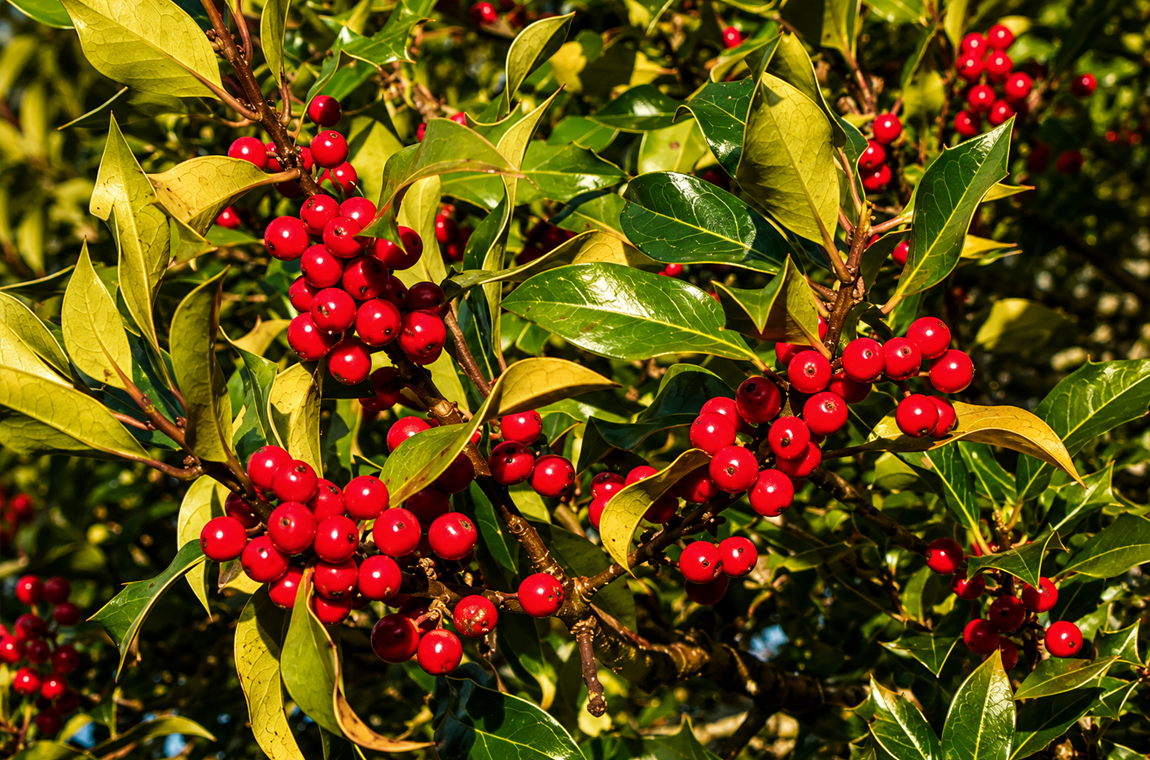
‘Schwoebel’ holly belongs to the Ilex × meserveae group, commonly known as Blue Hollies. These hybrids are prized for their cold tolerance and distinctive blue-green foliage. The leaves are glossy and spiny, giving the shrub a classic holly appearance that remains vibrant throughout winter.
Why ‘Schwoebel’ Holly Is Ideal for the Northeast
Cold Hardiness
In regions like Oyster Bay, Cold Spring Harbor, and throughout Nassau and Suffolk Counties, winter temperatures regularly drop below freezing. ‘Schwoebel’ holly is bred for northern climates and withstands snow loads, icy winds, and fluctuating winter temperatures better than many traditional hollies.
Winter Interest & Red Berries
When properly pollinated, ‘Schwoebel’ produces brilliant red berries that persist through the cold season. These berries contrast beautifully against snow-covered landscapes and dark green foliage, creating strong winter visual interest.
Evergreen Structure
While deciduous plants lose their leaves in winter, ‘Schwoebel’ holly maintains its architectural form year-round. Whether used as a hedge, foundation planting, or accent shrub, it provides density and presence in every season.
Landscape Design Applications
At Louis Contino Landscaping, we use ‘Schwoebel’ holly in a variety of design scenarios.
Foundation Plantings
Its upright, slightly pyramidal habit makes it ideal near home foundations. It softens corners, frames entryways, and anchors planting beds.
Privacy Screens & Hedges
Planted 3–4 feet apart, ‘Schwoebel’ holly forms a dense evergreen hedge. It offers a refined appearance and performs well in areas where deer browsing or winter burn can challenge other landscape plants.
Accent & Specimen Shrub
Used individually, it creates a bold focal point, particularly in formal or transitional garden designs.
Mixed Evergreen Borders
We often pair ‘Schwoebel’ holly with boxwood, inkberry, rhododendron, hydrangea, and ornamental grasses. Its dark foliage enhances lighter-colored perennials and flowering shrubs.
Pollination & Berry Production
For berries to develop, hollies require both male and female plants. ‘Schwoebel’ is typically a female cultivar, meaning it needs a compatible male pollinator nearby—often another Ilex × meserveae male variety.
When designing planting plans, proper pollination placement is important for consistent berry production. This is one reason professional design matters. At Louis Contino Landscaping, we don’t just install plants—we ensure they perform.
Soil & Site Requirements
Soil Conditions
‘Schwoebel’ holly prefers slightly acidic soil with a pH of 5.0–6.5, well-drained conditions, and moderate organic matter. Sandy Long Island soils generally work well when irrigation is consistent during establishment.
Sunlight
Best berry production and dense growth occur in full sun to partial shade. Excessive shade may reduce flowering and berry set.
Drainage
Hollies dislike sitting in water. Proper grading, soil amendment, compost integration, bed elevation, and subsurface drainage when necessary can support long-term plant health.
Deer Resistance in the Northeast
Deer pressure is a major challenge in Long Island landscaping. While no plant is completely deer-proof, hollies are generally considered deer-resistant because of their spiny leaves. Compared to arborvitae or yews, ‘Schwoebel’ holly can perform significantly better in deer-prone areas.
Maintenance Requirements
‘Schwoebel’ holly has a relatively low-maintenance profile.
Pruning
- Light pruning after berry drop
- Can be shaped into a formal hedge
- Avoid heavy pruning late in the season
Fertilization
Use an acid-based evergreen fertilizer in early spring.
Watering
Regular watering during the first growing season is critical. After establishment, it is moderately drought tolerant.
Winter Care
Minimal protection is required in Zone 6 and 7 areas typical of coastal New York.
Seasonal Appeal Breakdown
Spring: New blue-green growth emerges.
Summer: Dense, glossy foliage provides a rich backdrop for flowering plants.
Fall: Berry development begins.
Winter: Red berries and evergreen leaves provide bold contrast against snow.
Four-season interest is one of our core design principles at Louis Contino Landscaping.
Design Tips from Louis Contino Landscaping
- Use in odd-number groupings for natural aesthetics.
- Combine with lighter foliage plants for contrast.
- Install with proper spacing to avoid overcrowding at maturity.
- Consider winter sightlines when placing berry-producing shrubs.
When we create 3D renderings for clients, we demonstrate how hollies contribute to winter views—a detail many homeowners overlook.
Installation & Common Mistakes
Professional installation includes proper excavation sizing, soil amendment, root flare exposure, 2–3 inches of mulch, irrigation setup, and detailed aftercare instructions.
Common mistakes include planting without a male pollinator, installing in poorly drained soil, over-pruning during berry season, and ignoring soil acidity.
Why Choose Louis Contino Landscaping?
Based in Oyster Bay, NY, Louis Contino Landscaping specializes in high-quality landscape design and build services across Long Island and the greater Northeast region.
We offer:
- Detailed landscape plans
- 3D renderings
- Expert plant selection
- Full design-build installation
- Seasonal maintenance programs
Our knowledge of region-specific plant performance ensures every plant—especially specialty shrubs like ‘Schwoebel’ holly—thrives in its environment.
Final Thoughts
If you are looking for a dependable evergreen shrub that provides structure, winter color, and long-term durability in the Northeast, Ilex × meserveae ‘Schwoebel’ is an exceptional choice.
Its cold hardiness, deer resistance, and bold red berries make it a valuable addition to both traditional and contemporary landscape designs.
At Louis Contino Landscaping, we carefully select plants not just for their beauty—but for their performance in real-world Northeast conditions. ‘Schwoebel’ holly consistently proves itself year after year.