
Hydrangea: The Most Popular Varieties in the Northeast
Hydrangeas are among the most beloved flowering shrubs in the Northeast, known for their bold blooms, long flowering season, versatility, and ability to thrive in the Long Island climate. At Louis Contino Landscaping in Oyster Bay, we design and install hydrangeas across Nassau and Suffolk County properties, from coastal estates to shaded woodland gardens.
If you’re considering hydrangeas for your property, choosing the right variety is essential. Each type offers different advantages based on sunlight, space, climate, and landscape design goals.
Why Hydrangeas Thrive in the Northeast
The Northeast, including Long Island, provides favorable conditions for many hydrangea varieties. Cold winters, warm humid summers, adequate rainfall, and suitable soils allow hydrangeas to establish and produce beautiful seasonal displays.
Hydrangeas offer long bloom times, strong seasonal interest, excellent cut flowers, moderate deer resistance, and adaptability to sun or shade depending on the variety. They work beautifully in foundation plantings, poolscapes, privacy borders, estate entrances, and backyard entertainment spaces.
1. Bigleaf Hydrangea (Hydrangea macrophylla)
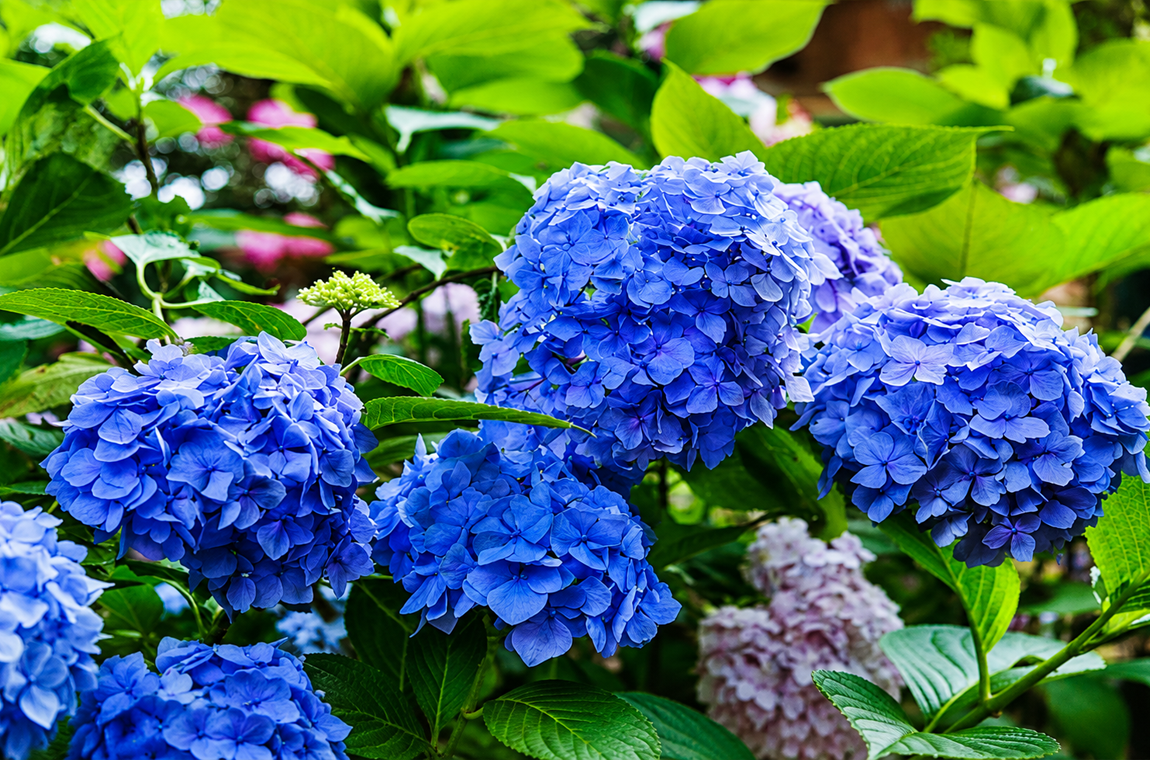
The classic Hamptons hydrangea, bigleaf types are often what homeowners picture when they think of hydrangeas. They feature large mophead or lacecap flowers in blue, pink, purple, or white.
Most Popular Varieties: Endless Summer® and Nikko Blue.
Endless Summer® is a reblooming variety, while Nikko Blue is known for deep true-blue blooms. Bigleaf hydrangeas generally reach 3–6 feet and perform well in partial shade.
Design Use: Foundation plantings, coastal cottage landscapes, and shaded backyard borders.
2. Panicle Hydrangea (Hydrangea paniculata)
Panicle hydrangeas are among the most reliable choices for cold winters. They bloom on new wood, are extremely hardy, tolerate more sun, and produce large cone-shaped flowers.
Top Northeast Favorites: Limelight®, Little Lime®, and Vanilla Strawberry®.
Limelight® produces lime-green blooms that age to pink and can reach 6–8 feet, making it excellent for privacy screening. Little Lime® offers a more compact option, while Vanilla Strawberry® is known for its dramatic white-to-deep-pink color transition.
Design Use: Privacy hedges, poolside plantings, estate entrances, and specimen trees.
3. Smooth Hydrangea (Hydrangea arborescens)
Smooth hydrangea is a native North American species and one of the easiest hydrangeas to grow. It produces large white, ball-shaped blooms, blooms on new wood, and is extremely cold hardy.
Popular Varieties: Annabelle and Incrediball®.
Annabelle is known for its classic white globes, while Incrediball® features stronger stems and larger flowers.
Design Use: Woodland gardens, naturalized landscapes, shade borders, and transitional planting between lawns and tree lines.
4. Oakleaf Hydrangea (Hydrangea quercifolia)
Oakleaf hydrangeas provide exceptional four-season interest. Their cone-shaped blooms, dramatic oak-shaped foliage, outstanding red and purple fall color, and exfoliating winter bark make them valuable landscape plants.
Popular Varieties: Snow Queen and Ruby Slippers.
Depending on the variety, oakleaf hydrangeas can reach 4–8 feet.
Design Use: Back-of-border planting, estate landscapes, layered woodland gardens, and seasonal interest areas.
5. Mountain Hydrangea (Hydrangea serrata)
Mountain hydrangeas are often confused with bigleaf hydrangeas but offer better bud hardiness. They feature smaller lacecap blooms and generally reach 2–4 feet.
Popular Variety: Bluebird.
Their compact size makes them ideal for smaller properties and front foundation plantings.
Choosing the Right Hydrangea for Your Long Island Property
Selection should depend on several factors.
Sun Exposure: Panicle hydrangeas are ideal for full sun, while bigleaf and oakleaf hydrangeas perform well in partial shade. Smooth hydrangeas are suitable for shadier locations.
Soil Type: Acidic soil can enhance blue coloration in certain varieties, while well-draining soil is important for healthy growth.
Wind & Salt Exposure: Panicle and oakleaf hydrangeas generally perform better in coastal conditions.
Desired Height: Little Lime® and Ruby Slippers work well in compact spaces, Limelight® is excellent for privacy, and tree-form panicles can create dramatic statement pieces.
Hydrangea Care in the Northeast
Proper pruning is essential for maintaining blooms. Panicle and smooth hydrangeas can generally be pruned in late winter, while bigleaf hydrangeas should be pruned carefully after blooming. Oakleaf hydrangeas typically require minimal pruning.
Hydrangeas prefer consistent moisture but not soggy soil. Proper drainage and soil preparation are important during installation. A balanced slow-release fertilizer in spring can support healthy growth, while excessive nitrogen should be avoided because it encourages foliage rather than flowers.
Hydrangeas in Modern Landscape Design
At Louis Contino Landscaping, hydrangeas can be incorporated into 3D landscape designs, pool patio borders, bluestone terraces, driveway entrances, estate screening, coastal gardens, and Zen-inspired retreats.
They combine beautifully with boxwood, nepeta, ornamental grasses, roses, allium, and lavender to create layered, elegant, and seasonally dynamic landscapes.
Final Thoughts
Hydrangeas remain one of the most impactful and versatile shrubs for Northeast landscapes. Whether you want a classic Hamptons look, a formal estate hedge, or a natural woodland retreat, there is a hydrangea variety suited to your property.
At Louis Contino Landscaping, we specialize in designing, sourcing, and installing premium hydrangea plantings across Long Island. From Oyster Bay to the Hamptons, we carefully select varieties that thrive in the local climate and complement your home's architecture.
If you’re ready to upgrade your landscape with timeless hydrangeas, our team can provide professional landscape design, 3D renderings, full installation, seasonal maintenance, and expert pruning guidance.
Hydrangeas aren’t just flowers—they’re a statement of elegance, structure, and Northeast charm.