
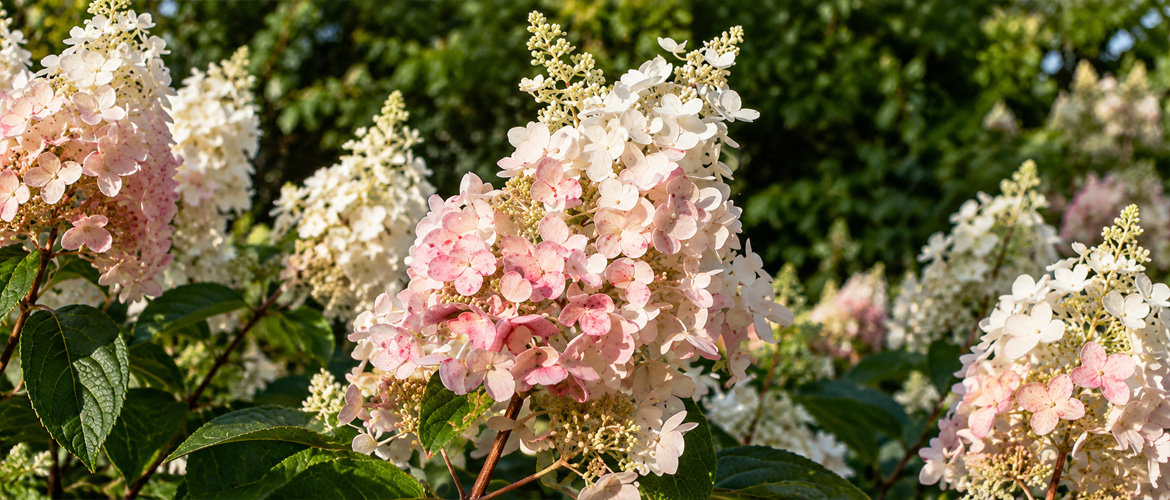
Hydrangea ‘Pinky Winky’ Tree - A Show-Stopping Landscape Feature
The Hydrangea ‘Pinky Winky’ Tree is an ornamental choice for Long Island and Northeast landscapes. At Louis Contino Landscaping, we recommend it for its dramatic blooms, upright structure, and low maintenance.
What Is a Hydrangea ‘Pinky Winky’ Tree?
The Pinky Winky hydrangea tree is a trained standard form of Hydrangea paniculata ‘Pinky Winky’, with a single trunk topped by a rounded canopy of flowering branches.
Mature plants typically reach 6–8 feet tall with a similar spread. Flowers begin as bright white panicles in midsummer and gradually turn rich pink, often displaying both colors.
Why Homeowners Love Pinky Winky Hydrangea Trees
1. Long Bloom Season
Blooms begin in midsummer and persist well into autumn, providing color when many other shrubs begin to fade.
2. Strong, Upright Structure
Pinky Winky is known for strong stems that help hold flowers upright, even after heavy rain.
3. Four-Season Interest
Dried flower heads remain attractive through winter, catching snow and adding texture. The branching structure also provides architectural interest.
4. Versatility in Design
Its trained tree form works in formal and informal landscapes. Use it near entryways, patios, poolscapes, or shrub borders.
Ideal Growing Conditions in the Northeast
Sunlight
Pinky Winky grows in full sun to part shade. Around 4–6 hours of direct sunlight encourages strong blooms, while afternoon shade can help in hot locations.
Soil
Well-draining soil is essential. The plant tolerates clay better than many hydrangeas and prefers slightly acidic to neutral soil.
Water
Provide moderate, consistent moisture. Mulching helps retain moisture and regulate soil temperature.
Hardiness
Pinky Winky is listed for USDA Zones 3–8. As a panicle hydrangea, it blooms on new wood and is less susceptible to winter damage than bigleaf hydrangeas.
Seasonal Beauty Throughout the Year
Spring: Fresh green foliage emerges and the tree develops a neat silhouette.
Summer: Large white blooms become a garden focal point, complementing blue stone patios and natural stone walls.
Fall: The lower portions of the flower panicles turn pink while the tops remain white, creating the two-tone effect.
Winter: Dried blossoms add texture against snow or evergreen backdrops.
Landscape Design Ideas
Entryway Elegance: Planting two trees on either side of a walkway creates a symmetrical, welcoming entrance.
Poolside Sophistication: The flowering canopy softens pool hardscapes without producing messy fruit.
Mixed Shrub Borders: Combine Pinky Winky trees with Ilex varieties, ornamental grasses, or perennials to create depth and seasonal layers.
Patio Focal Points: A single specimen near outdoor seating creates a living feature that changes seasonally.
Pairing Pinky Winky with Other Plants
Pair it with ornamental grasses, purple perennials, evergreen shrubs, and light-colored flowers.
Maintenance and Care
Pruning
Prune in late winter or early spring. Because blooms form on new growth, pruning encourages flowering. Remove weak or crossing branches to maintain the tree's shape.
Fertilizing
Apply a balanced slow-release fertilizer in spring. Avoid excessive nitrogen, which can reduce blooming.
Mulching and Watering
A 2–3 inch mulch layer helps retain moisture and protect roots. Deep watering during establishment is important, especially during summer heat.
Common Questions Homeowners Ask
Will it survive harsh winters?
Yes. Pinky Winky is cold hardy and suited to northeastern winters.
Does it require staking?
Newly planted trees may need temporary staking until roots establish. Mature trees generally stand on their own.
Is it deer resistant?
No plant is completely deer-proof, but panicle hydrangeas are generally less preferred than many flowering shrubs.
How fast does it grow?
It has a moderate growth rate, with noticeable size increases each season under suitable conditions.
Professional Installation Matters
At Louis Contino Landscaping, installation includes proper soil preparation, planting depth, placement, drainage planning, and balanced plant selections.
Environmental Benefits
Its flowers attract bees and butterflies, while dense branches can shelter small birds. Late-season blooms also provide a resource when other flowers have declined.
Final Thoughts
The Hydrangea ‘Pinky Winky’ Tree brings structure, elegance, and season-long color to residential landscapes. Its strong stems, two-tone blooms, and adaptability make it a distinctive ornamental choice for Northeast homeowners.
At Louis Contino Landscaping, we use it in custom design-build projects to bring lasting beauty to gardens and outdoor living spaces.