
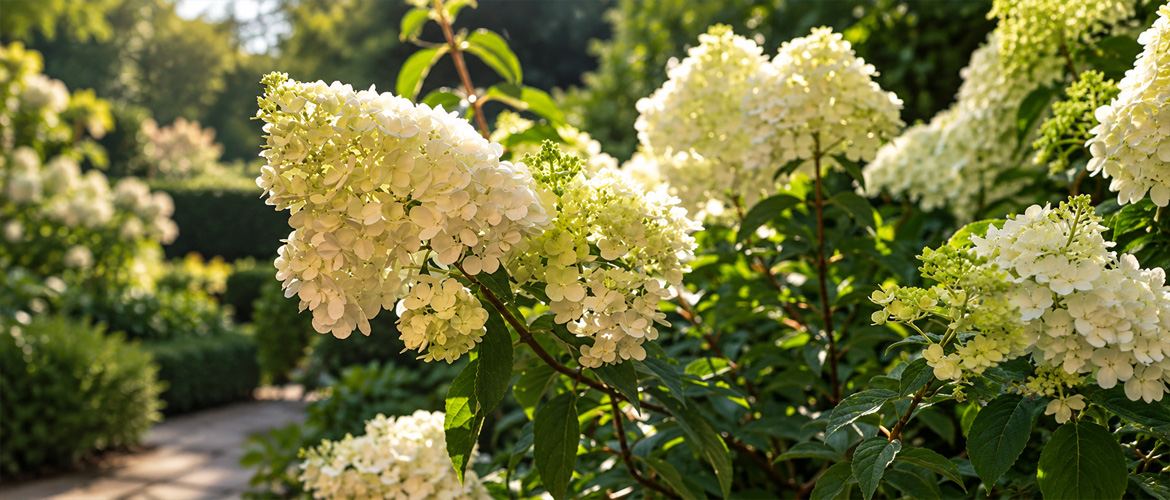
Hydrangea Limelight Tree
The Hydrangea Limelight Tree (Hydrangea paniculata ‘Limelight’) is a popular ornamental tree in Northeast landscapes. At Louis Contino Landscaping, we recommend this tree-form hydrangea for Long Island homeowners seeking seasonal color, elegant structure, and relatively low maintenance. Whether placed near a pool patio, lining a walkway, or highlighting a formal garden, it provides beauty from summer through winter.
What Is a Hydrangea Limelight Tree?
The Limelight Tree is a tree-form version of Hydrangea paniculata ‘Limelight’. Unlike traditional rounded hydrangea shrubs, it is trained into a single trunk with a rounded canopy, creating the appearance of a small flowering tree.
Key Features
Large cone-shaped blooms, often 8–12 inches long
Strong upright stems that resist flopping
Color-changing flowers throughout the season
Excellent cold hardiness
Long flowering period from midsummer into fall
Because it blooms on new wood, it flowers reliably even after harsh winters, making it a dependable choice for Northeast landscapes.
Why Homeowners Love Limelight Trees
1. Long Seasonal Interest
Flowers emerge in midsummer with soft lime-green tones, gradually transition to creamy white, and develop rosy-pink and burgundy hues by fall. This extended flowering period provides more seasonal interest than many flowering trees.
2. Perfect Scale for Residential Properties
Growing approximately 6–8 feet tall and wide, this tree provides visual impact without overwhelming smaller properties. It works beautifully near pools, entryways, and seating areas.
3. Reliable Performance
Limelight blooms on new growth, supporting consistent flowering year after year, even following cold winters.
4. Architectural Shape
Its tree form introduces vertical structure and helps frame views or soften hardscape features such as pavers, retaining walls, and outdoor kitchens.
Ideal Uses in Landscape Design
Entryway Accents: Pairing two Limelight trees along a front walkway or driveway creates symmetry and an elegant entrance.
Poolside Landscaping: Their moderate size and rounded canopy add softness while maintaining openness around swimming pools.
Patio Borders: Planting them near seating walls or outdoor lounges introduces height and visual privacy without creating a heavy screen.
Transitional Plantings: They connect lawn areas and shrub borders, creating a smooth transition between landscape spaces.
Seasonal Color Progression
Summer: Fresh lime-green blooms create a bright, clean appearance.
Late Summer: Creamy white blossoms provide a classic garden aesthetic.
Fall: Pink and burgundy tones complement autumn landscapes.
Winter: Dried flower heads provide texture, while the architectural silhouette adds interest against snow.
Planting Requirements
Sunlight: Limelight trees prefer full sun, ideally six or more hours daily. Partial afternoon shade can help in particularly hot locations.
Soil: Well-drained soil is essential. Slightly acidic to neutral soil is preferred. Compost can help improve drainage in heavy clay soils.
Watering: Newly planted trees require regular watering during their first season. Established plants have moderate drought tolerance but perform best with consistent moisture.
Pruning and Maintenance
One advantage of Limelight trees is their relatively simple maintenance.
Annual Pruning: Prune in late winter or early spring. Remove weak branches and lightly shape the canopy to maintain symmetry. Because flowering occurs on new wood, appropriate pruning encourages larger blooms and stronger structure.
Fertilizing: Apply balanced, slow-release fertilizer in spring. Avoid excessive nitrogen, which can reduce flowering.
Mulching: A 2–3 inch mulch layer helps retain moisture, reduce weeds, and protect roots from temperature fluctuations.
Common Questions Homeowners Ask
Does the Limelight Tree flop over?
Generally, its stems are stronger than those of many other hydrangeas. Proper pruning helps maintain its shape.
Do deer eat it?
It is considered moderately deer resistant, although no plant is completely deer-proof.
How fast does it grow?
It has a moderate growth rate and typically reaches mature size within several years.
Can it grow in pots?
Large decorative containers can work temporarily, but planting in the ground is better for long-term growth.
Design Pairings We Love
Limelight trees pair beautifully with ornamental grasses, boxwood hedges, lavender, Nepeta, dark-leaved shrubs, natural stone patios, and bluestone walkways. These combinations create balanced, layered, and timeless landscapes.
Limelight Tree vs. Shrub Form
Tree Form: More formal and architectural, ideal for focal points, patios, and entrances.
Shrub Form: Fuller and more naturalistic, suitable for hedges, mass plantings, and larger garden beds.
At Louis Contino Landscaping, we often combine both forms to create layered depth.
Why Long Island Homeowners Choose Limelight Trees
Homeowners across Nassau and Suffolk counties appreciate their elegant appearance, seasonal interest, relatively low maintenance, reliable flowering, and adaptability to different landscape styles. Whether the property has a classic, modern, or coastal design, Limelight trees complement a variety of outdoor spaces.
Final Thoughts
The Hydrangea Limelight Tree is more than a flowering plant. It is a versatile landscape feature that brings height, color, and elegance to residential properties. At Louis Contino Landscaping, we incorporate Limelight trees into our design-build projects because they deliver dependable seasonal beauty with relatively little maintenance.