
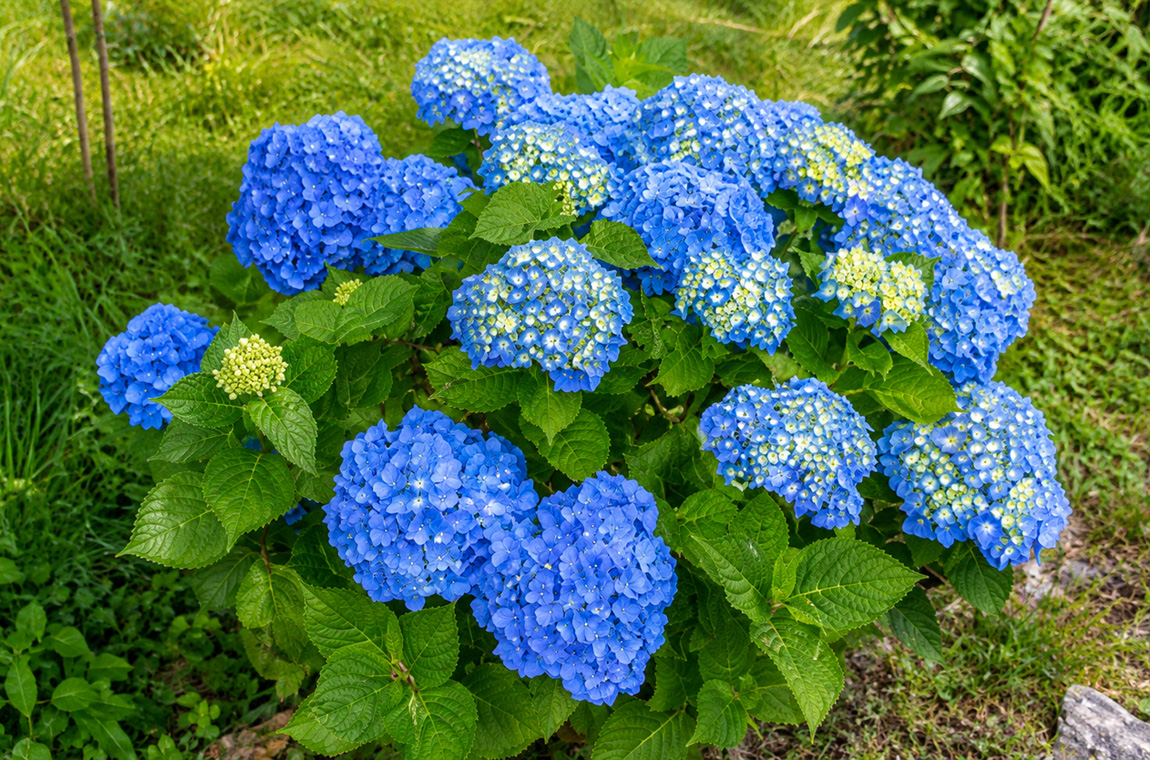
Hydrangea: Blue Billow, Blue Enchantress, Blushing Bride & Bobo
Hydrangeas are one of the most requested plants we use at Louis Contino Landscaping in Oyster Bay and throughout Long Island. Homeowners love them for their large blooms, reliable performance, and ability to transform a property from simple to spectacular in one season.
In the Northeast—especially here on Long Island—we deal with cold winters, humid summers, deer pressure, coastal salt exposure, and varying soil conditions. Choosing the right hydrangea variety makes all the difference.
In this guide, we’ll take a deep dive into four exceptional varieties we frequently recommend: Blue Billow, Blue Enchantress, Blushing Bride, and Bobo. We’ll explore their growth habits, bloom characteristics, maintenance needs, and how we design with them in real landscape projects across Nassau and Suffolk County.
1. Blue Billow Hydrangea
(Hydrangea serrata ‘Blue Billow’)
Blue Billow is a lacecap mountain hydrangea known for its delicate, airy bloom structure and improved cold tolerance compared to many traditional bigleaf hydrangeas. Unlike mophead varieties, lacecaps feature a ring of showy outer florets surrounding tiny fertile flowers, creating a more natural, woodland appearance.
Key Features
- Mature Size: 3–4 feet tall and wide
- Bloom Type: Lacecap
- Bloom Color: Blue in acidic soil, lavender in neutral soil
- Bloom Time: Early to mid-summer
- Sun Needs: Morning sun / afternoon shade
- Zone: 5–9
Blue Billow performs better than many bigleaf hydrangeas after cold winters. In Long Island landscapes—especially North Shore properties with partial shade—it thrives beautifully.
We frequently install Blue Billow under mature oak trees, along woodland borders, in layered foundation plantings, and in cottage-style gardens. Because of its moderate size, it works well in smaller properties where larger hydrangeas would overwhelm the space.
Design Tip from Louis Contino Landscaping
We love pairing Blue Billow with ferns, hostas, astilbe, and white flowering perennials for contrast. The delicate blue blooms pop against darker green foliage and natural stone walls.
2. Blue Enchantress Hydrangea
(Hydrangea macrophylla ‘Blue Enchantress’)
Blue Enchantress is a reblooming bigleaf hydrangea known for its rich blue mophead flowers and strong garden presence. Unlike older hydrangeas that only bloom on old wood, many newer cultivars like Blue Enchantress produce blooms on both old and new wood—offering more reliable flowering in colder climates.
Key Features
- Mature Size: 3–4 feet tall
- Bloom Type: Mophead
- Bloom Color: Deep blue in acidic soil
- Bloom Time: Early summer with repeat blooms
- Sun Needs: Morning sun, filtered afternoon shade
- Zone: 6–9 (borderline Zone 5 with protection)
Soil pH & Color Control
In the Northeast, soil often leans slightly acidic, which works in our favor for blue tones. However, we test soil regularly and amend with aluminum sulfate when homeowners want a stronger blue hue.
We educate clients that:
- Acidic soil = Blue flowers
- Neutral soil = Purple tones
- Alkaline soil = Pink tones
Blue Enchantress works beautifully as a foundation shrub, around patios and seating areas, as a statement mass planting, and in symmetrical front-yard designs. On many of our Kings Point and Oyster Bay projects, we use it near bluestone patios because the cool blue flowers complement natural stone beautifully.
3. Blushing Bride Hydrangea
(Hydrangea macrophylla ‘Blushing Bride’)
Blushing Bride is one of our favorite white hydrangeas for refined Northeast landscapes. It begins with creamy white blooms that gradually develop a soft pink blush as they age. This gentle color shift gives gardens a layered, evolving look through the season.
Key Features
- Mature Size: 3–4 feet tall
- Bloom Type: Mophead
- Bloom Color: White aging to soft pink
- Bloom Time: Early summer, repeat blooming
- Sun Needs: Part sun
- Zone: 5–9
Classic white color fits traditional homes, while the variety also works beautifully with modern designs. It brightens shaded corners and looks elegant near pools and patios.
In waterfront properties on the North Shore, Blushing Bride pairs beautifully with boxwoods and white fencing for a timeless Hamptons-style aesthetic.
Design Strategy
At Louis Contino Landscaping, we often mass plant 5–7 in curved beds, pair them with dark green evergreens for contrast, combine them with soft pink perennials, and use them in wedding-style garden themes.
Bobo Hydrangea
(Hydrangea paniculata ‘Bobo’)
Bobo is a dwarf panicle hydrangea that has become one of the most popular compact varieties for Northeast landscapes.
Unlike bigleaf hydrangeas, panicle hydrangeas bloom on new wood, are extremely cold hardy, tolerate more sun, and are more reliable bloomers after harsh winters.
Key Features
- Mature Size: 2.5–3 feet tall
- Bloom Type: Cone-shaped panicles
- Bloom Color: White aging to pink
- Bloom Time: Mid to late summer
- Sun Needs: Full sun to part sun
- Zone: 3–8
For homeowners tired of hydrangeas not blooming after cold winters, Bobo is a game changer. Because it blooms on new wood, winter dieback is not an issue, spring pruning encourages stronger growth, and it produces consistent flower coverage.
We often use Bobo along walkways, in front of retaining walls, as a low hedge, and in tight spaces near patios.
Comparing the Four Varieties
| Variety | Height | Bloom Type | Color | Best Use |
|---|---|---|---|---|
| Blue Billow | 3–4 ft | Lacecap | Blue/Lavender | Woodland gardens |
| Blue Enchantress | 3–4 ft | Mophead | Blue | Foundation plantings |
| Blushing Bride | 3–4 ft | Mophead | White → Pink | Elegant formal beds |
| Bobo | 2.5–3 ft | Panicle | White → Pink | Compact borders |
Hydrangea Care in the Northeast
At Louis Contino Landscaping, proper installation is just as important as plant selection.
Soil Preparation: We amend soil with compost, organic matter, and proper drainage mix. Hydrangeas hate sitting in water.
Watering: Especially in the first year, deep watering 2–3 times weekly and mulch help retain moisture.
Pruning: For Bigleaf & Mountain varieties—Blue Billow, Blue Enchantress, and Blushing Bride—prune lightly after flowering and avoid heavy fall pruning. For Bobo, prune in late winter or early spring and cut back by 1/3 for stronger blooms.
Winter Protection: For bigleaf varieties in Zone 6 areas, apply 2–3 inches of mulch and protect roots from freeze-thaw cycles.
Designing with Hydrangeas: Our Approach
At Louis Contino Landscaping, hydrangeas are rarely planted alone. We design them as part of a layered composition:
- Evergreen backdrop
- Mid-layer flowering shrubs
- Perennial foreground
- Proper lighting for nighttime drama
Hydrangeas provide seasonal color, but structure is what makes a landscape beautiful year-round.
Why Hydrangeas Remain a Northeast Favorite
They offer:
- Reliable seasonal color
- Strong curb appeal
- Long bloom duration
- Versatility in design styles
- Increased property value
In our Long Island projects—from Oyster Bay to the Hamptons—hydrangeas remain one of the top requested shrubs year after year.
Final Thoughts from Louis Contino Landscaping
Choosing between Blue Billow, Blue Enchantress, Blushing Bride, and Bobo depends on sun exposure, soil conditions, desired color palette, available space, and maintenance preference.
If you are located in Nassau or Suffolk County and want help selecting the right hydrangea for your property, our team at Louis Contino Landscaping specializes in custom landscape design and build services tailored to Northeast conditions.
We don’t just plant hydrangeas—we design entire outdoor environments that thrive in our climate.