Holly and Its Different Varieties in the Northeast
Hollies are among the most versatile, durable, and visually striking plants used in Northeast landscape design. At Louis Contino Landscaping, based in Oyster Bay, NY, we regularly incorporate holly varieties into residential landscape projects across Long Island and surrounding Northeast regions because they offer four-season structure, privacy, wildlife value, and stunning winter color.
Whether you’re designing a classic estate property in Nassau County, enhancing a coastal garden on the North Shore, or adding evergreen privacy screening to a suburban backyard, holly is one of the most reliable and elegant plant groups available.
Understanding Holly (Genus: Ilex)
Hollies belong to the genus Ilex, which includes over 400 species worldwide. In the Northeast, we primarily use cold-hardy species that tolerate freezing winters, coastal wind, and varying soil conditions.
Hollies fall into two main categories:
Evergreen Hollies – Keep their leaves year-round
Deciduous Hollies – Lose their leaves but display vibrant winter berries
Both types are extremely valuable in Northeast landscapes.
Evergreen Hollies for the Northeast
Evergreen hollies provide structure, privacy, and year-round greenery, especially important in winter landscapes across Long Island and the greater Northeast.
1. American Holly
Ilex opaca
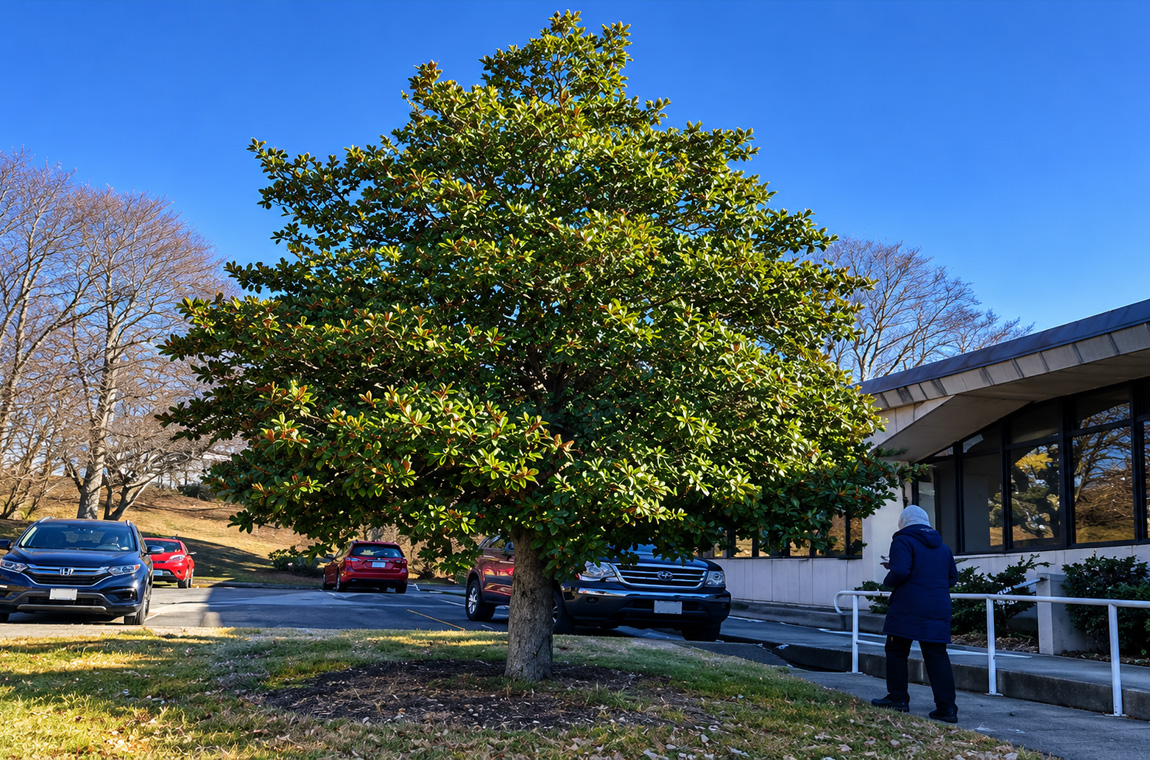
Native to the Eastern United States, American Holly is one of the most classic and recognizable holly trees.
Key Features:
Glossy, dark green spiny leaves
Bright red berries on female plants
Slow-growing but long-lived
Can reach 30–50 feet tall
Best Uses: Specimen trees, privacy screening, estate landscapes, and traditional or colonial-style homes.
At Louis Contino Landscaping, we use American Holly in larger properties where clients want a natural, native, and stately evergreen presence.
2. Nellie R. Stevens Holly
One of the most popular holly varieties used for privacy hedging in the Northeast.
Why It’s Popular:
Fast-growing
Dense growth habit
Heavy berry production
Excellent for screening
Grows: 15–25 feet tall and 8–12 feet wide.
We often recommend Nellie R. Stevens for Long Island clients seeking evergreen privacy without waiting decades for maturity.
3. Blue Holly (Meserve Holly)
Blue Hollies are extremely cold-hardy and perfect for Northeast winters. Popular cultivars include Blue Princess Holly and Blue Prince Holly.
You need both a male and female plant to produce berries.
Features:
Blue-green foliage
Compact growth
Excellent foundation plant
We frequently use Blue Hollies in formal garden layouts and foundation plantings where winter berry interest is desired.
4. Japanese Holly
Ilex crenata
Japanese Holly is often mistaken for boxwood because of its small leaves.
Advantages:
Smooth leaf edges with no spines
Dense, compact growth
Excellent for formal hedges
Common cultivars include ‘Compacta’, ‘Helleri’, and ‘Sky Pencil’. At Louis Contino Landscaping, we often substitute Japanese Holly for boxwood in areas where deer pressure or winter burn may be an issue.
5. Sky Pencil Holly
Sky Pencil Holly is a narrow, upright form of Japanese Holly.
Grows: 6–8 feet tall and 2–3 feet wide.
Ideal For:
Tight spaces
Modern landscapes
Framing entryways
Poolside planting
This is a favorite in contemporary North Shore designs where vertical structure is needed without width.
Deciduous Hollies for Winter Color
Unlike evergreen hollies, deciduous hollies lose their leaves but produce spectacular berry displays in winter.
6. Winterberry Holly
Ilex verticillata
Winterberry is one of the most striking winter plants in Northeast landscapes.
Features:
Drops leaves in fall
Bright red berries persist through winter
Excellent for wet soils
Popular cultivars include ‘Winter Red’, ‘Berry Heavy’, and ‘Red Sprite’. Winterberry is especially useful in naturalized plantings and waterfront properties across Long Island.
Design Considerations for Northeast Landscapes
At Louis Contino Landscaping, we consider deer pressure, soil conditions, sun exposure, and male and female plants when selecting holly.
Most hollies are moderately deer resistant. American Holly prefers well-drained acidic soil, Winterberry tolerates wet conditions, and Japanese Holly prefers slightly acidic soil. Most hollies prefer full sun to partial shade. For berries, you must plant at least one male plant nearby.
Holly for Privacy Screening
Best options for Northeast privacy include:
Nellie R. Stevens Holly
Ilex opaca
Ilex crenata
These varieties maintain year-round density and can be pruned into formal hedges.
Holly for Foundation Plantings
Best compact varieties include:
Blue Princess Holly
Sky Pencil Holly
Dwarf Japanese Holly varieties
Holly in Coastal Landscapes
For North Shore and waterfront properties, salt tolerance matters. Japanese Holly performs moderately well, while Nellie R. Stevens can tolerate some salt spray. Extreme coastal exposure with American Holly should be avoided unless protected.
Maintenance Tips
Pruning: Light shaping in late winter; avoid heavy pruning in fall.
Fertilization: Use acid-loving plant fertilizer in spring.
Mulching: Apply 2–3 inches of organic mulch and keep mulch away from the trunk.
Why We Recommend Holly at Louis Contino Landscaping
At Louis Contino Landscaping, we value plants that provide year-round beauty, offer wildlife habitat, require minimal maintenance, withstand Northeast winters, and enhance property value.
From classic American Holly specimen trees to modern Sky Pencil accents, we integrate holly strategically into landscape designs that are both functional and beautiful.
Final Thoughts
Holly is not just a holiday decoration plant—it’s one of the most structurally important and visually powerful shrubs and trees available to Northeast homeowners.
Whether you’re looking for privacy, winter color, deer resistance, formal hedging, or coastal durability, there is a holly variety suited to your landscape.
If you’re planning a landscape renovation or new design-build project on Long Island or anywhere in the Northeast, our team at Louis Contino Landscaping in Oyster Bay, NY can help you select the perfect holly varieties for your property.
We specialize in thoughtful plant selection, 3D landscape design renderings, and full-service installation tailored to your property’s microclimate and aesthetic goals.