
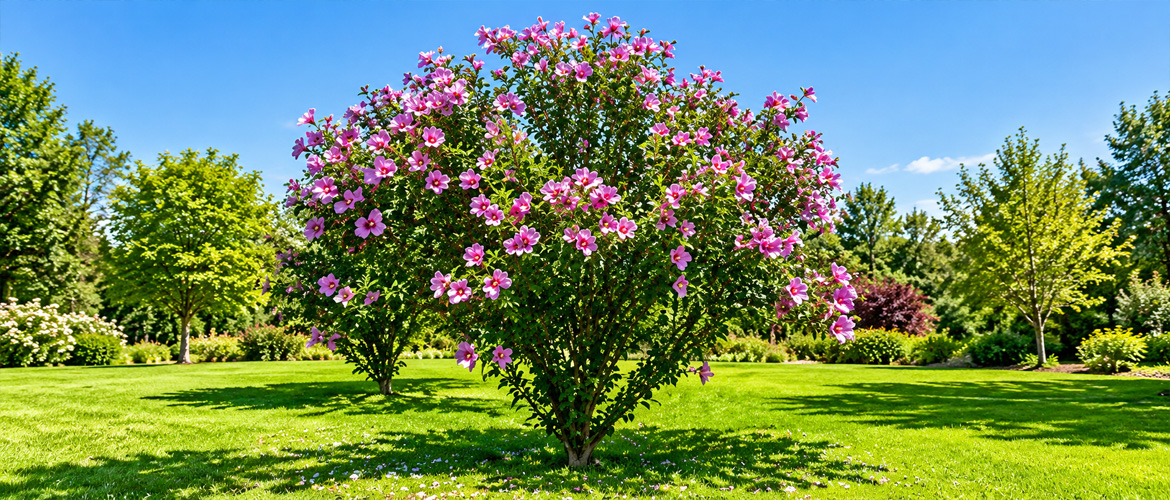
Hibiscus ‘Rose of Sharon Pink’
For dependable summer color and easy maintenance, homeowners across New York and the Northeast often choose Hibiscus ‘Rose of Sharon Pink’ (Hibiscus syriacus). At Louis Contino Landscaping, we recommend it for its tropical-looking flowers and durability in residential landscapes.
What Is Hibiscus ‘Rose of Sharon Pink’?
Rose of Sharon is a deciduous shrub in the mallow family. Despite its tropical appearance, it thrives in USDA zones 5–9. Large pink flowers bloom from mid-summer into early fall, attracting bees and butterflies. This extends garden color into late summer locally for homeowners across the region.
Key Characteristics
Mature height: 8–12 feet; it can be pruned smaller
Width: 6–10 feet
Growth rate: Moderate
Light: Full sun to partial shade
Bloom period: July through September
Soil: Well-drained; adaptable to many soil types
Deer resistance: Moderate, especially once established
It blooms on new wood, making it forgiving to prune.
Visual Character and Garden Appeal
Its silky pink flowers resemble tropical hibiscus, while its upright, vase-like form creates vertical interest.
Why It Works in the Northeast
Rose of Sharon adapts to the changing conditions found in Northeast landscapes.
Late-Season Color: While lilacs and viburnums often finish flowering by early summer, Rose of Sharon blooms through July, August, and September, extending garden color.
Toughness and Adaptability: Once established, it tolerates heat, urban pollution, and occasional dry spells. Its moderate salt tolerance can suit some properties near the Long Island coast.
Vertical Structure: Its upright habit provides screening and height without the bulk of large evergreens.
Pollinator Support: Its flowers attract bees and butterflies.
Landscape Design Uses
Rose of Sharon Pink offers several design possibilities.
Privacy Screens and Informal Hedges: Planted 5–6 feet apart, it can form a light, airy screen near patios and pools.
Accent or Specimen Plant: A mature shrub creates a focal point in a mixed planting bed, particularly alongside ornamental grasses.
Foundation Plantings: Its tolerance for pruning allows it to be shaped near homes, bringing summer color to foundation beds.
Poolside and Patio Gardens: Its tropical-looking flowers complement modern hardscapes, bluestone patios, and outdoor living areas.
Companion Plants
Pair it with ornamental grasses, Hydrangea paniculata, Nepeta (Catmint), lavender, Coreopsis, echinacea, or Arborvitae. Pink flowers complement purple, silver, and white palettes.
Planting Tips
Sunlight: For maximum flowering, choose a site with at least six hours of direct sun. Partial shade is tolerated but may reduce blooms.
Soil Preparation: Rose of Sharon prefers well-drained soil. Where heavy clay is present, organic material can help improve drainage and root development.
Watering: Water consistently during the first year while roots establish. Established plants have moderate drought tolerance.
Spacing: Allow room for mature growth and air circulation, particularly in humid conditions, to help reduce disease risk.
Maintenance and Care
This shrub needs relatively little maintenance. Prune in late winter or early spring because it blooms on new growth. Apply balanced, slow-release fertilizer in spring if needed; over-fertilizing can reduce blooms. A 2–3 inch mulch layer retains moisture, regulates soil temperature, and suppresses weeds.
Deer Resistance and Considerations
No plant is completely deer-proof. Mature Rose of Sharon may be less attractive to deer than tender perennials, but protect young growth where deer pressure is high. Some varieties self-seed; sterile cultivars are available. Young plants may need support in windy locations, and late spring leaf emergence is normal.
Seasonal Interest
Spring: Fresh foliage provides a backdrop for spring bulbs and perennials.
Summer: Large pink flowers become a prominent feature.
Fall: Flowering tapers off while the shrub’s structure remains attractive.
Winter: Its branching form adds architectural interest.
Design Tips from Louis Contino Landscaping
For a balanced landscape, pair it with ornamental grasses and evergreens. Plant multiples for stronger impact, avoid overcrowding, and position shrubs where their late-season color can be enjoyed from patios or indoors.
Final Thoughts
Hibiscus ‘Rose of Sharon Pink’ brings color and resilience to Northeast landscapes. Its long bloom season and upright form suit homeowners seeking beauty without demanding upkeep. At Louis Contino Landscaping, we use it in designs from small gardens to backyard renovations.
Need Help Designing the Perfect Landscape?
Louis Contino Landscaping creates custom landscapes throughout Oyster Bay and Long Island through thoughtful plant selection, expert installation, and long-term planning. Call 631-351-5409 for a free estimate.