
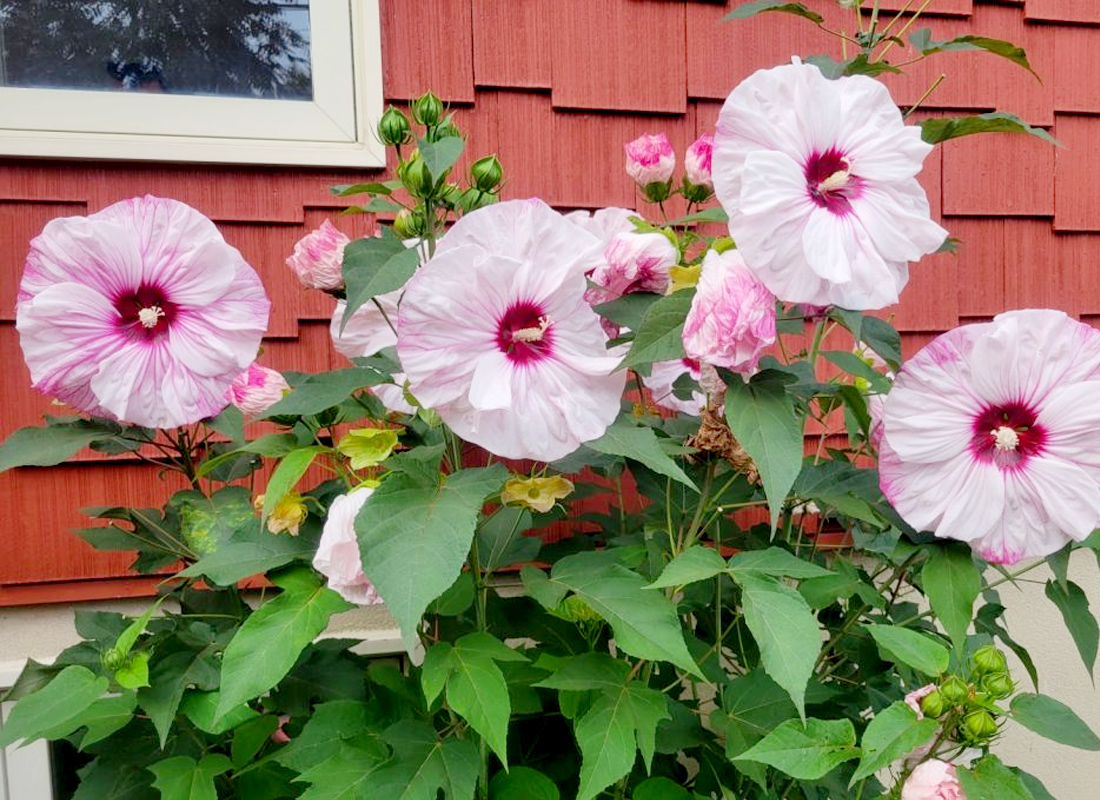
Hibiscus Rose Mallow
If there’s one perennial plant that instantly transforms a garden into a tropical paradise while still thriving in temperate climates, it’s the Hibiscus Rose Mallow. Known formally as Hibiscus moscheutos, this striking plant boasts enormous blooms, bold colors, and a presence that makes every garden bed unforgettable. From formal landscapes to wetland borders and pollinator gardens, Rose Mallow brings beauty, wildlife value, and seasonal drama.
Rose Mallow is a member of the mallow family (Malvaceae) and is native to Eastern and Central North America, where it often grows in marshes, damp meadows, roadside ditches, and edges of ponds. Despite its lush, exotic blooms, it is a cold-hardy perennial that dies down in winter and regrows vigorously in spring — making it a reliable performer for a wide range of climates.
Why Choose Rose Mallow for Your Garden?
Rose Mallow isn’t just another pretty flower — it’s a landscape powerhouse:
1. Dramatic Bloom Size
The blooms of Hibiscus moscheutos are giant, often reaching 6–12 inches across. These “dinner-plate” flowers come in shades of white, pink, red, and even bicolor forms.
2. Long Flowering Season
Once they start in mid-summer, these plants can bloom continuously into early fall — providing consistent color when many other perennials begin to fade.
3. Wildlife Magnet
Butterflies, bees, hummingbirds, and even specialized pollinators like the Rose Mallow bee are attracted to these nectar-rich blossoms. Larvae of several butterfly species also feed on the foliage.
4. Versatility
Although Rose Mallow thrives in moist to wet soil conditions and can grow near water features, it also adapts to average garden soil as long as it receives adequate water and sunlight.
5. Hardy and Resilient
Unlike tropical hibiscus, which dies back in colder climates, Rose Mallow can be hardy in USDA zones 4–9, enduring winter and returning strong each spring.
A Deep Dive Into Hibiscus Rose Mallow Varieties
Rose Mallow isn’t a single plant — it’s a species with numerous cultivars and hybrid varieties, each offering unique colors, habits, and bloom patterns. Many modern garden favorites are bred for increased bloom vigor, longer flowering periods, fascinating foliage, and ease of care.
Here’s a detailed look at the most beloved and widely planted varieties:
Classic and Native Rose Mallow Types
These are the forms closest to wild Hibiscus moscheutos:
- Common Rose Mallow, Swamp Rose Mallow, Crimson-eyed Rose-mallow – The quintessential native form with large white to pink blooms and deep maroon eye. It thrives in wet areas and works beautifully in naturalistic plantings.
- Standard Species Form – Grows 3–7 feet tall with cone-shaped flowers and striking central eyes in shades from pale pink to deep red.
Cultivar Groups & Named Varieties
Gardeners and breeders have developed many hybrids and named cultivars that take Rose Mallow to the next level. Many are sold by nurseries under trade names and series:
Luna Series
A compact set of varieties ideal for beds and borders:
- ‘Luna Pink Swirl’ – Pink and white patterned blooms for a softer palette.
- ‘Luna Red’ – Deep scarlet flowers for bold contrast.
- ‘Luna Rose’ & ‘Luna Blush’ – Diverse and eye-catching shades ideal for mid-height garden areas.
Summerific® Series (Proven Winners)
This series includes some of the most popular hybrid hibiscus varieties today, known for long bloom times and striking showy flowers:
- Summerific® ‘Holy Grail’ – Dark foliage with 8–9″ deep red flowers — a true garden centerpiece.
- Summerific® ‘All Eyes on Me’ – Blushing pink blooms and lush foliage make this a standout in borders.
- Other Summerific® types include ‘Evening Rose’, ‘Valentine’s Crush’, ‘Spinderella’, and ‘Ballet Slippers’, each with their own unique charm.
Disco Belle Series
These rose mallows are bred for vigorous growth and rich color:
- Disco Belle Red / Pink / White – Elegant, large blooms with strong stems and prolific flower production.
Other Notable Cultivars
Beyond the main series above, gardens often showcase other exquisite forms, including:
- ‘Lady Baltimore’ – Pink blooms with dramatic eyes.
- ‘Lord Baltimore’ – Rich red flowers that add focal interest.
- ‘Cranberry Crush’, ‘Midnight Marvel’, ‘Kopper King’, ‘Scallopini’, ‘Wildwood Wonder’ — each brings unique color and form to garden schemes.
Planning Your Rose Mallow Planting
To get the most out of these spectacular plants, here are practical guidelines for planting and care:
Sunlight
Rose Mallows love full sun — 6 or more hours of direct sunlight daily for best flowering.
Soil & Water
While they prefer moist soil and will tolerate wet areas near ponds, rain gardens, and boggy edges, they can also grow in well-drained garden beds with regular watering.
Planting Tips
- Space plants 2–4 feet apart depending on variety size.
- Add compost to enrich soil and help retain moisture.
- Mulch to retain soil moisture and reduce weeds.
Maintenance
- They die back each winter — cut stems to ground after frost.
- Divide clumps occasionally to control spread and rejuvenate growth.
Pollinator Bonus
Bees, butterflies, hummingbirds, and specialist native pollinators visit Hibiscus moscheutos, making it not just beautiful but ecologically valuable.
Rose Mallow in Landscaping — The Louis Contino, Inc. Touch
For those who want to elevate their outdoor space from pretty to extraordinary, landscape design professionals can make all the difference. One such firm with strong roots in Long Island is:
Louis Contino Landscaping, Inc.
5.0•Landscape architect
Based in Oyster Bay, New York, Louis Contino Landscaping, Inc. has been transforming residential and commercial outdoor spaces since 1980. With decades of experience in custom landscape design, hardscape construction, plantings, outdoor lighting, and full property enhancements, the team brings expert vision to gardens of all scales.
Whether you’re dreaming of lush perennial borders, water features flanked by native plantings, or colorful pollinator gardens centered on dramatic Rose Mallow blooms, professional landscaping guidance can help you choose the right varieties and placement for year-round interest and ecological impact.
Final Thoughts — Why Rose Mallow Captivates Gardeners
Rose Mallow Hibiscus moscheutos is more than a plant — it’s a statement. Its lush, oversized blooms are bold enough to anchor garden beds yet versatile enough for cottage, wildlife, or formal designs. With a diverse array of cultivars that span delicate pinks to dramatic reds and every shade in between, there’s a Rose Mallow for every garden palette.
Add to that its long bloom season, hardiness, and appeal to pollinators, and it’s easy to see why gardeners keep coming back to this perennial year after year. Whether you’re planting a few in containers or building an entire landscape around them with help from professionals like Louis Contino, Inc., Rose Mallow will reward you with stunning, unforgettable blooms.