
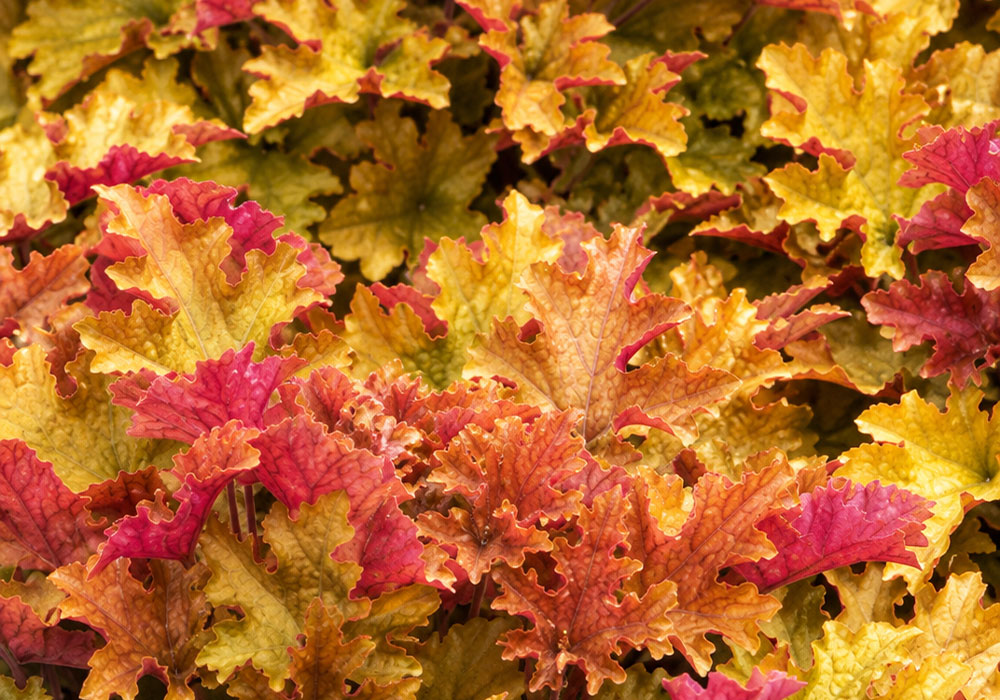
Heuchera “Marmalade”
Heuchera “Marmalade” — a standout in the beloved family of coral bells — brings warm, glowing foliage, season-long interest, and effortless charm to gardens. Whether you’re planting a shade border, brightening a woodland edge, or adding texture to containers, this perennial delivers color, resilience, and low maintenance performance.
What Is Heuchera “Marmalade”?
Heucheras, also called coral bells or alumroot, are evergreen or semi-evergreen perennials known for ornamental foliage and delicate flower spikes. Heuchera “Marmalade” is one of the most eye-catching selections in the coral bell world: it forms a mounded clump of foliage with colors ranging from amber and peach to bronze and copper, often glowing like a slice of citrus in filtered shade or dappled sun.
Coral bells are prized more for their foliage spectacle than their flowers, with blooms appearing mostly above the foliage on thin stems in late spring to early summer. These blooms — typically creamy white or subtly reddish — add an airy contrast to the bold leaves.
The cultivar “Marmalade” is part of a broader Marmalade™ series from Terra Nova Nurseries that includes other striking heucheras like Lime Marmalade and Berry Marmalade, but the classic “Marmalade” holds its own with warm, ruffled color and year-round appeal.
A Plant That Works Hard in the Garden
Heuchera “Marmalade” is more than just beautiful — it’s versatile and easy to care for:
- Evergreen or semi-evergreen habit: Leaves persist year-round in many climates, offering seasonal structure and color.
- Compact mounding form: Typically reaches about 10–14″ tall with an 18″ spread, making it perfect for borders, rock gardens, foundation plantings, and containers.
- Wide light tolerance: Thrives in full to partial shade, and in cooler climates can even take some sun.
- Easy care: Minimal maintenance needs once established, ideal for both new and experienced gardeners.
Whether planted in mass for dramatic effect or mixed with textured foliage plants, Marmalade coral bells bring warmth and movement to your planting schemes.
Deer & Rabbit Resistance: Why It Matters
One of the biggest challenges for gardeners is protecting plants from wildlife — especially deer and rabbits, which can wreak havoc on new plantings. Thankfully, Heuchera “Marmalade” is widely regarded as deer-resistant and rabbit-resistant in many landscapes.
Why does this matter?
- Deer resistance: Coral bells, including Marmalade, are generally less palatable to deer due to their texture and foliage composition.
- Rabbit resistance: Rabbits tend to avoid denser, textured foliage like coral bells compared with tender annuals and vegetables.
Important: “Deer-resistant” does not mean deer-proof — extremely hungry wildlife may still sample plants in food-scarce conditions — but many gardeners report that heucheras remain largely untouched.
This resistance makes Marmalade an excellent choice for gardens near wooded areas or in regions with high wildlife pressure.
Growing & Caring for Heuchera “Marmalade”
One of the joys of Marmalade is how simple it is to grow. Here’s a comprehensive guide to care so your plants look their best year after year.
Light Requirements
- Partial shade to full shade: Best color develops in bright shade, especially in hot summer climates.
- Filtered sunlight: Morning sun with afternoon shade is ideal. Too much hot, direct sun can fade foliage tones.
Soil & Planting
- Well-drained soil: Coral bells prefer soil that doesn’t stay soggy. Add compost or organic matter to improve structure if needed.
- Planting depth: Set the crown at soil level and firm gently.
- Spacing: Leave 12–18″ between plants to allow room for mounding and airflow.
Watering
- Establishment period: Keep soil moist (not wet) until roots take hold.
- After established: Water during dry spells — heucheras tolerate short drought periods but perform best when evenly moist.
Maintenance
- Spring cleanup: Remove any tattered or old leaves before new growth emerges to freshen appearance.
- Divide every few years: Splitting mature clumps rejuvenates growth and keeps the plant looking tidy.
- Mulch: A light mulch helps conserve moisture and suppress weeds.
Like most coral bells, Marmalade is low-maintenance and forgiving, making it a reliable choice in borders and mixed plantings.
Landscape Ideas: Bring Warmth & Texture
Heuchera “Marmalade” shines in garden designs that emphasize contrast, color, and seasonal interest. Here are some inspiring ways to use it:
1. Front-Of-Border Focal Points
Plant Marmalade along the front edge of perennial borders to provide a glowing band of amber foliage that anchors more dramatic blooms behind it. In early spring, it’s often one of the first plants to emerge, setting the tone for the season.
2. Woodland & Shade Gardens
Due to its shade tolerance, Marmalade works beautifully under trees or alongside shade lovers like ferns, hostas, and astilbe. The warm leaf tones contrast with lush green companions, bringing vibrancy to shaded spots.
3. Containers & Patios
Use Marmalade in mixed containers for patios or entrances. Paired with deep purple or silvery foliage, its sunset hues become even more striking. Its compact habit makes it ideal for pots without overwhelming other plants.
4. Groundcover & Mass Plantings
When planted in groups, coral bells create rich color accents that unify garden beds. Massed plantings glow beneath taller perennials like Japanese painted ferns or flowering shrubs.
5. Seasonal Transitions
Heuchera “Marmalade” performs across seasons:
- Spring: Fresh foliage and emerging plants set the stage.
- Summer: Creamy or airy flower spikes rise above the leaves.
- Fall: Foliage continues to look vibrant, contrasting with cooler tones.
- Winter: In milder climates, the evergreen leaves provide year-round structure.
This extended presence makes it a backbone plant for perennial gardens.
Wildlife & Pollinator Benefits
While primarily grown for foliage, Marmalade also offers garden ecology value:
- Bee and hummingbird magnet: When in bloom, the airy flower stalks attract pollinators.
- Butterflies: Some species may visit coral bell flowers for nectar.
By including plants like Marmalade in your landscape, you’re not just beautifying your yard — you’re supporting local pollinators too.
Companion Plants That Pop
Pair Heuchera “Marmalade” with plants that amplify its beauty:
- Hosta ‘Halcyon’: Mega-textured blue foliage creates cool contrasts.
- Heuchera ‘Berry Marmalade’ Heuchera Berry Marmalade — darker leaves for dramatic contrast.
- Carex ‘Bowles Golden’: Graceful grass that echoes warm tones.
- Astilbe or Brunnera: Soft blossoms balance fiery coral bells.
These combinations enhance garden depth and seasonal evolution.
Final Thoughts: Why Marmalade Belongs in Your Garden
From its glowing foliage and deer resistance to its year-round interest and design versatility, Heuchera “Marmalade” is a standout perennial for gardens of all styles — from woodland retreats to urban container spaces.
These coral bells cultivar delivers:
Warm, multidimensional color
Deer and rabbit resistance
Low maintenance performance
Attractive in beds, borders, and containers
Pollinator value when in bloom
Add it to your garden and watch how it becomes a season-long focal point and foundation plant that brings texture and energy to every outdoor space.