
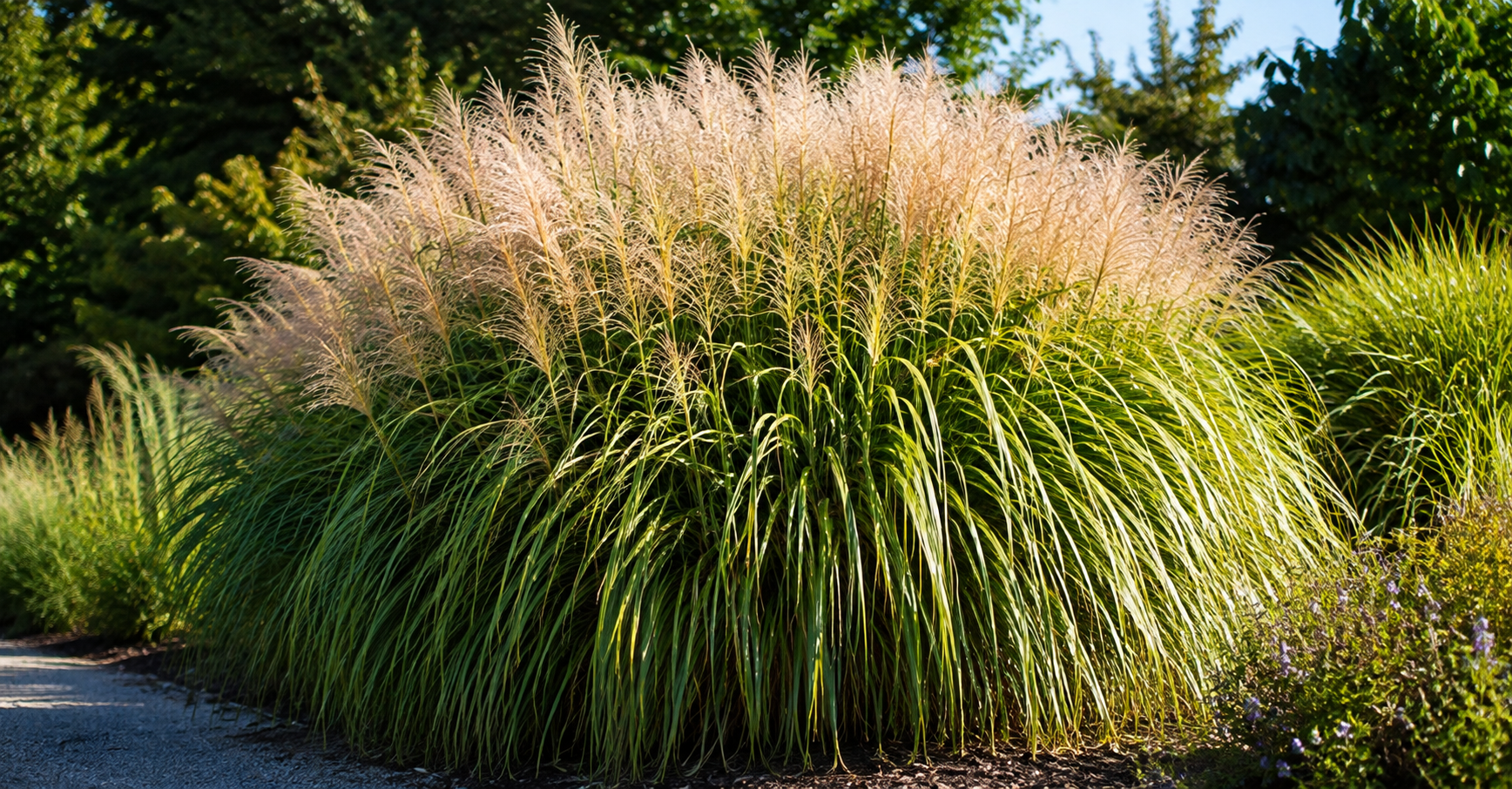
Grass Miscanthus Varieties for the Northeast
Miscanthus (commonly called maiden grass) is one of the best “big-impact, low-drama” ornamental grasses for Northeast landscapes. It’s tough, cold-hardy, and it gives you movement + texture + height that shrubs can’t. In the right spot, Miscanthus looks clean and architectural all season—then becomes a winter feature with feathery plumes and golden straw color.
At Louis Contino Landscaping, Inc., we use Miscanthus in everything from modern poolscapes to classic foundation beds—especially when clients want privacy, soft screening, or a natural look that still feels designed. Below is a homeowner-friendly guide to the best Miscanthus varieties for the Northeast, how to choose the right one, and how we design with them on Long Island and similar climates.
Why Miscanthus Works So Well in the Northeast
1) Strong performance in four seasons
Miscanthus shines from late spring through winter. It starts as a tidy green clump, gets taller and fuller in summer, then produces seed heads (plumes) late summer into fall. By winter, it dries to a warm tan and holds its structure in snow.
2) Great for screening without building a “wall”
If you want a softer screen than arborvitae—or something lighter near a patio or pool—Miscanthus is a go-to. The blades and plumes create a semi-private veil that feels natural, not boxed-in.
3) Easy maintenance (when planted correctly)
Most Miscanthus only needs consistent watering the first season, a spring cutback, and occasional dividing every few years if it gets too large.
4) Salt, wind, and coastal conditions
On Long Island and coastal Northeast properties, wind and occasional salt spray are real factors. Miscanthus can handle a lot, but placement matters. We like it as a buffer planting behind lower salt-tolerant plants or in protected courtyard-style beds.
Miscanthus vs. Switchgrass vs. Feather Reed Grass
Miscanthus (Maiden Grass): Big, dramatic, arching, fluffy plumes. Best for screening, focal points, and mass plantings.
Panicum (Switchgrass): More upright and airy. Great for naturalistic meadows, rain gardens, and strong fall color.
Calamagrostis (Karl Foerster Feather Reed Grass): Tight and vertical, with early plumes. Great for modern lines and narrow spaces.
If you want fullness + softness + height, Miscanthus is usually the winner.
Best Miscanthus Varieties for the Northeast
1) Miscanthus sinensis ‘Gracillimus’ (Classic Maiden Grass)
Height: ~5–7 ft
Look: graceful, fine-textured, arching fountain shape
Best use: screening, background plantings, large bed anchors
‘Gracillimus’ is the classic “maiden grass” most people picture—soft, arching blades with a rounded fountain form. It’s elegant and natural, not stiff.
Where we use it:
- Behind pool patios for movement and softness
- Along fences for lighter privacy
- At the back of deep foundation beds
Tip: Give it room. If you cram it into a tight bed, it will outgrow the space and feel messy.
2) Miscanthus sinensis ‘Morning Light’ (Fine Texture + Clean Look)
Height: ~4–6 ft
Look: very fine blades, silvery highlights, refined shape
Best use: high-end landscapes, patios, pools, and modern designs
‘Morning Light’ looks polished and refined. Its narrow foliage creates a softer appearance that works especially well with:
- Boxwood and inkberry
- Hydrangeas
- Bluestone patios
- Clean-lined pavers
- Coastal-style plant palettes
3) Miscanthus sinensis ‘Adagio’ (Compact + Reliable)
Height: ~3–5 ft
Look: smaller, tidy clump with good plumes
Best use: tighter spaces, layered beds, and medium borders
‘Adagio’ provides the Miscanthus look without becoming a 7-foot giant. It works well for foundation plantings, walkways with enough setback, and smaller privacy breaks.
4) Miscanthus sinensis ‘Little Zebra’ (Compact with Stripe)
Height: ~3–4 ft
Look: horizontal banding on the blades
Best use: accent grass and focal points
‘Little Zebra’ adds personality through its distinct horizontal striping. Use it near entry walks, patio-bed corners, or with clean shrubs.
5) Miscanthus sinensis ‘Zebrinus’ (Zebra Grass, Larger)
Height: ~5–7 ft
Look: larger striped foliage
Best use: large landscapes and dramatic focal points
‘Zebrinus’ is best used with restraint. Its bold striping can become busy when overused, but it makes an excellent statement plant in large beds.
6) Miscanthus sinensis ‘Strictus’ (Porcupine Grass)
Height: ~5–7 ft
Look: upright, striped, stiff blades
Best use: modern and architectural landscapes
‘Strictus’ stays more upright and spiky than ‘Zebrinus’, making it a strong choice for structured designs.
7) Miscanthus sinensis ‘Purpurascens’ (Flame Grass)
Height: ~4–6 ft
Best use: fall color and seasonal drama
Its green summer foliage shifts into reddish-bronze tones in fall, creating warmth and contrast.
How to Choose the Right Miscanthus
Choose a tall variety for:
- Privacy screening
- Background structure
- Soft fence coverage
Good picks: ‘Gracillimus’, ‘Silberfeder’, ‘Cosmopolitan’, ‘Zebrinus’
Choose a mid-size variety for:
- Fullness without excessive height
- Layered borders
- Smaller property balance
Good picks: ‘Morning Light’, ‘Adagio’, ‘Purpurascens’
Choose a compact variety for:
- Accents
- Smaller beds
- Walkways and entries
Good picks: ‘Little Zebra’, ‘Adagio’
Planting and Care Tips (For Long Island + Northeast)
Sunlight
Miscanthus prefers full sun (6+ hours). It can survive in part sun, but it may be less full and more likely to flop.
Soil
It prefers well-drained soil but is adaptable. Long Island properties may have sandy soils, clay pockets, or compacted fill.
We usually improve planting beds with:
- Compost/organic matter
- Proper grading
- Mulch to stabilize moisture
Watering
During the first season:
- Water deeply 1–2 times per week during dry periods
- Avoid shallow sprinkling
Spring Cutback
In late winter or early spring, cut the grass down to about 6–10 inches before new growth begins.
Dividing
If the clump becomes too large or thin in the center, divide it in spring and replant the strongest sections.
Design Ideas: How Louis Contino Landscaping Uses Miscanthus
1) Soft privacy along a fence line
A row of ‘Gracillimus’ or ‘Morning Light’ can soften a fence with movement and texture.
2) Poolscape comfort planting
‘Morning Light’ works beautifully near patios because it looks refined and moves naturally in the breeze.
3) Mixed perennial borders
Miscanthus provides structure behind echinacea, rudbeckia, salvia, nepeta, allium, sedum, and hydrangeas.
4) Entry focal point
One or two ‘Little Zebra’ or ‘Adagio’ can anchor an entry bed without overwhelming it.
Common Mistakes to Avoid
Planting too close to walkways: Miscanthus arches, so provide adequate setback.
Using the wrong size variety: A 7-foot grass in a 3-foot-wide bed will become a maintenance problem.
Not cutting back early enough: Old blades can make new growth look messy.
Over-fertilizing: Excess fertilizer can encourage tall growth and flopping.
Miscanthus and “Invasiveness” (Important Note)
Some Miscanthus varieties can self-seed depending on the cultivar and conditions. In professional landscape planning, we’re careful about selection and placement and discuss alternatives when clients prefer a native-only approach, such as switchgrass or little bluestem.
Final Thoughts
Miscanthus is one of the most valuable ornamental grasses for Northeast landscapes because it delivers height, motion, privacy, texture, and winter interest while remaining relatively easy to maintain. The key is choosing the right variety for your space and providing proper spacing, sunlight, and first-year care.
If you’re on Long Island or in the Northeast and want Miscanthus integrated into a clean, professional landscape design—whether it’s a new build, pool renovation, or front entry refresh—Louis Contino Landscaping, Inc. can help you select the right variety and layout so it looks great for years.