
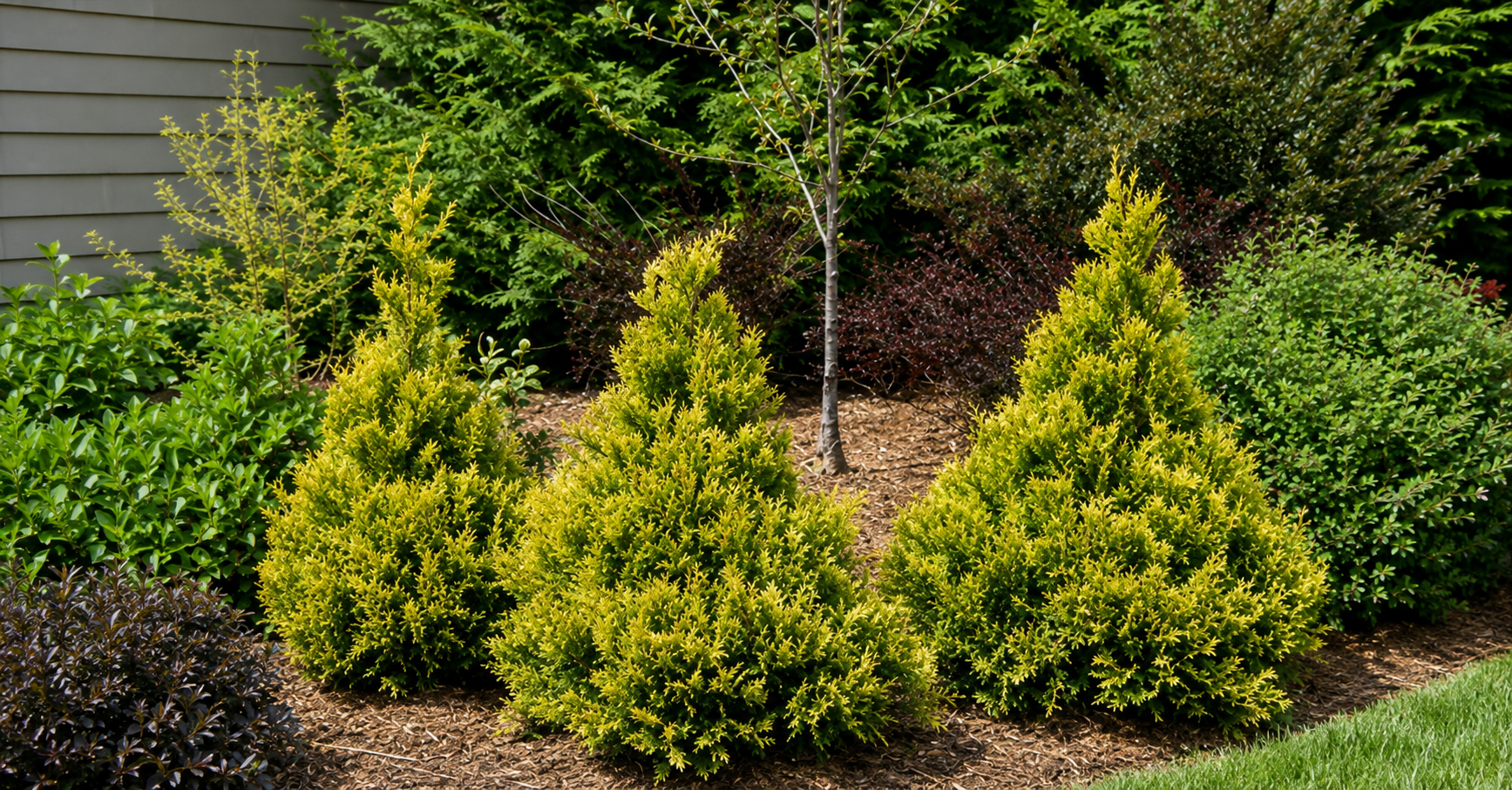
Golden Mop False Cypress Varieties for the Northeast (Complete Guide)
Few plants give you year-round color and soft texture the way golden threadleaf false cypress does—especially in the Northeast, where winter landscapes can feel flat and gray. When clients ask us for a compact evergreen that holds color through cold weather and works well with stonework, hydrangeas, and ornamental grasses, we often reach for Golden Mop false cypress and its close golden threadleaf relatives.
This guide explores the best Golden Mop-type varieties, along with Northeast-focused planting, care, and design advice we use at Louis Contino Landscaping Inc. across Long Island and the surrounding region.
Golden Mop
Golden Mop is a dwarf cultivar of Chamaecyparis pisifera, commonly called Sawara false cypress. It is known for thread-like foliage that cascades and mounds, creating a soft, fountain-like appearance rather than a stiff conifer form.
It is slow-growing and generally hardy in USDA Zones 4–8. With the right placement, Golden Mop can maintain attractive golden color through the seasons.
Golden Mop (Chamaecyparis pisifera ‘Golden Mop’): The Standard for Golden Texture
Look & habit
Golden Mop forms a mounded cushion of bright gold to chartreuse thread foliage. It is slow-growing and typically requires little pruning when given enough space.
Size expectations
In Northeast landscapes, Golden Mop often remains around 2–4 ft in height and width during its early years, although it can become larger with age and favorable growing conditions.
Best placement
Golden Mop works beautifully in:
- Foundation corners
- Boulder and ledge gardens
- Evergreen groupings
- Four-season entry beds
Light and Site Conditions
Light matters
Full sun generally produces the strongest golden color. However, Northeast sites can present challenges.
Hot, reflective locations such as south-facing walls and stone patios may increase drying and scorch, while exposed corners can cause winter desiccation.
A good location is morning sun with some afternoon protection, or full sun with reliable irrigation and wind buffering.
Golden Mop Alternatives Worth Considering
1. ‘Filifera Aurea’
‘Filifera Aurea’ is a taller golden threadleaf form with a broadly conical shape and drooping, thread-like sprays.
When we use it:
- When a taller golden accent is needed
- Behind lower shrubs or perennials
- In layered conifer groupings
Its threadleaf texture works especially well with rounded shrubs such as boxwood, inkberry, or dwarf hollies.
2. ‘Filifera Aurea Nana’
This smaller-scale selection provides golden threadleaf texture with slower growth characteristics.
When we use it:
- Tight planting beds
- Conifer collections
- Smaller landscape compositions
Even compact forms should be given enough space to develop naturally rather than being repeatedly sheared.
3. ‘Lemon Thread’
‘Lemon Thread’ is valued for bright yellow foliage and fine texture.
When we use it:
- To add a clean yellow accent
- Near bluestone, granite, or dark mulch
- In modern planting designs
4. Soft Serve® Gold
Soft Serve® Gold offers a more uniform, structured form while maintaining the golden conifer effect.
When we use it:
- Modern landscapes
- Repeated plantings
- Designs requiring consistent form
How to Choose the Right Variety
Choose Golden Mop when you want:
- A true dwarf-scale evergreen
- A soft, cascading mound
- Minimal pruning
Choose ‘Filifera Aurea’ when you want:
- Taller threadleaf structure
- A golden accent behind lower plants
Choose ‘Filifera Aurea Nana’ when you want:
- A smaller-scale threadleaf form
- Slower growth characteristics
Choose ‘Lemon Thread’ when you want:
- Brighter yellow foliage
- Fine texture
Choose Soft Serve® Gold when you want:
- A tidy, consistent form
- Repetition in modern landscape designs
Preventing Browning
Golden threadleaf cypresses can develop browning when planted in wet soil, exposed to winter winds, or stressed by drought.
Soil & drainage
These plants prefer well-drained soil. In heavy clay or poorly drained areas, improve drainage and avoid creating planting holes that retain water.
Watering
The first year is especially important.
- Deep watering 1–2 times per week depending on weather and soil
- Avoid shallow daily watering
- Mulch to retain moisture and moderate soil temperature
Keep mulch away from the trunk.
Winter wind protection
Coastal Northeast sites can experience winter wind and salt exposure. Planting near windbreaks such as fences, hedges, structures, or larger evergreens can help reduce winter damage.
Pruning: Less Is More
Golden Mop and threadleaf forms generally require little pruning.
If shaping is necessary:
- Use light, selective tip-pruning
- Remove dead interior growth
- Avoid cutting deeply into old wood
Their natural form is part of their appeal, so heavy shearing should generally be avoided.
Design Pairings We Love
Dark evergreens
Inkberry holly, boxwood, and dark yew selections provide strong contrast and make golden foliage appear brighter.
Blue and silver foliage
Blue-toned conifers and ornamental grasses create an elegant gold-and-blue combination.
Hydrangeas and seasonal shrubs
Golden threadleaf cypress provides evergreen structure when deciduous shrubs lose their leaves.
Stonework and boulders
The soft, mop-like texture creates a beautiful contrast against bluestone, granite, walls, and boulders.
Common Problems and Solutions
“It’s turning brown inside”
Older interior growth can naturally decline as the plant becomes dense. If outer growth remains healthy, lightly clean out dead material and maintain consistent moisture.
“The tips browned after winter”
Winter wind, sun exposure, or drought stress can contribute to browning. Improve siting, provide adequate fall watering, and use mulch.
“It’s green, not gold”
Insufficient sunlight can reduce golden coloration. Golden Mop generally performs best with adequate sun exposure.
Golden Mop in a Luxury Northeast Landscape
Golden Mop and related varieties provide:
- Year-round structure
- Winter color
- High-end texture
- Low-maintenance performance
At Louis Contino Landscaping Inc., we use Golden Mop and its relatives as part of a four-season strategy, combining layered evergreens, flowering shrubs, ornamental grasses, and stonework to create landscapes that remain attractive throughout the year.