
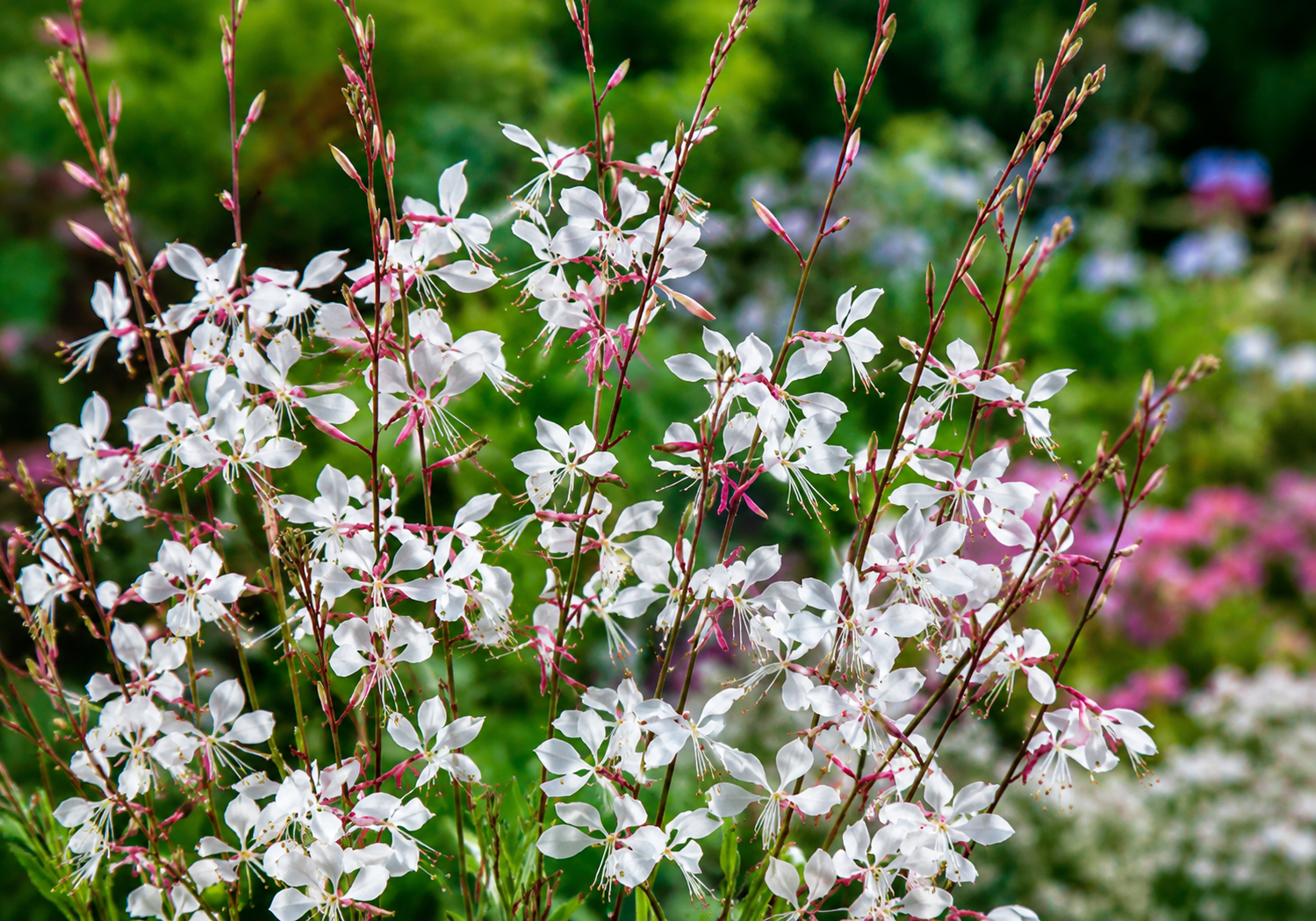
Gaura ‘Whirling Butterflies’
If there’s one perennial that truly brings movement to the garden, it’s Gaura ‘Whirling Butterflies’. With long, slender stems topped by delicate white flowers that flutter in the slightest breeze, this plant creates the illusion of butterflies hovering just above your garden beds. Elegant, tough, and endlessly graceful, gaura has become a favorite for gardeners who want long bloom time, minimal maintenance, and a light, naturalistic look.
Despite its refined appearance, Gaura ‘Whirling Butterflies’ is surprisingly rugged. It thrives in heat, tolerates drought, attracts pollinators, and blends effortlessly into a wide range of garden styles — from cottage gardens to modern landscapes and prairie plantings.
Let’s take a deep dive into why this perennial deserves a permanent place in your garden.
What Is Gaura ‘Whirling Butterflies’?
Gaura, botanically known as Oenothera lindheimeri (formerly Gaura lindheimeri), is a long-blooming perennial native to the southern United States, particularly Texas and Louisiana. ‘Whirling Butterflies’ is one of the most iconic and widely grown cultivars.
This variety is best known for:
- Pure white, four-petaled flowers
- Tall, wiry stems that sway gracefully
- A loose, airy habit rather than a dense mound
- An exceptionally long bloom season
The flowers open sequentially along the stems, ensuring a steady supply of fresh blooms from late spring through fall. When viewed from a distance, the flowers resemble a cloud of white butterflies hovering over the foliage — hence the name.
Size, Habit & Growth Form
Gaura ‘Whirling Butterflies’ has a distinctly upright yet flowing form, which sets it apart from many traditional perennials.
- Height: 24–36 inches (sometimes taller in ideal conditions)
- Width: 18–24 inches
- Habit: Upright, airy, fountain-like
- Foliage: Narrow, lance-shaped green leaves
Unlike compact, mounded plants, gaura thrives on its see-through quality. You can plant it among other perennials without blocking views or overwhelming neighbors — it weaves itself visually through the garden.
A Bloom Season That Feels Endless
One of gaura’s greatest strengths is its extraordinarily long flowering period.
- Begins blooming in late spring
- Peaks through summer
- Continues well into fall, often until frost
Instead of producing a single flush of flowers, gaura blooms continuously, with new buds opening daily. Deadheading is optional — the plant naturally sheds spent blooms and keeps going.
This makes ‘Whirling Butterflies’ an invaluable plant for gardeners who want consistent color and motion without constant maintenance.
Pollinator Magnet (Despite the Name!)
While the flowers look like butterflies, they are actually excellent nectar sources for real pollinators.
Gaura attracts:
- Bees
- Butterflies
- Beneficial insects
Its open flower shape makes nectar easily accessible, and the long bloom window provides food when many other perennials slow down in late summer.
If you’re building a pollinator-friendly garden, gaura is a quiet powerhouse.
Ideal Growing Conditions
Gaura ‘Whirling Butterflies’ is happiest when treated a little rough — it prefers sun, lean soil, and good drainage.
Sun
- Full sun is best (6–8+ hours daily)
- Tolerates light shade, but flowering may decrease
Soil
- Well-drained soil is essential
- Sandy, gravelly, or average garden soil works well
- Avoid heavy, wet clay unless amended for drainage
Water
- Moderate water during establishment
- Once established, very drought tolerant
- Overwatering is a common cause of failure
This plant is ideal for gardeners who want beauty without pampering.
Planting Gaura Successfully
When to plant
- Spring after last frost
- Early fall in warm climates
How to plant
- Choose a sunny, well-drained site
- Dig a hole as deep as the root ball and twice as wide
- Plant at the same depth it grew in the container
- Water thoroughly to establish roots
Space plants about 18–24 inches apart to allow air circulation and natural movement.
Maintenance & Care (Very Minimal!)
Gaura is a dream plant for low-maintenance gardens.
Deadheading
- Not required
- Optional trimming can tidy appearance
Midseason cutback
- If plants get leggy, cut back by ⅓ in midsummer
- Encourages fresh growth and renewed flowering
Fertilizing
- Rarely needed
- Too much fertilizer causes floppy growth
Winter care
- Leave stems standing over winter for structure
- Cut back in early spring when new growth appears
In colder climates, gaura may behave as a short-lived perennial, but it often self-seeds lightly.
Hardiness & Longevity
- USDA Zones: 5–9 (sometimes grown as an annual in colder zones)
- Heat tolerance: Excellent
- Cold tolerance: Moderate
In colder regions, excellent drainage is crucial for winter survival. Many gardeners treat gaura as a reliable reseeding perennial, allowing seedlings to replace older plants naturally.
Landscape Design Ideas with Gaura
Gaura’s movement and transparency make it incredibly versatile.
1. Cottage Gardens
Gaura pairs beautifully with roses, salvias, catmint, and coneflowers, softening structured plantings with motion.
2. Prairie & Naturalistic Plantings
Combine with ornamental grasses, echinacea, rudbeckia, and yarrow for a relaxed, meadow-style look.
3. Modern Landscapes
Use gaura to add softness to clean lines and architectural plants without cluttering the design.
4. Containers
Gaura works well in large containers, especially when paired with trailing or mounding companions.
5. Hot, Dry Spots
This is a go-to plant for areas where irrigation is limited and heat reflects off pavement or walls.
Companion Plants That Shine with Gaura
Gaura plays well with others, especially plants that contrast its airy habit.
Great companions include:
- Echinacea (Coneflower) – bold structure
- Salvia – upright spikes and pollinator appeal
- Lavender – complementary texture and drought tolerance
- Ornamental grasses – movement on movement
- Coreopsis – color contrast and similar toughness
Together, these plants create gardens that move, bloom, and thrive with little effort.
Is Gaura Deer Resistant?
Gaura is considered moderately deer resistant. While not completely deer-proof, it is rarely a first choice for browsing animals due to:
- Thin, wiry stems
- Sparse foliage
- Mildly bitter taste
In most landscapes, deer focus on more tender plants and leave gaura largely untouched — especially once established.
Common Issues (And How to Avoid Them)
Flopping
Cause: Too much shade or fertilizer
Solution: More sun, leaner soil
Poor winter survival
Cause: Wet soil
Solution: Improve drainage, avoid heavy mulch
Fewer flowers
Cause: Too much water or shade
Solution: Full sun, less irrigation
Most problems with gaura come from overcare, not neglect.
Why Gaura ‘Whirling Butterflies’ Belongs in Your Garden
Gaura offers a rare combination of qualities:
Long bloom season
Elegant, airy appearance
Pollinator friendly
Heat and drought tolerant
Low maintenance
Beautiful in motion
Few plants can match its ability to add life and movement to a garden without demanding attention.
Final Thoughts
Gaura ‘Whirling Butterflies’ is proof that a plant can be both delicate and durable. It dances in the breeze, feeds pollinators, shrugs off heat, and blooms for months — all while asking for very little in return.
If your garden feels stiff, heavy, or static, gaura may be exactly what it needs. Plant it once, give it sun and drainage, and then step back and enjoy the show.
Because sometimes the most beautiful gardens aren’t the loudest — they’re the ones that move.