
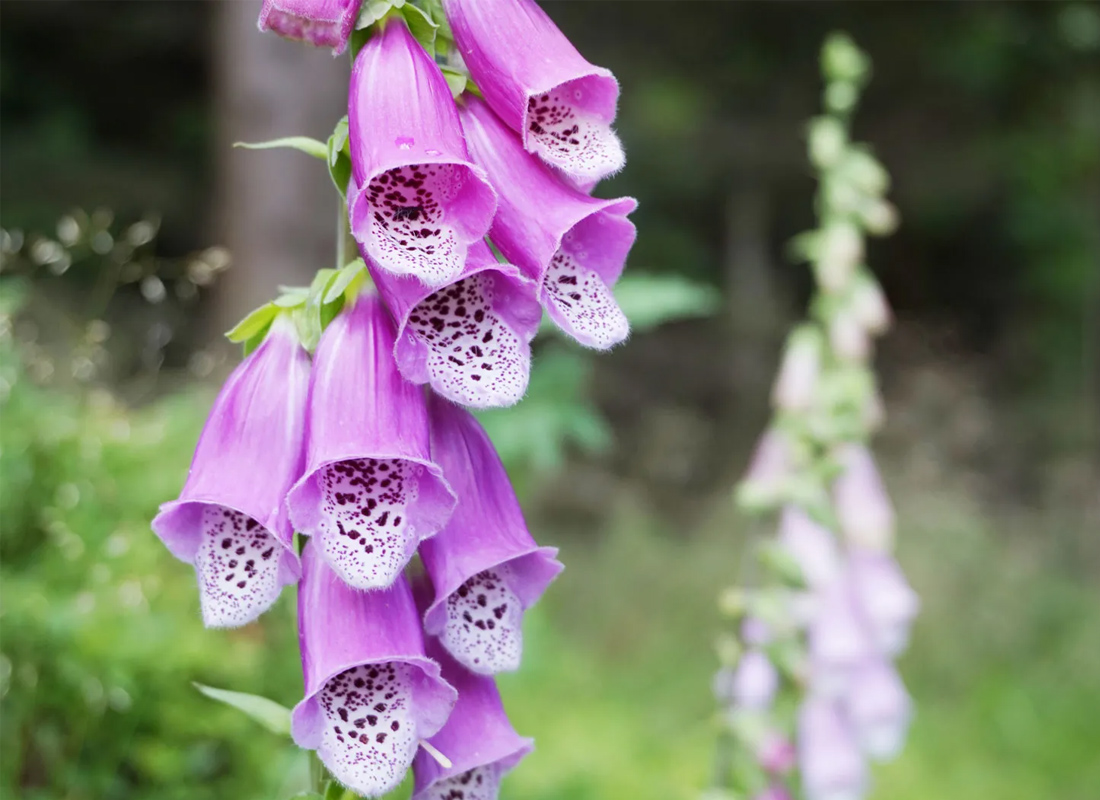
Foxglove
If there’s a single flower that embodies classic cottage garden charm with a bold vertical statement, it’s foxglove (Digitalis spp.). With tall spikes of bell-shaped blooms, foxgloves add elegance and structure to garden borders while also bringing in pollinators like bumblebees and hummingbirds. Best of all for many gardeners, foxgloves are consistently resistant to deer and rabbits thanks to their biochemical defenses — making them a smart choice for gardens in wildlife-prone areas.
In this comprehensive guide we’ll explore:
- What foxgloves are
- Why they resist deer and rabbits
- How to grow and care for them
- Best varieties and design ideas
- Safety and toxicity considerations
- Expert tips for success
What Is Foxglove?
Foxglove refers to a group of plants in the Digitalis genus known for tall spikes covered in tubular, bell-shaped flowers. Many species are biennials — plants that spend their first year putting down roots and foliage and bloom in the second — though some hybrids will flower in the first season.
Botanically, Digitalis purpurea (common foxglove) is the most widely cultivated species, often growing 3–5 feet tall with clusters of colorful blooms in shades of purple, pink, white, and yellow. Other species such as Digitalis grandiflora (yellow foxglove) and Digitalis parviflora (small-flowered foxglove) offer variation in size and color.
Foxgloves are beloved for their vertical impact, making them perfect as background plants in beds and borders or as specimens in cottage-style gardens.
Why Foxgloves Resist Deer & Rabbits (And What That Really Means)
One of the most common questions gardeners ask is: “Are foxgloves deer resistant?” The answer is a confident yes — but the reason goes deeper than folklore.
Nature’s Defense System
Foxgloves produce cardiac glycosides, including compounds like digitoxin and digoxin that affect the heart function of mammals if ingested. These compounds are present in all parts of the plant — leaves, stems, flowers, and seeds — and make the plant extremely bitter and toxic to herbivores.
Deer and rabbits instinctively avoid plants with this level of toxicity. After even one unpleasant encounter with foxglove foliage, most deer will learn to steer clear, and rabbits show similar avoidance behavior. While no garden plant is truly “proof” against an extremely hungry animal under severe starvation conditions, foxgloves consistently rank among the most avoided plants in deer and rabbit resistance charts.
Important: This resistance is due to the plant’s chemistry — not a guarantee — and applies most strongly once foxgloves are mature and flowering. Young seedlings and rosettes contain lower toxin levels and may be sampled occasionally, so protect new plantings initially.
How to Grow & Care for Foxglove
Whether you’re starting from seeds or planting nursery transplants, foxgloves are surprisingly easy to grow with the right conditions.
Light
Foxgloves thrive in full sun to partial shade. In hotter climates, afternoon shade helps prevent foliage from scorching and maintains soil moisture.
Soil
These plants prefer fertile, well-drained soil with plenty of organic matter — compost mixed into the bed before planting can significantly boost blooms. A slightly acidic to neutral soil pH is ideal.
Watering
While foxgloves can tolerate a range of moisture levels, they do not like waterlogged soil. Water consistently, letting the soil dry slightly between watering in summer heat. Mulching helps retain moisture and regulate soil temperature.
Planting from Seed
Foxglove seeds need light to germinate, so press them onto the soil surface rather than covering with dirt. Sow in late summer for blooms next year, or in early spring — seedling timing depends on climate and frost dates.
Once seedlings emerge, thin them to about 12–18 inches apart so each plant has space to grow tall and sturdy.
Bloom Time
Most foxgloves will flower in late spring through summer, especially in their second year. To enjoy a continuous display, plant foxgloves in succession — some flowering one year while others mature for the next.
Popular Foxglove Varieties for Your Garden
There’s more to foxgloves than just the classic purple spikes. Here are some favorites that thrive in gardens while offering deer and rabbit resistance:
Common Foxglove – Digitalis purpurea
- The classic garden foxglove with tall spires and dramatic blooms
- Colors range from deep purple and fuchsia to white and blush
- Great for borders and pollinator gardens
Yellow Foxglove – Digitalis grandiflora
- Softer, primrose-yellow blooms provide a different palette
- Slightly shorter stature, perfect for mixed beds
Lucas Pink Foxglove
- Upright spikes of soft pink flowers that contrast beautifully with green foliage
- Deer and rabbit resistant with excellent pollinator appeal
Arctic Fox™ Rose
- A hybrid with peach-rose tones and prolonged summer bloom
- Compact and great for containers or tighter spaces
Small-Flowered Foxglove – Digitalis parviflora
- More modest height with charming smaller bells
- Deer resistant and excellent underplanting or cottage garden plant
Tip: While all these varieties carry deer and rabbit resistance due to their cardiac glycosides, verify botanical names to avoid confusion with look-alikes that might not share the same resistance traits.
Garden Design & Landscaping With Foxgloves
Foxgloves can be used creatively in many garden styles:
1. Cottage Garden Backdrops
Tall, graceful spikes make foxgloves ideal as background plants in cottage borders, pairing beautifully with roses, delphiniums, and lupines.
2. Woodland or Shade Edge
Plant foxgloves along wooded edges or under dappled shade where other full-sun specimens don’t thrive.
3. Pollinator Gardens
Foxgloves are magnets for bumblebees and hummingbirds — their tubular flowers fit pollinators perfectly. Create pollinator-centric spaces with foxgloves, salvias, and echinaceas.
4. Naturalized Meadows
For a seemingly wild look, allow some foxgloves to self-seed or mix them with ornamental grasses and wildflowers. Their biennial nature lends a spontaneous feel to meadows and prairie gardens.
Safety & Toxicity: What Every Gardener Should Know
While foxgloves are beautiful and wildlife-resistant, they are also highly toxic. All parts of the plant contain cardiac glycosides that can cause severe reactions if ingested by humans, pets, or livestock.
- Wear gloves when handling, especially during pruning or deadheading.
- Plant away from areas where pets and small children play.
- Avoid ingesting any part of the plant, and wash hands after contact.
This toxicity is also what deters deer and rabbits — the bitter taste and physiological effects serve as a natural herbivore deterrent.
Growing Tips & Expert Tricks
Here are some advanced tips to help you succeed with foxgloves:
Encourage Re-Bloom
Some gardeners choose to deadhead spent flowers to tidy beds and encourage more blooms on certain hybrids, though letting seed pods form will allow natural reseeding for future displays.
Soil Prep Matters
Add generous compost before planting to improve drainage and fertility — foxgloves appreciate moist, rich soil with good structure.
Sun & Shade Balance
In hotter climates, provide afternoon shade to prevent stress and fading blooms; in cooler regions, more sun strengthens stems and flower production.
Pest & Disease Watch
Foxgloves are generally low-maintenance, but watch for powdery mildew and aphids. Good air circulation and proper spacing help prevent disease.
Final Thoughts
Foxgloves are a classic, tall, and romantic centerpiece in gardens that demand personality and performance — and their biochemical defenses offer genuine deer and rabbit resistance that few other flowering perennials can match.
From garden borders and pollinator havens to naturalized meadows, these plants deliver beauty, vertical drama, and ecological value if planted thoughtfully and handled safely. With the right mix of varieties and mindful design, foxgloves can transform any outdoor space into a visually stunning and wildlife-resilient retreat.
Whether you’re planting them for dramatic seasonal impact or as part of a sustainable garden design, foxgloves are worth every gardener’s consideration.