
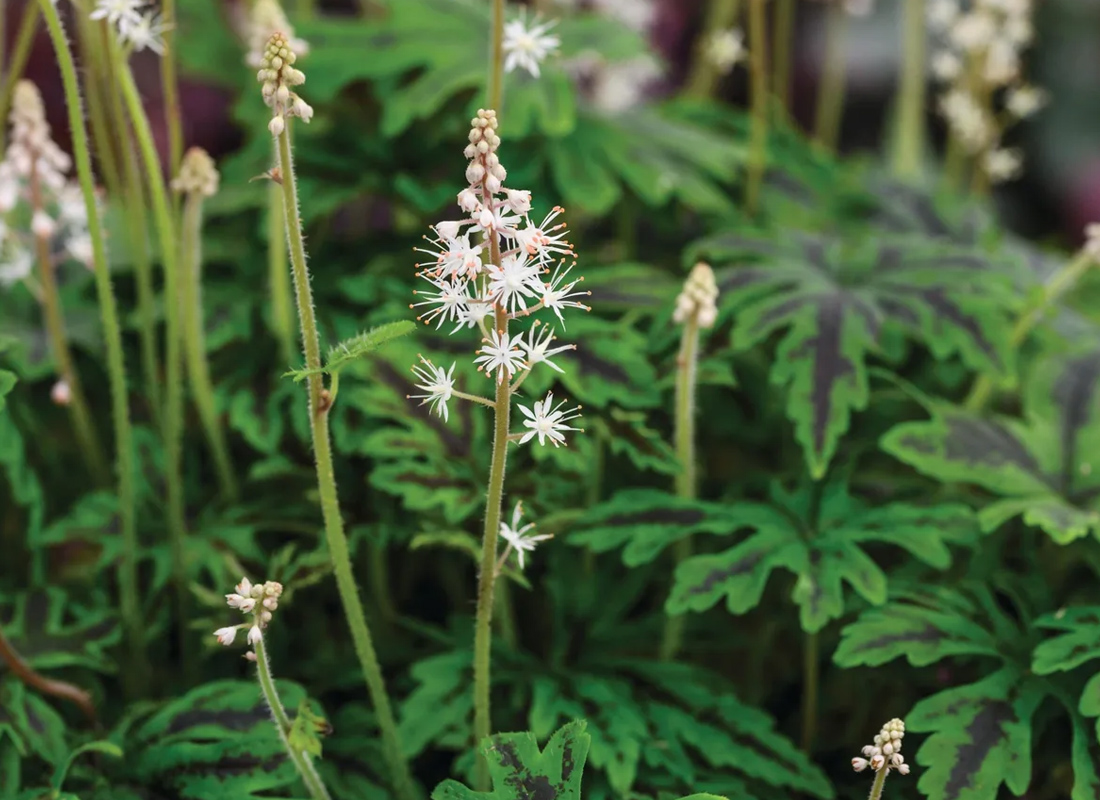
Foam Flower ‘Cutting Edge’
Whether you’re a seasoned gardener or just starting to design your outdoor space, some plants stand out not just for their beauty — but because they’re resilient, long-lasting, and practical too. Foam Flower ‘Cutting Edge’ (botanical name: Tiarella ‘Cutting Edge’) is one of those standout perennials: deer and rabbit resistant, shade-tolerant, and beautiful season after season.
What Is Foam Flower (Tiarella)?
Foam flowers are herbaceous perennial plants in the genus Tiarella, native to woodlands and shaded environments across eastern North America. Their common name comes from the airy, foamy clusters of tiny flowers that rise above lush foliage in spring and early summer.
The Cutting Edge variety is one of the most striking cultivars available today — bred for dramatic foliage, abundant blooms, and landscape versatility.
Meet Tiarella ‘Cutting Edge’
Key Features
- Botanical Name: Tiarella ‘Cutting Edge’
- Common Names: Cutting Edge Foamflower, Foam Flower
- USDA Zones: 4–9 (wide range of climates)
- Height: ~8–10 inches (20–25 cm)
- Spread: ~16–18 inches (40–45 cm)
- Foliage: Green leaves with dark burgundy veins or splash
- Flowers: Creamy white spires in spring
- Sun Exposure: Part shade to full shade
- Soil: Moist, well-drained, humus-rich soils preferred
- Evergreen/Semi-evergreen: Most climates
- Deer & Rabbit Resistance: Yes (among other resistant plants)
This hybrid, developed for the ornamental gardening market, offers exceptional visual interest even after blooming, thanks to its foliage color and texture, which many gardeners describe as stunning.
Why It’s Deer & Rabbit Resistant
One of the biggest headaches for gardeners (especially in suburban and rural areas) is wildlife browsing. Deer and rabbits are notorious for feeding on tender perennials, sometimes decimating plantings overnight. But Tiarella ‘Cutting Edge’ — like many foamflowers — is often ignored or left alone by these critters.
What Makes It Unappealing?
- Foliage texture and chemicals: Tiarella leaves contain astringent compounds and textures that deer and rabbits generally avoid.
- Low palatability: Compared to lush, tender tender plants like hostas or daylilies — which deer and rabbits love — foam flowers simply don’t taste as good to them.
- Dense growth habit: The plant’s low, mounded form makes it less accessible and less desirable as a food source.
Important: No plant is completely “deer proof” — determined animals may still sample plants in food-scarce situations — but Cutting Edge consistently rates well among resistant choices.
How to Grow & Care for Cutting Edge
Whether you’re planting one specimen or designing a whole woodland bed, here’s how to give your Cutting Edge foam flowers the best chance to thrive.
Light
- Thrives in partial shade to full shade conditions.
- Morning sun or dappled light works well, but avoid hot afternoon sun which can scorch foliage — unless you have consistently moist soil.
Soil
- Humus-rich, well-drained soil is ideal.
- Add organic matter if your soil is heavy clay or sandy.
- Tiarella doesn’t like “wet feet” — too much winter moisture can cause root rot.
Watering
- Water regularly after planting until established.
- Once established, this plant tolerates average shade garden moisture — but consistent watering helps foliage stay healthy in dry conditions.
Blooming & Seasonality
- Bloom time: spring to early summer
- Foliage interest: all season — and evergreen/semi-evergreen in many regions
- Flowers rise above the foliage on airy stalks, creating a soft, foamy visual effect that looks great in spring.
Planting Tips
- Spacing: Plant 16–18″ apart for a full, textured groundcover effect.
- Companion plants: Pair with hostas, ferns, heucheras, astilbes, and other shade lovers for layered garden design.
- Containers: Works well in pots and window boxes when watered and protected from hot sun.
Landscaping With Foam Flower
One reason gardeners love Cutting Edge is how versatile it is in garden design.
Here are some landscape ideas:
1. Woodland Garden Groundcover
Mass planting Cutting Edge under trees or along shaded paths creates a lush woodland look. Its low habit fills in spaces and suppresses weeds naturally.
2. Edging & Borders
Use foamflowers to edge walkways or beds. Their tidy, mounding habit provides soothing texture and a soft contrast to taller perennials.
3. Mixed Shade Beds
Plant with ferns, hostas, and spring ephemerals for multi-season interest.
- Ferns add vertical texture
- Hostas add bold leaf contrast
- Foamflower fills in with delicate blooms and foliage
4. Containers & Planters
Don’t underestimate Cutting Edge in containers. It blends beautifully with trailing vines and shade annuals, making attractive porch or patio displays.
Companion Plant Ideas
Foamflower’s shade tolerance makes it a great addition to many perennial beds. Ideas include:
- Hostas — bold foliage contrast
- Ferns — soft, feathered texture
- Heucheras — vibrant foliage colors
- Astilbes — feathery flowers
- Solomon’s Seal — elegant arching stems
These combinations can create dynamic plantings with different heights, colors, and textures.
Are There Limitations?
While incredibly versatile and resilient, Tiarella ‘Cutting Edge’ has a few things to keep in mind:
Not drought tolerant — it prefers moist conditions (but avoid soggy soil).
Shade preference — blooms can be less prolific in deep shade with heavy competition.
Not completely deer-proof — but much less palatable than many others.
Troubleshooting Common Issues
Foliage Damage
If leaves show spots or discoloration:
- Check for excess moisture — fungal issues favor wet conditions.
- Ensure adequate air flow — avoid overcrowding.
Pest Pressure
While deer and rabbits usually avoid this plant, some insects (e.g., vine weevils) may nibble foliage. Monitor and treat early if necessary.
Why Gardeners Love It
Here’s what makes Cutting Edge foamflowers a garden staple:
Visual Appeal: Unique foliage with burgundy highlights gives year-round interest.
Low Maintenance: Pretty much plant and enjoy.
Wildlife Resistance: Less damage from deer & rabbits.
Shade Tolerance: Thrives where many plants struggle.
Pollinator Friendly: Flowers provide early nectar.
Final Thoughts
If you’re designing a shade garden, struggling with deer or rabbits, or just love plants that work hard for you, Foam Flower ‘Cutting Edge’ should be on your shortlist. It delivers texture, color, resilience, and years of beauty with minimal fuss — and that’s a combination every gardener appreciates.
So whether you plant it as a groundcover, in containers, or as part of a woodland border, this deer and rabbit resistant perennial is truly a garden gem you’ll enjoy season after season.