
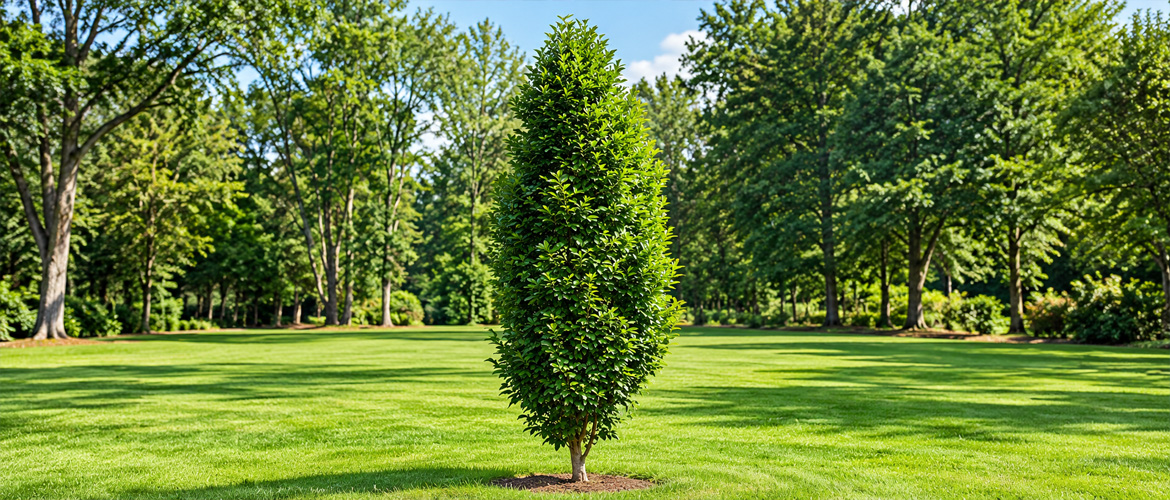
European Hornbeam ‘Fontaine’
When homeowners in the Northeast look for a tree that delivers structure, elegance, and long-term reliability, European Hornbeam ‘Fontaine’ (Carpinus betulus ‘Fontaine’) is an excellent choice. Known for its narrow upright habit, strong branching, and year-round architectural presence, this cultivar is popular among landscape designers seeking a tree that combines beauty with functionality.
At Louis Contino Landscaping, we frequently recommend European Hornbeam ‘Fontaine’ for properties throughout Long Island and the greater Northeast. It performs well under urban conditions while providing the refined appearance expected in high-end landscape design. Whether used for privacy, an allée, or a formal landscape feature, this tree offers timeless sophistication with relatively low maintenance.
What Is European Hornbeam ‘Fontaine’?
European Hornbeam ‘Fontaine’ is a selected cultivar of Carpinus betulus, valued for its tight, columnar-to-oval growth habit. Its upright structure and dense branching make it ideal for properties where space is limited but vertical presence is desired.
Key Characteristics
Botanical name: Carpinus betulus ‘Fontaine’
Mature height: 35–45 feet
Mature width: 15–20 feet
Growth rate: Moderate
Hardiness: USDA Zones 4–8
Fall color: Yellow to golden-orange
Light: Full sun to partial shade
Its smooth gray bark and subtly serrated green foliage create a refined appearance suitable for traditional and contemporary landscapes.
Why We Recommend It at Louis Contino Landscaping
Northeast landscapes must balance aesthetics with durability. Wind exposure, changing temperatures, road salt, and urban soil compaction can challenge many trees. European Hornbeam ‘Fontaine’ combines attractive form with excellent adaptability.
Architectural Form
Its naturally narrow, vertical shape brings order and symmetry to landscapes without requiring heavy pruning. It works beautifully around driveways, pools, and formal gardens.
Excellent Urban Tolerance
Hornbeam tolerates soil compaction, air pollution, mild drought once established, and clay or loamy soils. These qualities make it suitable for suburban neighborhoods throughout Long Island.
Four-Season Interest
Even during winter, its dense branching structure creates an attractive sculptural presence after the leaves drop.
Best Uses in Landscape Design
Formal Entryways and Driveways
Planted in rows, European Hornbeam ‘Fontaine’ creates elegant property entrances and living architectural corridors.
Privacy Without Bulk
For homeowners who prefer screening without massive evergreen walls, hornbeam offers a softer alternative. Its dense foliage provides seasonal privacy while allowing light movement.
Pool and Patio Framing
Its canopy provides filtered shade without producing messy fruit, making it an attractive addition to patios and poolscapes.
Urban or Narrow Spaces
Its upright growth habit makes it suitable between houses, alongside fences, and in narrow planting strips where wider trees may be problematic.
Four-Season Interest
Spring: Fresh green leaves emerge, giving landscapes a clean, rejuvenated appearance.
Summer: The dense canopy provides cooling shade while maintaining a neat silhouette.
Fall: Foliage changes to golden yellow and sometimes orange, adding warmth to Northeast properties.
Winter: Its branching framework becomes a striking structural feature, particularly when planted in sequences.
Planting Considerations
Sun and Soil: European Hornbeam ‘Fontaine’ performs best in full sun but tolerates partial shade. It prefers well-drained soil and adapts to heavier conditions.
Spacing: For avenues or screening, space trees 12–15 feet apart to create a continuous visual effect. Individual specimen trees can be spaced wider.
Watering: Regular watering is important during the first 2–3 years of establishment. Mature trees show good drought tolerance compared with many deciduous trees.
Mulching: A 2–3 inch mulch ring helps retain moisture and protect roots.
Maintenance and Care
One of the biggest benefits of European Hornbeam ‘Fontaine’ is its relatively low maintenance requirements once established.
Pruning: Minimal structural pruning is needed during the early years. Occasional thinning helps preserve airflow and maintain its natural upright shape.
Fertilization: Fertilizer is usually unnecessary in healthy soil. Slow-release fertilizer can be applied in early spring if needed.
Pest and Disease Resistance: European hornbeam is generally resistant to major pests and diseases, making it a reliable long-term landscape investment.
Design Pairings We Love
Because of its formal character, this tree pairs beautifully with boxwood hedges, hydrangea masses, ornamental grasses such as Miscanthus, natural stone, bluestone patios, and clean-lined modern planting beds. Its versatility complements both classic estate landscapes and contemporary designs.
Environmental Benefits
Beyond its aesthetic value, European Hornbeam contributes to the environment by improving air quality, supporting urban biodiversity, reducing heat buildup around hardscape areas, and helping manage stormwater through canopy interception.
Why Homeowners on Long Island Love It
Homeowners appreciate how this tree balances elegance with practicality. It requires relatively little intervention and provides visual order, making it especially valuable where architecture and landscaping must feel cohesive.
Whether lining a driveway in Oyster Bay, defining a pool terrace on the North Shore, or adding structure to a landscape design-build project, European Hornbeam ‘Fontaine’ consistently delivers.
Final Thoughts
European Hornbeam ‘Fontaine’ quietly elevates a landscape through structure, reliability, and year-round beauty rather than flashy flowers or dramatic foliage.
At Louis Contino Landscaping, we value plants that combine form and function. For homeowners seeking a refined, relatively low-maintenance tree suited to Northeast conditions, European Hornbeam ‘Fontaine’ remains one of our top recommendations.