
Euonymus: Different Varieties for Northeast Landscapes
When homeowners across Long Island and the Northeast ask us at Louis Contino Landscaping for a plant that offers year-round structure, vibrant foliage, and dependable performance, Euonymus is often at the top of our list. Whether used as a formal topiary, colorful evergreen groundcover, or bold fall-color statement shrub, Euonymus provides versatility that few plant genera can match.
In the Northeast climate — where winters are cold, coastal winds can be harsh, and deer pressure is constant — selecting the right Euonymus variety makes all the difference. We use different types throughout Oyster Bay and the greater Long Island area based on site conditions, architectural style, and maintenance expectations.
Understanding Euonymus: An Overview
Euonymus is a broad genus of shrubs, vines, and small trees known for:
- Evergreen or deciduous foliage
- Excellent tolerance to pruning
- Adaptability to sun or partial shade
- Strong architectural form
- Colorful fall display in deciduous varieties
- Variegated foliage options
Some varieties are compact and tidy, while others spread aggressively. Some remain evergreen year-round, while others deliver brilliant autumn color.
Evergreen Euonymus Varieties
1. Euonymus japonicus (Japanese Euonymus)
Hardiness: Zones 6–9
Best for: Formal hedges, foundation planting, topiary
Sun: Full sun to partial shade
Japanese Euonymus is a staple for structured landscapes. Its glossy, leathery leaves give it a refined look that works well in traditional and transitional homes across Nassau and Suffolk County.
Popular Cultivars:
- ‘Green Spire’ – Upright, narrow growth perfect for tight spaces
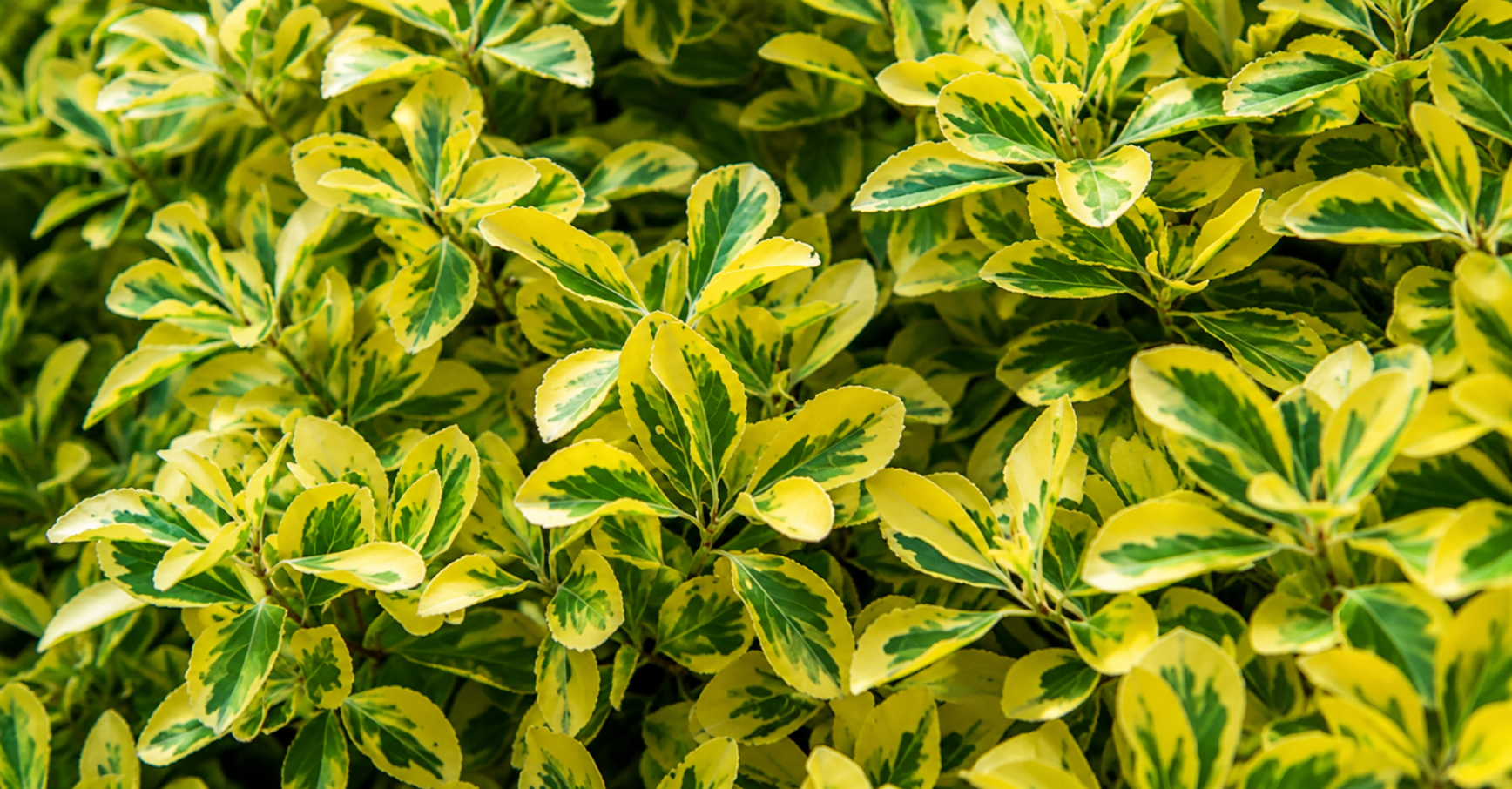
- ‘Aureo-marginatus’ – Green leaves edged in gold
- ‘Silver King’ – Cream and green variegation
- ‘Microphyllus’ – Smaller leaves for a more delicate look
We often use Euonymus japonicus in entry planters, formal garden rooms, pool patio borders, and structured evergreen hedges. In coastal Long Island properties, salt exposure should be evaluated carefully, as excessive salt spray can cause leaf burn.
2. Euonymus fortunei (Wintercreeper Euonymus)
Hardiness: Zones 4–9
Best for: Groundcover, low hedges, slopes
Sun: Full sun to shade
This is one of the most adaptable evergreen options for Northeast landscapes. It can be grown as a low shrub, trained vertically, or used as erosion-controlling groundcover.
Top Varieties:
- ‘Emerald Gaiety’ – Green leaves with white margins
- ‘Emerald ’n Gold’ – Green leaves with yellow edging
- ‘Coloratus’ – Turns burgundy-purple in winter
- ‘Moonshadow’ – Yellow-centered foliage
We frequently install Emerald Gaiety around patios and walkways where homeowners want color without flowers. It holds structure year-round and tolerates pruning well. In some regions, Wintercreeper can become invasive, so placement and containment should be managed carefully.
Deciduous Euonymus Varieties
3. Euonymus alatus (Burning Bush)
Hardiness: Zones 4–8
Best for: Fall color, privacy hedging
Sun: Full sun for best color
Few shrubs rival the fiery red autumn display of Burning Bush. Popular forms include ‘Compactus’ (Dwarf Burning Bush) and standard Euonymus alatus.
Due to invasiveness concerns in certain states, local regulations should be evaluated before recommending this plant. Where burning bush is not permitted, alternatives such as Itea virginica, Aronia, and Viburnum can provide red fall color.
4. Euonymus europaeus (European Spindle Tree)
Hardiness: Zones 4–7
Best for: Naturalized landscapes, ornamental interest
This deciduous species is known for unique pink seed capsules that open to reveal orange seeds. It adds late-season interest and works well in naturalized and woodland-style landscapes.
Variegated Euonymus for Visual Contrast
Variegation adds brightness to shaded areas and creates contrast against darker evergreens like boxwood or yew.
Popular choices include:
- Euonymus japonicus ‘Silver King’
- Euonymus fortunei ‘Emerald Gaiety’
- Euonymus fortunei ‘Moonshadow’
At Louis Contino Landscaping, we use variegated Euonymus to soften stone walls, brighten north-facing foundations, complement bluestone patios, and add dimension to layered shrub beds.
Euonymus in Container Design
Euonymus works exceptionally well in containers because:
- It tolerates shaping
- It maintains structure year-round
- It pairs beautifully with seasonal underplantings
We often use Euonymus as the vertical “thriller” element in custom container arrangements for Long Island homes, surrounded by trailing ivy or seasonal annuals.
Winter container tip: Choose hardy varieties and use insulated planters to protect root systems.
Deer Resistance and Northeast Conditions
While no plant is fully deer-proof, Euonymus is considered moderately deer resistant. In high-pressure areas, we:
- Avoid planting young, tender specimens unprotected
- Use deer deterrent sprays during establishment
- Pair Euonymus with more resistant shrubs like boxwood and holly
Euonymus fortunei varieties tend to hold up better than softer-leafed alternatives.
Soil and Drainage Requirements
Euonymus prefers:
- Well-drained soil
- Moderate moisture
- Slightly acidic to neutral pH
In many Long Island properties, sandy soil drains quickly. Compost can help improve moisture retention. Proper grading is also critical because standing water can lead to root rot, especially during winter.
Pruning and Maintenance
Euonymus responds extremely well to pruning. Maintenance recommendations include:
- Light shaping in early spring
- Removing dead or crossing branches
- Trimming hedges for a formal look
- Avoiding heavy pruning in late fall
For topiary forms, regular maintenance helps maintain crisp lines.
Design Applications in Northeast Landscapes
Euonymus works beautifully in:
1. Foundation Planting
Provides evergreen structure against siding or stone veneer.
2. Pool Landscaping
Low-maintenance and clean-lined for modern patios.
3. Slopes & Erosion Control
Wintercreeper varieties stabilize soil effectively.
4. Formal Garden Borders
Japanese Euonymus can be shaped into symmetrical hedges.
5. Entry Framing
Topiary forms elevate curb appeal.
Common Problems and Solutions
1. Euonymus Scale
Small white insect clusters on stems.
Solution: Horticultural oil treatments.
2. Leaf Spot
Improve air circulation and avoid overhead watering.
3. Winter Burn
Plant in sheltered areas and ensure proper fall watering.
Sustainability Considerations
Some Euonymus varieties have invasive tendencies. At Louis Contino Landscaping, we:
- Verify local regulations
- Offer non-invasive alternatives
- Avoid planting near woodlands
- Educate homeowners on responsible maintenance
Sustainable design is always a priority in our Northeast projects.
Why We Recommend Euonymus at Louis Contino Landscaping
As a full-service landscape design and build firm based in Oyster Bay, NY, we understand the demands of Northeast climates. Euonymus provides:
- Four-season interest
- Structural elegance
- Design flexibility
- Reliable performance
Whether you want a formal hedge, colorful groundcover, or elegant container accent, our team can incorporate the right Euonymus variety into your landscape plan.
Final Thoughts
Euonymus is one of the most versatile plant genera available for Northeast landscaping. From evergreen structure to dramatic fall color, it offers homeowners countless design possibilities.
Choosing the correct variety for your site conditions, maintenance preferences, and aesthetic goals is essential. That’s where experience matters.