
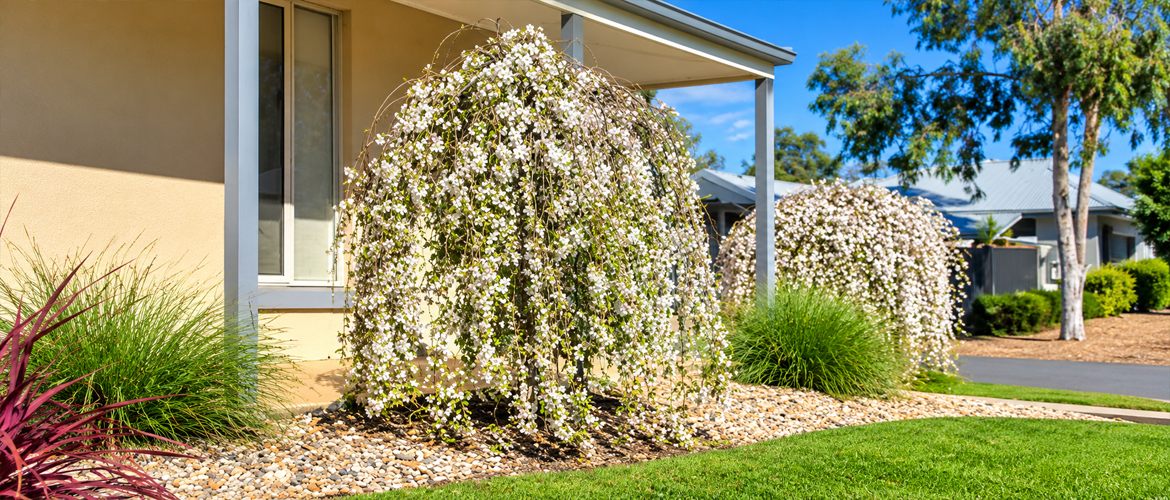
Dwarf Weeping Cherry (White) — A Graceful Accent Tree for Northeast Landscapes
The dwarf white weeping cherry is an elegant ornamental tree known for its cascading branches, delicate white spring blossoms, and compact form. Popular throughout Long Island and the Northeast, it creates a timeless focal point without overwhelming the landscape. At Louis Contino Landscaping, we recommend this tree for entryways, patios, and lawn islands where seasonal beauty and architectural interest are desired.
What Is a Dwarf White Weeping Cherry?
Dwarf white weeping cherries typically reach 8–12 feet tall and wide. Their downward-arching branches create a fountain-like silhouette, while clusters of white blossoms appear in early spring, often before the leaves emerge.
These trees work well as front-yard accents, patio focal points, garden centerpieces, poolside features, and entryway anchors. Their graceful structure also softens patios, retaining walls, and walkways.
Why Homeowners Love Dwarf White Weeping Cherry Trees
Four-Season Beauty
The tree offers year-round interest. Spring brings spectacular white flowers, summer features soft green foliage, fall may reveal golden or yellow leaves, and winter highlights its sculptural branches.
Perfect Scale for Residential Properties
Its compact size suits courtyard gardens, suburban yards, driveways, walkways, and pool landscapes where larger ornamental trees may overwhelm the space.
Elegant Appearance
The cascading form balances hard lines from patios, fences, and home exteriors, creating a romantic, tranquil, refined appearance that complements traditional and modern designs.
Ideal Placement in the Landscape
Front Yard Centerpiece
A curved planting bed helps the tree become a focal point while enhancing curb appeal.
Patios and Poolside Areas
The cascading canopy adds intimacy near outdoor dining spaces and introduces softness beside pools, natural stone, and ornamental grasses.
Japanese-Inspired Gardens
Boulders, gravel paths, and minimalist plantings complement its graceful form.
Site Requirements and Growing Conditions
Sunlight
Dwarf weeping cherries thrive in full sun, requiring at least six hours of direct sunlight daily for stronger flowering and healthier growth.
Soil and Water
They prefer well-drained, moderately fertile soil with a slightly acidic to neutral pH. Proper grading helps prevent root stress. Newly planted trees need consistent watering during their first two growing seasons, while mature trees benefit from occasional deep watering during dry periods.
Flowering Season and Visual Impact
Early to mid-spring brings a cascade of white blossoms that can last several weeks, depending on weather conditions. The flowers attract pollinators such as bees, brighten spring gardens, and contrast beautifully with darker evergreens.
Maintenance and Care
Pruning
Remove dead or crossing branches and lightly shape the tree after flowering. Avoid heavy pruning in late summer or fall, allowing branches to maintain their natural cascading form.
Mulching and Fertilizing
Organic mulch helps retain moisture, regulate soil temperature, and reduce weeds. Keep mulch away from the trunk to prevent rot. A balanced, slow-release fertilizer applied in early spring supports healthy growth and blooming.
Pest and Disease Awareness
Occasional problems may include aphids, scale insects, and leaf spot diseases. Proper air circulation and thoughtful placement help reduce potential issues.
Design Pairings We Recommend
Dark green evergreens, including boxwood, holly, and arborvitae, make white blossoms stand out. Ornamental grasses such as Miscanthus, Pennisetum, and feather reed grass add movement. Perennials like catmint, salvia, Geranium ‘Rozanne’, and coreopsis provide seasonal color.
Bluestone patios, gravel walkways, and stone retaining walls also complement the tree, balancing the strength of masonry with its soft, flowing branches.
Dwarf Weeping Cherry vs. Larger Flowering Trees
Dwarf weeping cherries typically reach 8–12 feet, compared with 20–40 feet for traditional flowering cherries. Their compact size suits smaller yards, while their cascading form creates a sculptural focal point. Traditional flowering cherries generally require more space and have an upright canopy.
Seasonal Design Opportunities
In spring, pair white blooms with tulips or daffodils. During summer, add flowering perennials and low-maintenance shrubs. In fall, warm-toned grasses complement golden foliage. In winter, decorative lighting can highlight the tree’s branch structure.
Common Mistakes to Avoid
Avoid planting in excessive shade, overwatering poorly drained soil, crowding the tree with nearby shrubs, and heavy pruning that damages its natural form. Professional installation helps prevent long-term problems.
Final Thoughts from Louis Contino Landscaping
The dwarf white weeping cherry adds elegance, movement, and seasonal beauty to Northeast landscapes. Its manageable size and graceful structure suit traditional homes, modern gardens, patios, and outdoor entertaining areas.
Louis Contino Landscaping specializes in custom landscape design and build services throughout Oyster Bay and Long Island, including 3D landscape planning and complete outdoor transformations. For professional landscape design guidance or planting recommendations, the team can help create an outdoor space that feels timeless and uniquely yours.