
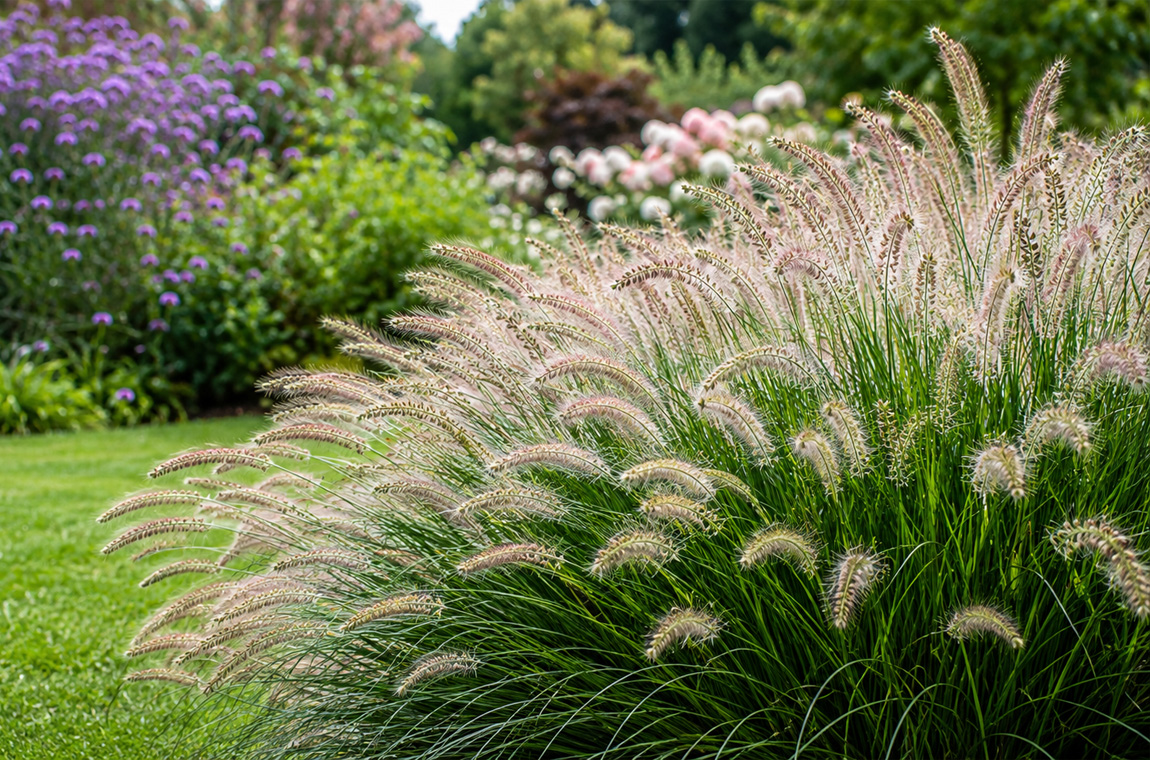
Dwarf Pennisetum & Dwarf Fountain Grass
Dwarf ornamental grasses — including dwarf Pennisetum and the beloved ‘Dwarf Fountain Grass’ — are among the most dynamic and versatile plants you can add to your landscape. They bring year-round texture, graceful movement, seasonal interest, and low-maintenance beauty to gardens large and small. In this in-depth guide, we’ll explore everything you need to know about these compact grasses — what they are, how to grow and care for them, and creative ways to use them in your landscape.
What Is Dwarf Pennisetum & Dwarf Fountain Grass?
Ornamental grasses in the Pennisetum genus — such as Pennisetum alopecuroides — are prized in gardens for their clumping habitat, arching foliage, and soft, feathery flower plumes. “Dwarf” selections simply stay smaller than their species counterparts, making them ideal for small spaces, containers, edges, and mixed borders.
Dwarf fountain grasses create miniature fountain-like shapes of foliage that sway delicately in the breeze. Their rounded mounds of blades and soft fuzzy flower panicles add movement, texture, and seasonal interest from summer through fall — and some even into winter.
These grasses work in formal and informal gardens alike, offering elegance without demanding heavy care.
How Dwarf Fountain Grass Enhances Your Landscape
Beautiful Form & Texture
Dwarf fountain grasses form tidy clumps of fine textured, arching leaves — creating soft mounds that contrast beautifully with bold-leaf perennials like asters, salvia, coneflower, and hostas.
Seasonal Interest
Summer: Soft, foxtail-like plumes appear above the foliage, often creamy white or tan.
Fall: Foliage shifts to golden or bronze hues, adding seasonal color and contrast.
Winter: Dried plumes provide structure and winter interest — leaving attractive silhouettes in the landscape.
Deer & Wildlife
Many dwarf fountain grasses are not favored by deer due to their fine stems and texture, making them a good choice in areas with browsing pressure. They also attract birds that feed on the seeds in fall and winter.
Low Maintenance
Once established, these grasses are drought tolerant and require minimal watering. They prefer full sun and well-drained soil and rarely need fertilizer or pest control.
Growing & Care Guide
Best Planting Locations
Full sun: These grasses bloom best and hold their compact shape with at least 6 hours of direct sunlight.
Border edges & front of beds: Their modest height (often 1–2.5 ft tall and wide) makes them perfect for edging and defining spaces.
Containers or patios: They add height and movement in containers without taking over.
Soil & Water
Soil: Well-drained soil — tolerates average to moderately rich soils.
Water: Regular watering during establishment; once established, drought tolerance increases.
Pruning & Seasonal Care
Late winter to early spring: Cut back old foliage to make room for fresh new growth.
Mid-season cleanup: Optional — you can leave faded plumes for winter interest or remove them for tidier beds.
Landscape Design Ideas
1. Soft Perennial Borders
Pair dwarf fountain grass with border plants like coneflowers, black-eyed Susans, salvia, and rudbeckia. Their fine texture contrasts beautifully with broad flower petals and upright stems, softening the overall look.
2. Fall Interest Gardens
Use these grasses as anchors in fall plantings with sedum and asters. Their golden foliage and plumes provide contrast against bright blossoms.
3. Rock & Cottage Gardens
Dwarf grasses like ‘Hameln’ work wonderfully alongside stone paths, rustic fences, and mixed plantings. Their texture adds movement and softness that complements rugged rock structures.
4. Containers & Small Spaces
Plant one or more in decorative containers near patios or entries to enjoy their shape and movement up close.
5. Wildlife-Friendly Gardens
Group grasses with pollinator-friendly perennials to encourage butterflies, beneficial insects, and seed-eating birds later in the season.
Why Gardeners Love Dwarf Fountain Grasses
Soft, Evergreen Appeal
Although technically deciduous (foliage dies back in winter), their long lasting seed heads and fall color keep gardens attractive even when many flowers have faded.
Adaptability
They flourish in a variety of climates — often hardy in USDA Zones 5–9 — and are willing to adapt from garden beds to containers.
Low Deer Damage
Though not completely deer-proof, the texture and form make them less attractive than many flowering shrubs, especially in full sun areas.
Final Thoughts: Add Grace & Movement to Your Garden
Dwarf Pennisetum and dwarf fountain grass selections like Dwarf Fountain Grass 5-Pack and its many nursery forms are truly garden workhorses — combining texture, motion, seasonal appeal, and simplicity. From summer plumes to fall color and winter silhouettes, they enrich landscapes with minimal fuss and maximum beauty.
Whether you’re designing a small border, container grouping, or mixed perennial bed, these grasses provide architectural form and graceful movement that lift garden designs throughout the growing season.