
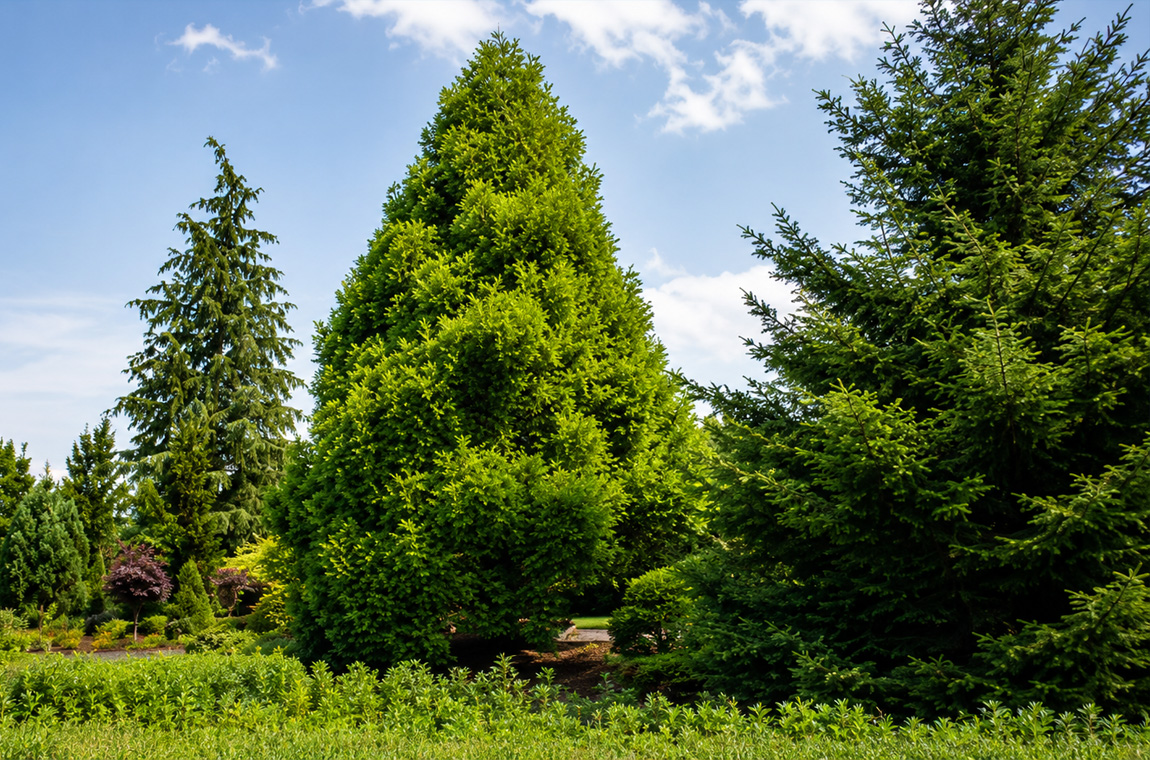
Cryptomeria
Evergreen conifers like Cryptomeria — commonly called Japanese cedar — are beloved in gardens for their year-round color, elegant foliage, structural form, and low-maintenance nature. Although the towering species can become large trees, the dwarf and compact cultivars bring these same treasured traits to small spaces, foundation beds, rock gardens, and borders. In particular, varieties such as dwarf Japanese cedar forms and the iconic Cryptomeria japonica ‘Globosa Nana’ add evergreen charm with minimal fuss.
Meet the Genus: Cryptomeria — Japanese Cedar
Cryptomeria is a monotypic genus — meaning it contains only one species, Cryptomeria japonica, a tall evergreen conifer in the cypress family (Cupressaceae). Native to Japan and parts of China, the species is often known as Japanese cedar or sugi, and long valued both as forestry and ornamental trees. The full-size species can reach 50–70 ft (15–20 m) tall in landscapes, with gracefully drooping branchlets and rich evergreen foliage.
While the classic Japanese cedar makes a striking specimen in large landscapes or parks, home gardens benefit most from dwarf or compact cultivars that deliver the same evergreen structure and year-round interest in a manageable size. These smaller forms keep the charming foliage but stay appropriately sized for borders, beds, patios, and even containers.
Deer resistance: Japanese cedar — including many dwarf forms — is generally rated as “seldom severely damaged” by deer browsing, meaning it tends to be deer-resistant in many landscapes, though no plant is 100% immune.
Cryptomeria Dwarf Japanese Cedar — A Garden Favorite
One of the most popular dwarf evergreen conifers is the dwarf Japanese cedar — a compact form of Cryptomeria japonica. These garden-scaled selections offer:
Evergreen foliage year-round
Low-maintenance growth with naturally neat shape
Deer resistance — deer tend to avoid the soft, fine foliage
Versatility in design: accents, hedges, foundation plants
Seasonal color changes, with bronze-tinged winter tones
Dwarf Japanese cedar typically features soft, fine needles that create a feathery, textured evergreen mass, making it an ideal foiling plant for broadleaf evergreens and flowering shrubs. Unlike tall cedar trees, these dwarf cultivars stay compact and are suited to small gardens and mixed borders.
Cryptomeria japonica ‘Globosa Nana’ — The Classic Dwarf Evergreen
Perhaps the most iconic dwarf form is Cryptomeria japonica ‘Globosa Nana’ — often simply called Dwarf Globe Japanese Cedar. This cultivar is prized for its:
- Dense, rounded, mounded habit — perfect as an evergreen focal point or foundation planting
- Compact size — ideal for small spaces and low borders
- Soft needle texture that contrasts beautifully with larger-leaf plants
- Minimal pruning needs — it naturally keeps its shape
- Deer resistance thanks to its evergreen texture
Globosa Nana typically grows slowly, reaching about 3–5 ft tall and wide over time, although some specimens planted longer can spread a bit more. Its fine evergreen foliage remains year-round, often developing bronze or rusty red hues in winter for added seasonal interest.
Evergreen Structure That Lasts Through Seasons
While it doesn’t produce showy flowers (as it’s grown for foliage), ‘Globosa Nana’ shines in landscapes because it:
Provides color and texture year-round
Adds winter interest with subtle foliage tones
Works well near paths, patios, and entrances
Fits well with other evergreens, perennials, and ornamental grasses
Planting and Care Basics for Dwarf Japanese Cedar
Whether you choose a standard dwarf form like Dragon Prince™ or classic Globosa Nana, these basics apply:
Light Requirements
- Full sun to partial shade — best color and growth occurs with at least a few hours of bright sun each day, though it tolerates some afternoon shade.
Soil
- Prefers moist, well-drained, slightly acidic soils.
- Avoid waterlogged locations as standing water can harm roots.
Water
- Water regularly during establishment; once established, cryptomerias are moderately drought-tolerant but still perform best when not allowed to completely dry out.
Winter Interest
Many dwarf Japanese cedar forms maintain green foliage through winter, with some turning bronze or reddish under cold stress — adding subtle seasonal variation.
Pruning
- Generally not required — these shrubby forms naturally maintain a compact, rounded shape.
- Light shaping can be done in early spring if desired.
Garden Design Ideas With Dwarf Cryptomeria
Dwarf Japanese cedars and Globosa Nana can be integrated into many design styles and planting schemes:
1. Mixed Evergreen Foundation Planting
Use dwarf cryptomerias near the base of a home or structure as foundation evergreens. Their year-round color provides a stable backdrop for seasonal color from flowering shrubs or perennials like azaleas, hydrangeas, or Japanese maples.
2. Specimen or Focal Points in Borders
Place one or two specimens as focal points in perennial borders. The fine-textured evergreen mass adds contrast among bold shapes and colors. For example, pairing with purple salvia or ornamental grasses creates a sophisticated, layered look.
3. Low Hedge or Formal Edge
Plant dwarf cryptomerias in a row for a low evergreen hedge around patios, pathways, or property edges. Their consistent form and slow growth make them excellent low hedges without heavy trimming.
4. Container Gardens and Courtyards
These compact evergreens also thrive in containers — perfect for patios or entrance flanking. Use rich quality potting soil, and ensure winter protection in colder climates.
5. Rock Gardens and Zen or Asian-Inspired Gardens
Given their Japanese cedar heritage, dwarf cryptomerias work beautifully in Asian-inspired designs with stone lanterns, gravel paths, and minimalist planting arrangements.
Wildlife & Landscape Benefits
- Deer resistance: Many dwarf Cryptomeria selections are rated as deer-resistant, meaning deer tend to avoid browsing the foliage — a valuable trait in areas with moderate deer pressure.
- Low pest issues: Generally, cryptomerias are relatively trouble-free for pests and diseases compared with many broadleaf shrubs.
- Evergreen structure: Provides year-round landscape presence — especially treasured in winter when deciduous plants are bare.
Seasonal Interest & Maintenance
Although grown for foliage rather than flowers, dwarf Japanese cedars like ‘Globosa Nana’ contribute seasonal subtlety:
- Spring: New green foliage flushes bring freshness.
- Summer: Deep green color holds strong with moderate water and sun.
- Fall: Some cultivars develop bronze-reddish tones as temperatures cool.
- Winter: Evergreen presence adds structure and contrast to snowy or bare winter gardens.
Maintenance: Light watering, mulch to retain soil moisture, and occasional fertilization in spring keep these shrubs healthy and attractive with little effort.
Final Thoughts: Timeless Evergreen Beauty
Cryptomeria dwarf cedars — especially beautiful cultivars like Dragon Prince™ and Cryptomeria japonica ‘Globosa Nana’ — are standout evergreen shrubs that combine year-round structure, low maintenance, and deer-resistant traits. Their fine, textured foliage adds a soft yet architectural element to formal or casual gardens alike. Whether you’re planting a foundation accent, evergreen hedge, or mixed border, these gentle evergreens bring lasting beauty from spring through winter.